|
Greek city of Soloi in Cilicia
Bronze 27mm (13.31 grams) Struck circa 100-30 B.C.
Reference: Sear 5619; B.M.C. 21. 150, 35
Certification: NGC Ancients
Ch F 6155900-009
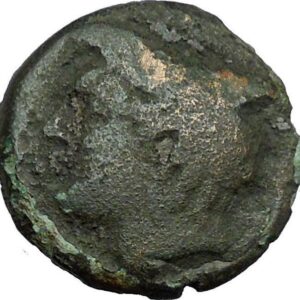
Aegis, with winged Gorgoneion at center.
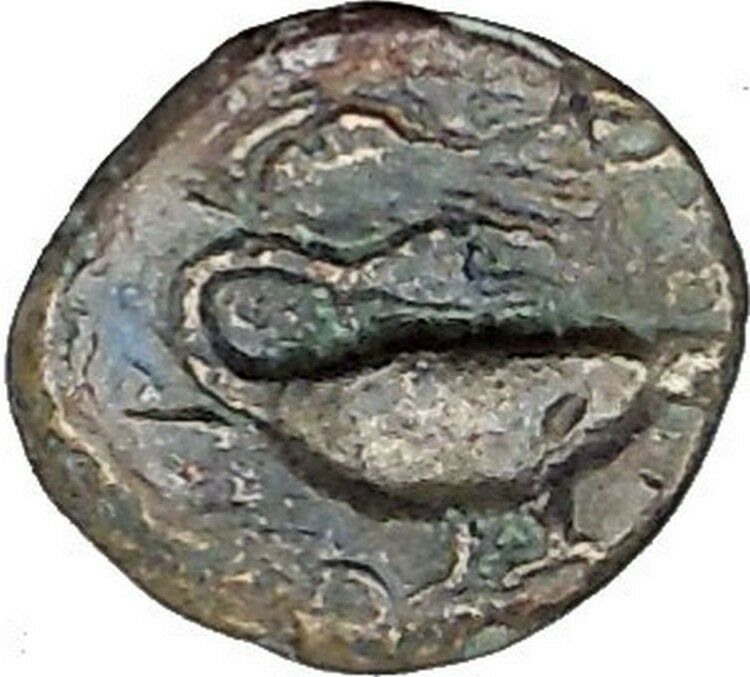
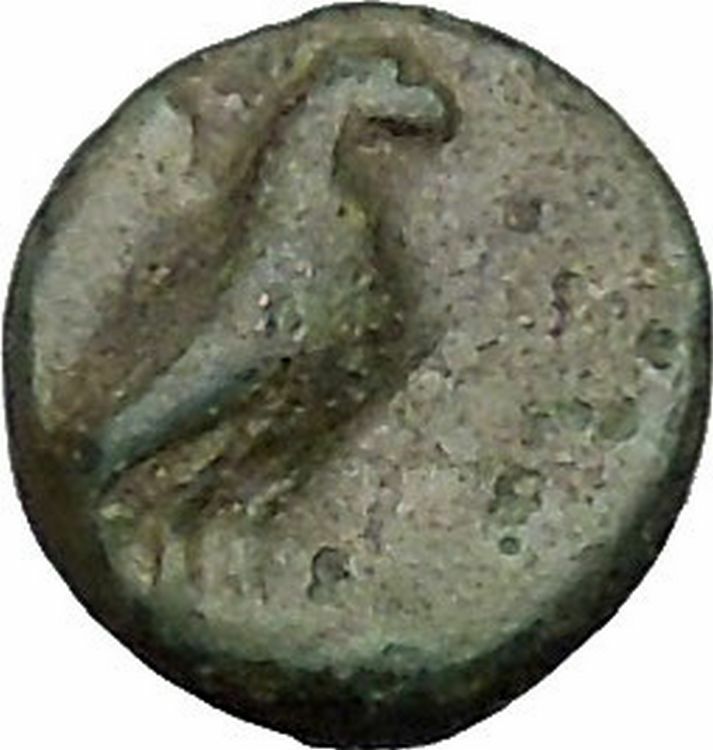
Aphrodite riding on bull right; monogram above, monogram behind, ΣOΛEΩN beneath.
An important coastal town south-west of Zephyrion and Tarsos, Soloi seems to have been a Rhodian foundation, though its coin types suggest some connection with Athens also. Early in the 1st century B.C. it was destroyed by Tigranes of Armenia, but in 66 B.C. Pompey the Great re-founded it under the name Pompeiopolis.
You are bidding on the exact item pictured, provided with a Certificate of Authenticity and Lifetime Guarantee of Authenticity.
Aphrodite is the Greek goddess of love, beauty, and sexuality. Her Roman equivalent is the goddess Venus. Historically, her cult in Greece was imported from, or influenced by, the 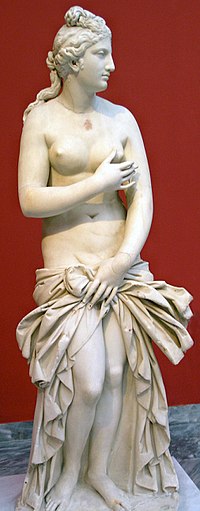 cult of Astarte in Phoenicia.
According to Hesiod’s Theogony, she was born when Cronus cut off Uranus’ genitals and threw them into the sea, and from the sea foam (aphros) arose Aphrodite.
Because of her beauty other gods feared that jealousy would interrupt the peace among them and lead to war, and so Zeus married her to Hephaestus, who was not viewed as a threat. Aphrodite had many lovers, both gods like Ares, and men like Anchises. Aphrodite also became instrumental in the Eros and Psyche legend, and later was both Adonis’ lover and his surrogate mother. Many lesser beings were said to be children of Aphrodite.
Aphrodite is also known as Cytherea (Lady of Cythera) and Cypris (Lady of Cyprus) after the two cult-sites, Cythera and Cyprus, which claimed her birth. Myrtles, doves, sparrows, horses, and swans are sacred to her. The Greeks further identified the Ancient Egyptian goddess Hathor with Aphrodite. Aphrodite also has many other local names, such as Acidalia, Cytherea and Cerigo, used in specific areas of Greece. Each goddess demanded a slightly different cult but Greeks recognized in their overall similarities the one Aphrodite. Attic philosophers of the fourth century separated a celestial Aphrodite (Aprodite Urania) of transcendent principles with the common Aphrodite of the people (Aphrodite Pandemos).
Soli (Greek: Σόλοι, Soloi) was an ancient city and port in Cilicia, in present day Turkey, a part of Mezitli municipality which in turn is a part of Greater Mersin. It was a colony of Rhodes, founded c. 700 BC. Soli was destroyed in the 1st century BC, and rebuilt by Pompey the Great. Thereafter, it was called Pompeiopolis (Πομπηιούπολις), not to be confused with the Pompeiopolis in Paphlagonia. The word solecism is derived from Soli, since the dialect of Greek spoken there was considered by Athenians to be a corrupted form of Attic Greek.
Charles Robert Cockrell visited the site of ‘Pompeiopolis’ in June 1813. Examination of his travel intinery and the archaeological remains present along the coastline of southern Turkey, suggests that Soloi-Pompeiopolis is located at Elaiussa-Sebaste.

The geographical location of the ancient city Soli of Cilicia in a modern map of Turkey. The red dot shows the position of Mersin. At the present scale, it coincides with the position of Soli which is slightly on the west.
Notable natives
- Aratus of Soli (c. 315 BC/310 BC – c. 240 BC) was a Greek didactic poet.
- Chrysippus of Soli (c. 279 BC – c. 206 BC) was a Greek Stoic philosopher.
|