|
Finland – 1964 Bronze 1 Penni 15.5mm (1.6 grams)
Reference: KM# 44, Schön# 48 (1963-1969)
SUOMEN TASAVALTA (Translation: Republic of Finland), Four joined loops form Saint Hannes cross, year below.
1 PENNI, Clasped hands flank denomination.
You are bidding on the exact item pictured, provided with a Certificate of Authenticity and Lifetime Guarantee of Authenticity.
 The looped square, also known as Saint John’s Arms, Saint Hannes cross (related to Swedish sankthanskors, Danish johanneskors, and Finnish hannunvaakuna), and as the command-key symbol due to its use on the command key on Apple computer keyboards, is a symbol consisting of a square with outward pointing loops at its corners. It is referred to as a looped square, for example, in works regarding the Mississippian culture (approximately 800 CE to 1600 CE). It is also known as the place of interest sign when used on information signs, a practice which started in Finland in the 1950s, spreading to the other Nordic countries in the 1960s.
It is an ancient symbol used by several cultures, and remains in common use today. It belongs to a class of symbols which are called valknute in Norway.
The symbol appears on a number of ancient objects in Northern Europe. It features prominently on a picture stone from Hablingbo, Gotland, Sweden, that was created between 400 and 600 CE.
It is also similar to a traditional heraldic emblem called a Bowen knot.
In Finland, the symbol was painted or carved on houses and barns, and domestic utensils such as tableware, to protect them and their owners from evil spirits and bad luck. The oldest surviving example is a pair of 1000-year-old (Finnish pre-Christian period) wooden skis decorated with the symbol.
The looped square also appears on artifacts of the Mississippian culture of the southeastern United States.
While not a true knot, many depictions follow the convention for heraldic knots in that the crossings of the strand obey an under-over pattern.
The English names Saint John’s Arms, Saint Hannes cross or Saint Hans’s Cross as well as the Scandinavian names refer to John the Baptist. The connection is that the celebration of Midsummer’s Eve is a major festival in Scandinavia, which in the Julian calendar coincided with the Christian feast celebrating the nativity of Saint John the Baptist, and that the (pagan) symbol was associated with the Midsummer celebrations.
In modern times, the symbol is commonly found in Belarus, Denmark, Estonia, Finland, Germany, Iceland, Latvia, Lithuania, Norway, Sweden, and Ukraine as an indicator of locations of cultural interest, beginning in Finland in the 1950s and spreading to the other Nordic countries in the 1960s. There has been modern speculation that it was chosen for its resemblance to an aerial view of Borgholm Castle; however, as stated its use for attractions began in Finland, not Sweden, and the symbol is well-represented in Scandinavian artifacts that predate the current castle by centuries.
The symbol later gained international recognition via computing. It is used on Apple keyboards as the symbol for the command key as well as in elementary OS as the symbol for the Super key.
The looped square is used in the logos of Belgian telecommunications company Proximus and Canadian software company DistillerSR.
In Unicode, it is encoded at U+2318 PLACE OF INTEREST SIGN, in the block Miscellaneous Technical.
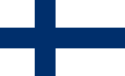 Finland, officially the Republic of Finland (Finnish: Suomen tasavalta, Swedish: Republiken Finland) is a country in Northern Europe bordering the Baltic Sea, Gulf of Bothnia, and Gulf of Finland, between Norway to the north, Sweden to the northwest, and Russia to the east. Finland is a Nordic country and is situated in the geographical region of Fennoscandia. The capital and the largest city is Helsinki.
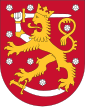 <pfinland's population="" is="" 5.5="" million="" (2017),="" and="" the="" majority="" of="" concentrated="" in="" southern="" region.="" 88.7%="" finnish="" speaks="" finnish,="" a="" uralic="" language="" unrelated="" to="" scandinavian="" languages;="" next="" come="" finland-swedes="" (5.3%).="" finland="" eighth-largest="" country="" europe="" most="" sparsely="" populated="" european="" union.="" it="" parliamentary="" republic="" with="" central="" government="" based="" capital="" city="" helsinki,="" local="" governments="" 311="" municipalities,="" one="" autonomous="" region,="" Åland="" islands.="" over="" 1.4="" people="" live="" greater="" helsinki="" metropolitan="" area,="" which="" produces="" third="" country's="" gdp.=""
Finland was inhabited when the last ice age ended, approximately 9000 BCE. The first settlers left behind artefacts that present characteristics shared with those found in Estonia, Russia, and Norway. The earliest people were hunter-gatherers, using stone tools. The first pottery appeared in 5200 BCE, when the Comb Ceramic culture was introduced. The arrival of the Corded Ware culture in southern coastal Finland between 3000 and 2500 BCE may have coincided with the start of agriculture. The Bronze Age and Iron Age were characterised by extensive contacts with other cultures in the Fennoscandian and Baltic regions and the sedentary farming inhabitation increased towards the end of Iron Age. At the time Finland had three main cultural areas – Southwest Finland, Tavastia and Karelia – as reflected in contemporary jewellery.

From the late 13th century, Finland gradually became an integral part of Sweden through the Northern Crusades and the Swedish part-colonisation of coastal Finland, a legacy reflected in the prevalence of the Swedish language and its official status. In 1809, Finland was incorporated into the Russian Empire as the autonomous Grand Duchy of Finland. In 1906, Finland became the first European state to grant all adult citizens the right to vote, and the first in the world to give all adult citizens the right to run for public office.
Following the 1917 Russian Revolution, Finland declared itself independent. In 1918, the fledgling state was divided by civil war, with the Bolshevik-leaning Red Guard supported by the equally new Soviet Russia, fighting the White Guard, supported by the German Empire. After a brief attempt to establish a kingdom, the country became a republic. During World War II, the Soviet Union sought repeatedly to occupy Finland, with Finland losing parts of Karelia, Salla, Kuusamo, Petsamo and some islands, but retaining independence.
Finland joined the United Nations in 1955 and established an official policy of neutrality. The Finno-Soviet Treaty of 1948 gave the Soviet Union some leverage in Finnish domestic politics during the Cold War era. Finland joined the OECD in 1969, the NATO Partnership for Peace in 1994, the European Union in 1995, the Euro-Atlantic Partnership Council in 1997,[19] and finally the Eurozone at its inception, in 1999.
Finland was a relative latecomer to industrialisation, remaining a largely agrarian country until the 1950s. After World War II, the Soviet Union demanded war reparations from Finland not only in money but also in material, such as ships and machinery. This forced Finland to industrialise. It rapidly developed an advanced economy while building an extensive welfare state based on the Nordic model, resulting in widespread prosperity and one of the highest per capita incomes in the world. Finland is a top performer in numerous metrics of national performance, including education, economic competitiveness, civil liberties, quality of life, and human development. In 2015, Finland was ranked first in the World Human Capital[25] and the Press Freedom Index and as the most stable country in the world during 2011-2016 in the Fragile States Index,[26] and second in the Global Gender Gap Report. A large majority of Finns are members of the Evangelical Lutheran Church, and freedom of religion is guaranteed under the Finnish Constitution.
|


