|
Germany – Free imperial city of Nuremberg (German States)
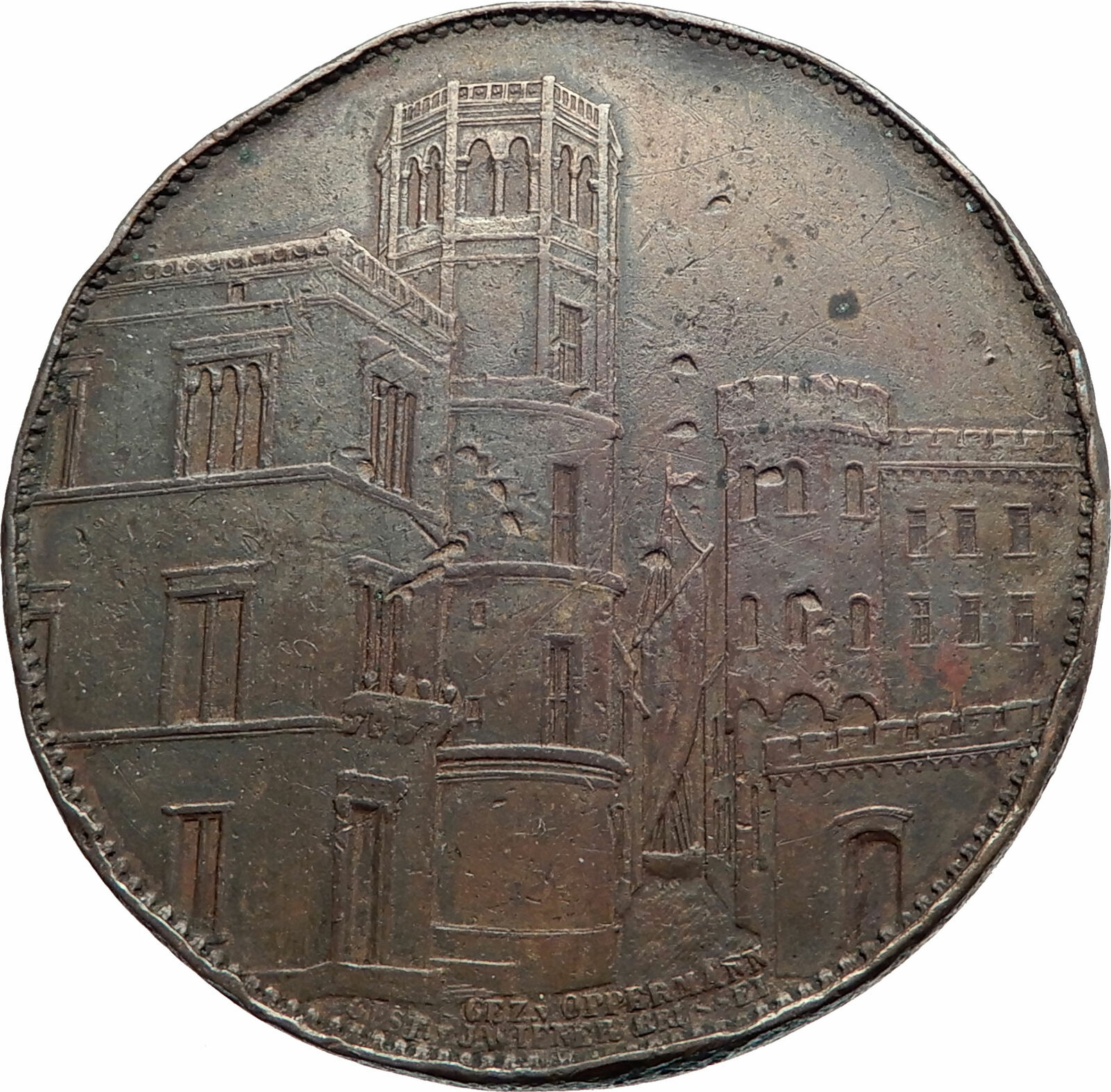
Circa 1806-1829 (No Date) Brass Counter Token (Jetton) 21mm (0.70 grams) Lauer Mint
Reference: cf. N# 1806-1829 (reverse type) POSSIBLY UNPUBLISHED / VERY Rare Type
TELE DE VENUS, Bust of Venus right.
Diana [Diane – the huntress] holding a spear and horn, with two dogs and doe going to the right; LAUER. in exergue below.
L. Chr. Lauer Mint (Münzprägeanstalt L. Chr. Lauer), Nuremberg, Germany (1790-1924)
You are bidding on the exact item pictured, provided with a Certificate of Authenticity and Lifetime Guarantee of Authenticity.
In Roman mythology, Diana was the goddess of the hunt, the moon, and nature being associated with wild animals and woodland, and having the power to talk to and control animals. She was eventually equated with the Greek goddess Artemis, though she had an independent origin in Italy. Diana was worshipped in ancient Roman religion and is revered in Roman Neopaganism and Stregheria. Diana was known to be the virgin goddess of childbirth and women. She was one of the three maiden goddesses, along with Minerva and Vesta, who swore never to marry.
Oak groves and deer were especially sacred to her. According to mythology (in common with the Greek religion and their deity Artemis), Diana was born with her twin brother, Apollo, on the island of Delos, daughter of Jupiter and Latona. She made up a triad with two other Roman deities: Egeria the water nymph, her servant and assistant midwife; and Virbius, the woodland god.
 Germany, officially the Federal Republic of  Germany is a federal parliamentary republic in western-central Europe. It includes 16 constituent states and covers an area of 357,021 square kilometres (137,847 sq mi) with a largely temperate seasonal climate. Its capital and largest city is Berlin. With 81 million inhabitants, Germany is the most populous member state in the European Union. After the United States, it is the second most popular migration destination in the world.
Various Germanic tribes have occupied northern Germany since classical antiquity. A region named Germania was documented before 100 CE. During the Migration Period the Germanic tribes expanded southward. Beginning in the 10th century, German territories formed a central part of the Holy Roman Empire. During the 16th century, northern German regions became the centre of the Protestant Reformation.
The rise of Pan-Germanism inside the German Confederation resulted in the unification of most of the German states in 1871 into the Prussian-dominated German Empire. After World War I and the German Revolution of 1918-1919, the Empire was replaced by the parliamentary Weimar Republic. The establishment of the Third Reich in 1933 led to World War II and the Holocaust. After 1945, Germany split into two states, East Germany and West Germany. In 1990, the country was reunified.
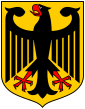 In the 21st century, Germany is a great power and has the world’s fourth-largest economy by nominal GDP, as well as the fifth-largest by PPP. As a global leader in several industrial and technological sectors, it is both the world’s third-largest exporter and importer of goods. Germany is a developed country with a very high standard of living sustained by a skilled and productive society. It upholds a social security and universal health care system, environmental protection and a tuition free university education.
Germany was a founding member of the European Union in 1993. It is part of the Schengen Area, and became a co-founder of the Eurozone in 1999. Germany is a member of the United Nations, NATO, the G8, the G20, and the OECD. The national military expenditure is the 9th highest in the world. Known for its rich cultural history, Germany has been continuously the home of influential artists, philosophers, musicians, sportsmen, entrepreneurs, scientists and inventors.
|