|
Kingdom of Bohemia – Silesia
Holy Roman Emperor; King of Bohemia; Archduke of Austria; King of Croatia: 5 May 1705 – 17 April 1711
1710 Silver 3 Kreuzer 19mm (1.71 grams)
Reference: KM# 687 (1705-11)
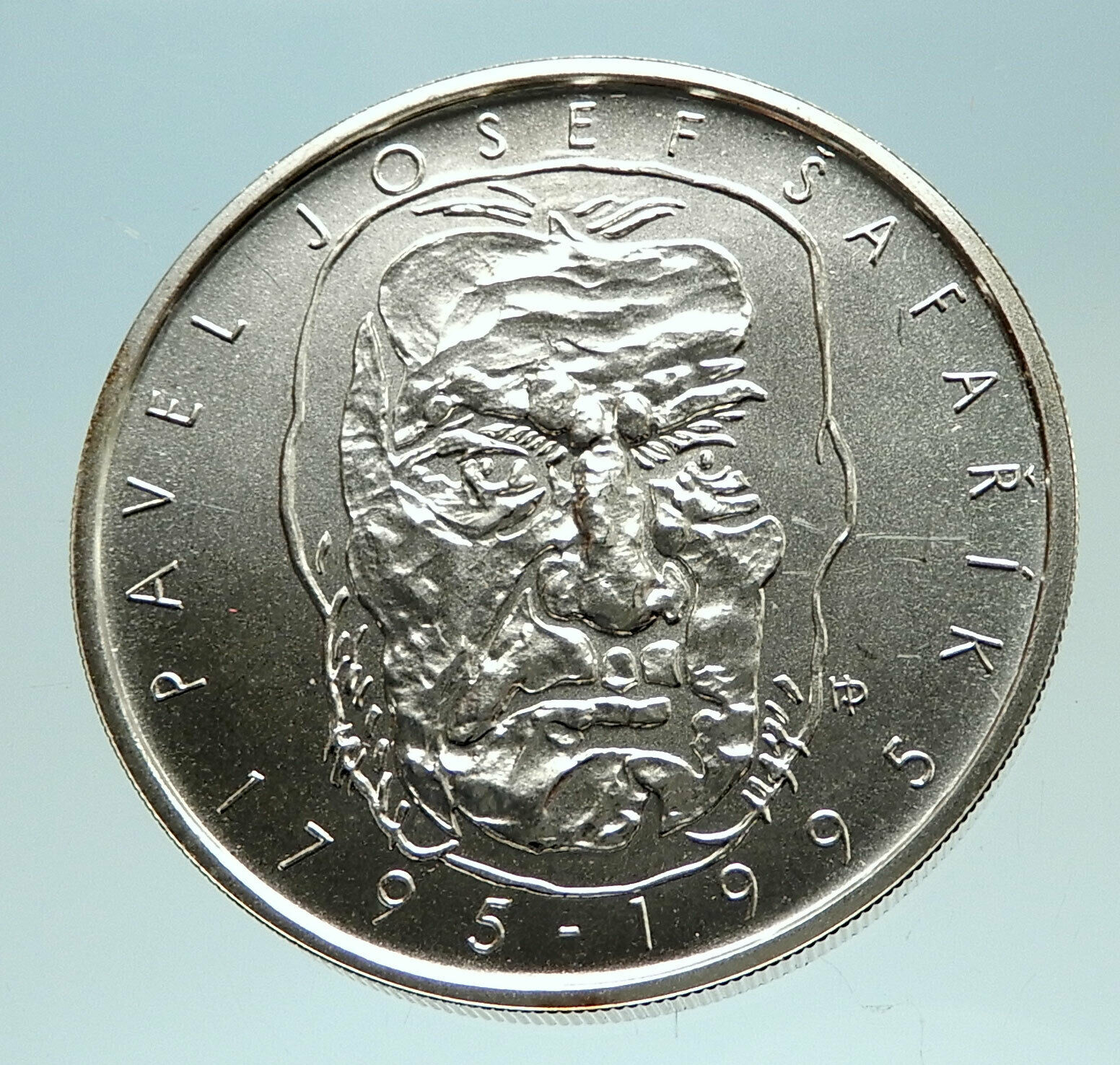
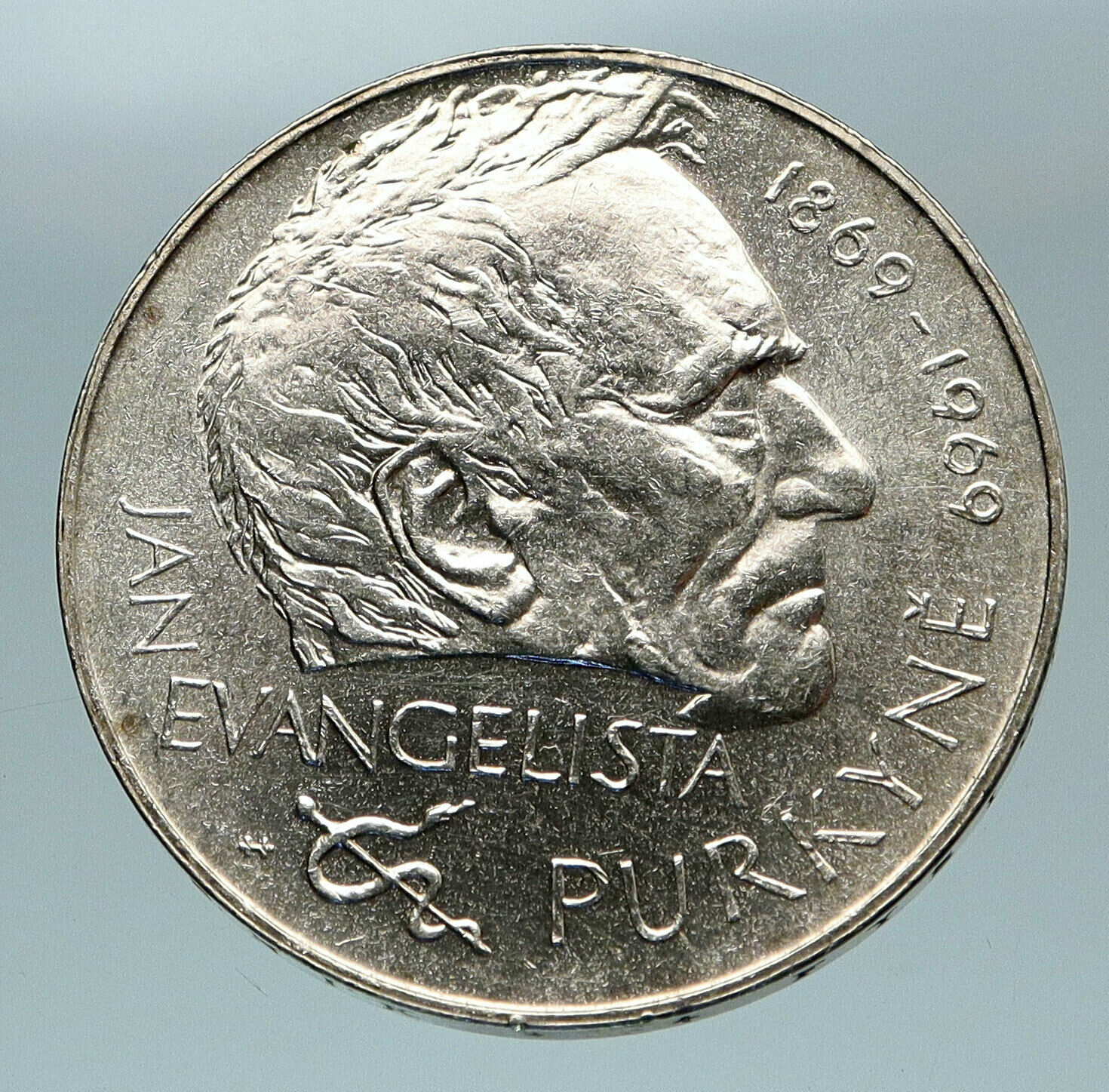
IOSEPHUS D G R I S // A G H B REX ou BO REX, Laureate portrait facing right.
ARCHID AU DUX BUR SI 17 06 F N, Crowned double headed imperial eagle in an inner circle.
You are bidding on the exact item pictured, provided with a Certificate of Authenticity and Lifetime Guarantee of Authenticity.
 Joseph I (Joseph Jacob Ignaz Johann Anton Eustachius; 26 July 1678 – 17 April 1711) was Holy Roman Emperor and ruler of the Austrian Habsburg Monarchy from 1705 until his death in 1711. He was the eldest son of Emperor Leopold I from his third wife, Eleonor Magdalene of Neuburg. Joseph was crowned King of Hungary at the age of nine in 1687 and was elected King of the Romans at the age of eleven in 1690. He succeeded to the thrones of Bohemia and the Holy Roman Empire when his father died.
Joseph continued the War of the Spanish Succession, begun by his father against Louis XIV of France, in a fruitless attempt to make his younger brother Charles (later Emperor Charles VI) King of Spain. In the process, however, owing to the victories won by his military commander, Prince Eugene of Savoy, he did succeed in establishing Austrian hegemony over Italy. Joseph also had to contend with a protracted revolt in Hungary, fomented by Louis XIV. Neither conflict was resolved until the Treaty of Utrecht, after his death.
His motto was Amore et Timore (Latin for “Through Love and Fear”).
Prior to his ascension, Joseph had surrounded himself with reform-hungry advisors and the young court of Vienna was ambitious in the elaboration of innovative plans. He was described as a “forward-looking ruler”. The large number of privy councillors was reduced and attempts were made to make the bureaucracy more efficient. Measures were taken to modernize the central bodies and a certain success was achieved in stabilizing the chronic Habsburg finances. Joseph also endeavoured to strengthen his position in the Holy Roman Empire – as a means of strengthening Austria’s standing as a great power. When he sought to lay claim to imperial rights in Italy and gain territories for the Habsburgs, he even risked a military conflict with the Pope over the duchy of Mantua. Joseph I was threatened with excommunication by Pope Clement XI on 16 June 1708.
In Hungary, Joseph had inherited the kuruc rebellion from his father Leopold I: once again, nobles in Transylvania (Siebenbürgen) had risen against Habsburg rule, even advancing for a time as far as Vienna. Although Joseph was compelled to take military action, he refrained – unlike his predecessors – from seeking to teach his subjects a lesson by executing the leaders. Instead, he agreed to a compromise peace, which in the long term facilitated the integration of Hungary into the Habsburg domains. It was his good fortune to govern the Austrian dominions and to be head of the Empire, during the years in which his trusted general, Prince Eugene of Savoy, either acting alone in Italy or with the Duke of Marlborough in Germany and Flanders, was beating the armies of Louis XIV of France. During the whole of his reign, Hungary was disturbed by the conflict with Francis Rákóczi II, who eventually took refuge in the Ottoman Empire. The emperor reversed many of the authoritarian measures of his father, thus helping to placate opponents. He began the attempts to settle the question of the Austrian inheritance by a pragmatic sanction, which was continued by his brother Charles VI. In 1710, Joseph extended his father’s edict of outlawry against the Romani (Gypsies) in the Habsburg lands. Per Leopold, any Romani who entered the kingdom was to be declared an outlaw by letters patent and if the same person returned to Bohemia a second time “treated with all possible severity”. Joseph ordered that in the Kingdom of Bohemia they were to have their right ears cut off; in the March of Moravia, the left ear was to be cut off; in Austria, they would be branded on the back with a branding iron, representing the gallows. These mutilations were to enable the authorities to identify Romani who had been outlawed and returned. Joseph’s edict specified “that all adult males were to be hanged without trial, whereas women and young males were to be flogged and banished forever.” Officials who failed to enforce the edict could be fined 100 Reichsthaler. Helping Romani was punishable by a half-year’s forced labor. “Mass killings” of Romani were reported as a result.
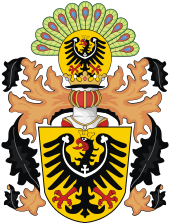 Silesia is a historical region of Central Europe located mostly in Poland, with small parts in the Czech Republic and Germany. Its area is approximately 40,000 km2 (15,400 sq mi) and the population is estimated at around 8,000,000 inhabitants. Silesia is split into two main sub-regions of Lower Silesia in the west and Upper Silesia in the east. Silesia has a diverse culture, including architecture, costumes, cuisine, traditions and the Silesian language.
In the second half of the 2nd millennium B.C. (late Bronze Age), Silesia belonged to the Lusatian culture. About 500 BC Scyths arrived, and later Celts in the South and Southwest. During the 1st century BC Silingi and other Germanic people settled in Silesia. For this period we have written reports of antique authors who included the area. Slavs arrived in this territory around the 6th century. The first known states in Silesia were those of Greater Moravia and Bohemia. In the 10th century, Mieszko I incorporated Silesia into Civitas Schinesghe, a Polish state. It remained part of Poland until the Fragmentation of Poland. Afterwards it was divided between Piast dukes, descendants of Władysław II the Exile, High Duke of Poland.
 In the Middle Ages, Silesia was divided among many duchies ruled by various dukes of the Piast dynasty. During this time, cultural and ethnic German influence increased due to immigrants from the German-speaking components of the Holy Roman Empire, as the region’s economy developed, and towns were founded under German town law.
Between the years 1289-1292 Bohemian king Wenceslaus II became suzerain of some Upper Silesian duchies. Silesia subsequently became a possession of the Crown of Bohemia under the Holy Roman Empire in the 14th century, and passed with that Crown to the Habsburg Monarchy in 1526. The Duchy of Crossen was inherited by Margraviate of Brandenburg in 1476 and, with the renunciation by King Ferdinand I and estates of Bohemia in 1538, it became an integral part of Brandenburg.
In 1742, most of Silesia was seized by King Frederick the Great of Prussia in the War of the Austrian Succession and subsequently made the Prussian Province of Silesia.
After World War I, Lower Silesia, having by far a German majority, remained with Germany while Upper Silesia, after a series of insurrections by the Polish inhabitants, was split. Part joined the Second Polish Republic and was administered as the Silesian Voivodeship. The Prussian Province of Silesia within Germany was divided into the Provinces of Lower Silesia and Upper Silesia. Austrian Silesia (officially: Duchy of Upper and Lower Silesia; almost identical with modern-day Czech Silesia), the small portion of Silesia retained by Austria after the Silesian Wars, became part of the new Czechoslovakia. During the Second World War, Nazi Germany invaded Polish parts of Upper Silesia. Jews were subject to genocide in the Holocaust, while German plans towards Poles involved ethnic cleansing and biological extermination.
In 1945 both provinces were occupied by the Soviet Union. Under the demands in the Potsdam Agreement, most of this territory was afterwards transferred to the Polish People’s Republic. Most of the German population, who had not been evacuated or had fled, were expelled by the newly arrived Polish administration, while Poles expelled from the eastern Polish Borderlands then settled in the region.
The Kingdom of Bohemia, sometimes later in English literature referred to as the Czech Kingdom (Czech: České království; German: Königreich Böhmen; Latin: Regnum Bohemiae, sometimes Regnum Czechorum), was a medieval and early modern monarchy in Central Europe, the predecessor of the modern Czech Republic. It was an Imperial State in the Holy Roman Empire, and the Bohemian king was a prince-elector of the empire. The kings of Bohemia, besides Bohemia, also ruled the Lands of the Bohemian Crown, which at various times included Moravia, Silesia, Lusatia, and parts of Saxony, Brandenburg, and Bavaria.
The kingdom was established by the Přemyslid dynasty in the 12th century from Duchy of Bohemia, later ruled by the House of Luxembourg, the Jagiellonian dynasty, and since 1526 by the House of Habsburg and its successor house Habsburg-Lorraine. Numerous kings of Bohemia were also elected Holy Roman Emperors and the capital Prague was the imperial seat in the late 14th century, and at the end of the 16th and beginning of the 17th centuries.
After the dissolution of the Holy Roman Empire in 1806, the territory became part of the Habsburg Austrian Empire, and subsequently the Austro-Hungarian Empire from 1867. Bohemia retained its name and formal status as a separate Kingdom of Bohemia until 1918, known as a crown land within the Austro-Hungarian Empire, and its capital Prague was one of the empire’s leading cities. The Czech language (called the Bohemian language in English usage until the 19th century) was the main language of the Diet and the nobility until 1627 (after the Bohemian Revolt was suppressed). German was then formally made equal with Czech and eventually prevailed as the language of the Diet until the Czech National Revival in the 19th century. German was also widely used as the language of administration in many towns after the return of Germans immigrated and populated some areas of the country in the 13th century after the Migration Period. The royal court used the Czech, Latin, and German languages, depending on the ruler and period.
Following the defeat of the Central Powers in World War I, both the Kingdom and Empire were dissolved. Bohemia became the core part of the newly formed Czechoslovak Republic.
|