


|
Item: i79803 |
|
Great Britain (United Kingdom) You are bidding on the exact item pictured, provided with a Certificate of Authenticity and Lifetime Guarantee of Authenticity.
His life and with it his reign, which were longer than those of any of his predecessors, were marked by a series of military conflicts involving his kingdoms, much of the rest of Europe, and places farther afield in Africa, the Americas and Asia. Early in his reign, Great Britain defeated France in the Seven Years’ War, becoming the dominant European power in North America and India. However, many of Britain’s American colonies were soon lost in the American War of Independence. Further wars against revolutionary and Napoleonic France from 1793 concluded in the defeat of Napoleon at the Battle of Waterloo in 1815. In the later part of his life, George III had recurrent, and eventually permanent, mental illness. Although it has since been suggested that he had the blood disease porphyria, the cause of his illness remains unknown. After a final relapse in 1810, a regency was established, and George III’s eldest son, George, Prince of Wales, ruled as Prince Regent. On George III’s death, the Prince Regent succeeded his father as George IV. Historical analysis of George III’s life has gone through a “kaleidoscope of changing views” that have depended heavily on the prejudices of his biographers and the sources available to them. Until it was reassessed in the second half of the 20th century, his reputation in the United States was one of a tyrant; and in Britain he became “the scapegoat for the failure of imperialism”.
The island is dominated by an oceanic climate with quite narrow temperature differences between seasons. Politically, the island is part of the United Kingdom of Great Britain and Northern Ireland, constituting most of its territory: most of England, Scotland, and Wales are on the island, with their respective capital cities, London, Edinburgh, and Cardiff. The term Great Britain often extends to include surrounding islands that form part of England, Scotland, and Wales. A single Kingdom of Great Britain resulted from the Union of Scotland and England (which already comprised the present-day countries of England and Wales) in 1707. More than a hundred years before, in 1603, King James VI, King of Scots, had inherited the throne of England, but it was not until 1707 that the Parliaments of the two countries agreed to form a unified state. In 1801, Great Britain united with the neighboring Kingdom of Ireland, forming the United Kingdom of Great Britain and Ireland, which was renamed the United Kingdom of Great Britain and Northern Ireland after the Irish Free State seceded in 1922. |


 George III (George William Frederick; 4 June 1738 – 29 January 1820) was King of Great Britain and King of Ireland from 25 October 1760 until the union of the two countries on 1 January 1801, after which he was King of the United Kingdom of Great Britain and Ireland until his death. He was concurrently Duke and prince-elector of Brunswick-Lüneburg (“Hanover”) in the Holy Roman Empire before becoming King of Hanover on 12 October 1814. He was the third British monarch of the House of Hanover, but unlike his two predecessors, he was born in England, spoke English as his first language, and never visited Hanover.
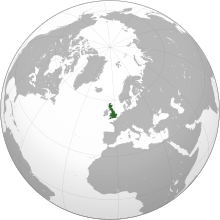 Great Britain, also known as Britain, is an island in the North Atlantic off the north-west coast of continental Europe. With an area of 209,331 km2 (80,823 sq mi), it is the largest island in Europe and the ninth-largest in the world. In 2011 the island had a population of about 61 million people, making it the third-most populous island in the world, after Java in Indonesia and Honshu in Japan. The island is the largest in the British Isles archipelago, which also includes the island of Ireland to its west and over 1,000 smaller surrounding islands.
Frequently Asked Questions
Who am I dealing with?
How long until my order is shipped?
How will I know when the order was shipped?
What is a certificate of authenticity and what guarantees do you give that the item is authentic?
Is there a money back guarantee?
When should I leave feedback?
How and where do I learn more about collecting ancient coins?
|


