|
German States – Baden
Louis (Ludwig) I – Grand Duke: 8 December 1818 – 30 March 1830
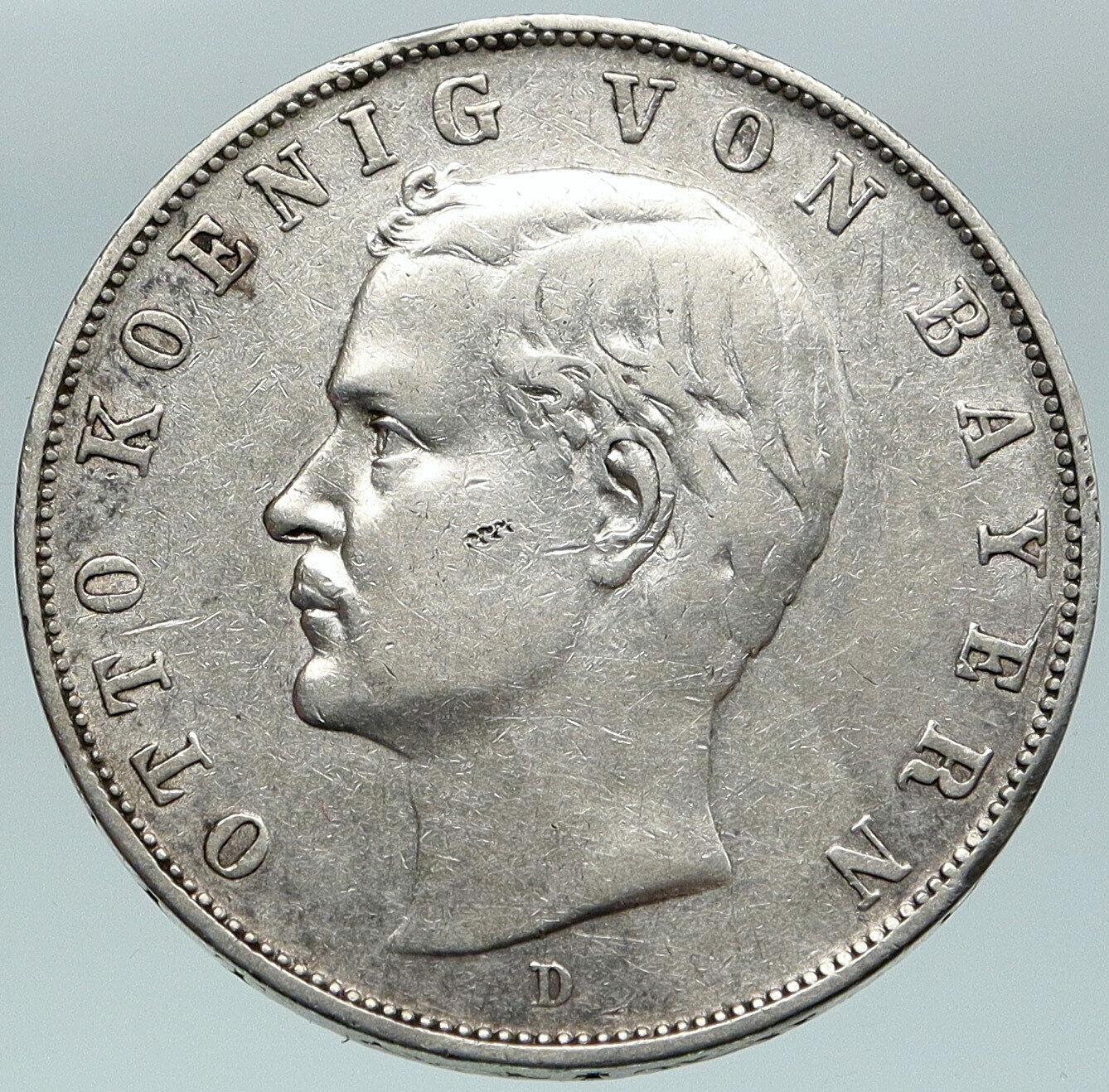
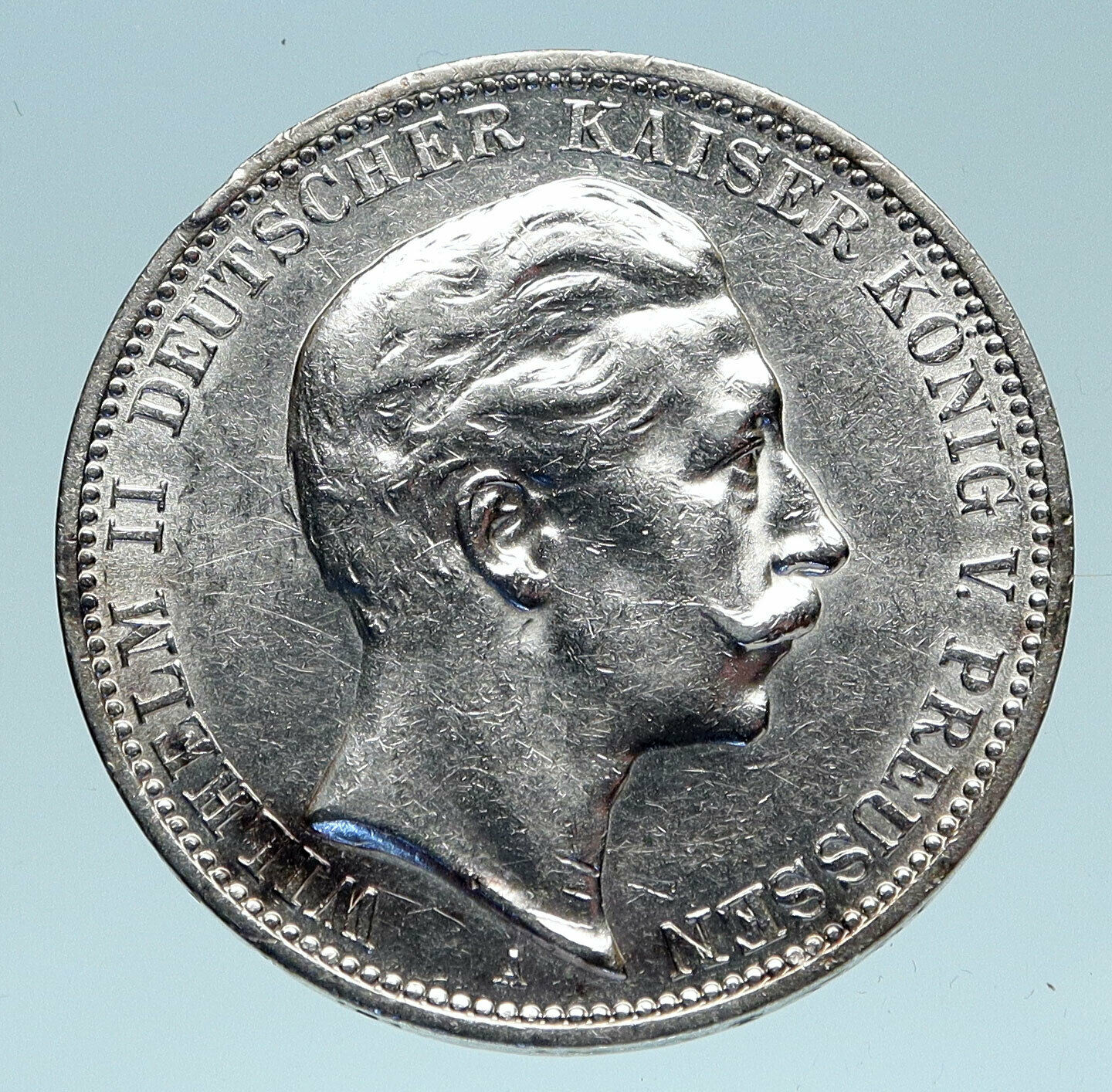
1830 Billon Silver 3 Kreuzer 15mm (0.92 grams) 0.375 Silver
Reference: KM# 191 (1829-30)
LUDWIG GROSHERZOG VON BADEN, Louis facing right.
DREI KREUZER 1830, Wreath.
You are bidding on the exact item pictured, provided with a Certificate of Authenticity and Lifetime Guarantee of Authenticity.
 Ludwig I (9 February 1763 – 30 March 1830) (or Louis I) succeeded as Grand Duke of Baden on 8 December 1818. He was the uncle of his predecessor Karl Ludwig Friedrich, and his death marked the end of the Zähringen line of the House of Baden. He was succeeded by his half brother, Leopold.
He secured the continued existence of the University of Freiburg in 1820, after which the university was called the Albert-Ludwig University. He also founded the Polytechnic Hochschule Karlsruhe in 1825. The Hochschule is the oldest technical school in Germany.
Ludwig’s death in 1830 led to many rumors. His death also meant the extinction of his line of the Baden family. The succession then went to the children of the morganatic second marriage of Grand Duke Karl Friedrich and Louise Karoline Geyer von Geyersberg, who was created Countess of Hochberg in the Austrian nobility at the personal request of Karl Friedrich.
After Ludwig’s death, there was much discussion about a mysterious seventeen-year-old man named Kaspar Hauser, who had appeared seemingly out of nowhere in 1828. Seventeen years previously, the first son of the future Grand Duke Karl and his French wife Stéphanie de Beauharnais died under what were later portrayed as mysterious circumstances. There was at the time and still is today (in 2007) speculation that Hauser, who died (perhaps murdered) in 1833, was that child.
Working together with architect Friedrich Weinbrenner, Ludwig is responsible for most of the classical revival buildings in the city center and for building the pyramid.
Ludwig had one surviving illegitimate daughter by his mistress Katharina Werner (created Countess of Langenstein and Gondelsheim in 1818), Countess Louise von Langenstein und Gondelsheim (1825-1900) who married in 1848 Swedish aristocrat Carl Israel, Count Douglas (1824-1898).
 Baden (/ˈbɑːdən/; German: [ˈbaːdn̩]) is a historical German territory. Together with Württemberg and the former Prussian Province of Hohenzollern, two other historical territories, it forms the  Federal State of Baden-Württemberg. The margraves of Baden originated from the house of Zähringen. Baden is named after the margraves’ residence Hohenbaden Castle [de] in Baden-Baden. The capital of the Grand Duchy of Baden was Karlsruhe.
Following the dissolution of the old Duchy of Swabia, Baden underwent a history which can be summarized as follows:
- Margraviate of Baden (1112-1806)
- Electorate of Baden (1803-1806)
- Grand Duchy of Baden (1806-1918), enlarged to four or five times the size of the Margraviate.
- Republic of Baden (1918-1945)
After World War II this territory was subdivided between Württemberg-Baden and South Baden. Finally, the state of Baden-Württemberg was formed in 1952.
Frederick II (German: Herzog Friedrich II von Anhalt) (19 August 1856 – 21 April 1918) was the Duke of Anhalt from 1904 until 1918.
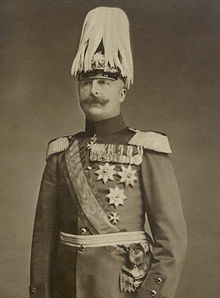 He was born in Dessau in 1856, he was the second son of Hereditary Prince Frederick of Anhalt-Dessau and his wife Princess Antoinette of Saxe-Altenburg.
His father succeeded as Duke of Anhalt on 22 May 1871 and Frederick became heir apparent and Hereditary Prince following the death of his elder brother Leopold on 2 February 1886.
Frederick was married on 2 July 1889 at Karlsruhe to Princess Marie of Baden (26 July 1865-29 November 1939). She was a daughter of Prince Wilhelm of Baden and his wife Princess Maria of Leuchtenberg, as well as an elder sister of Prince Maximilian of Baden, 8th Chancellor of Germany. The marriage produced no issue.
In 24 January 1904, Frederick succeeded his father as Duke of Anhalt.
During his reign he was known for his love of music and maintained a Court Theatre which became celebrated throughout Europe.
He was Grand Master of the Order of Albert the Bear and a Knight of the Order of the Black Eagle. In 1914, during World War I, he instituted the Friedrich Cross as a decoration for merit in time of war.
He died at Ballenstedt Castle on 22 April 1918. As his marriage to Marie of Baden was without issue, he was succeeded as Duke by his younger brother Eduard.
  Germany, officially the Federal Republic of Germany is a federal parliamentary republic in western-central Europe. It includes 16 constituent states and covers an area of 357,021 square kilometres (137,847 sq mi) with a largely temperate seasonal climate. Its capital and largest city is Berlin. With 81 million inhabitants, Germany is the most populous member state in the European Union. After the United States, it is the second most popular migration destination in the world.
Various Germanic tribes have occupied northern Germany since classical antiquity. A region named Germania was documented before 100 CE. During the Migration Period the Germanic tribes expanded southward. Beginning in the 10th century, German territories formed a central part of the Holy Roman Empire. During the 16th century, northern German regions became the centre of the Protestant Reformation.
The rise of Pan-Germanism inside the German Confederation resulted in the unification of most of the German states in 1871 into the Prussian-dominated German Empire. After World War I and the German Revolution of 1918-1919, the Empire was replaced by the parliamentary Weimar Republic. The establishment of the Third Reich in 1933 led to World War II and the Holocaust. After 1945, Germany split into two states, East Germany and West Germany. In 1990, the country was reunified.
 In the 21st century, Germany is a great power and has the world’s fourth-largest economy by nominal GDP, as well as the fifth-largest by PPP. As a global leader in several industrial and technological sectors, it is both the world’s third-largest exporter and importer of goods. Germany is a developed country with a very high standard of living sustained by a skilled and productive society. It upholds a social security and universal health care system, environmental protection and a tuition free university education.
Germany was a founding member of the European Union in 1993. It is part of the Schengen Area, and became a co-founder of the Eurozone in 1999. Germany is a member of the United Nations, NATO, the G8, the G20, and the OECD. The national military expenditure is the 9th highest in the world. Known for its rich cultural history, Germany has been continuously the home of influential artists, philosophers, musicians, sportsmen, entrepreneurs, scientists and inventors.
|