|
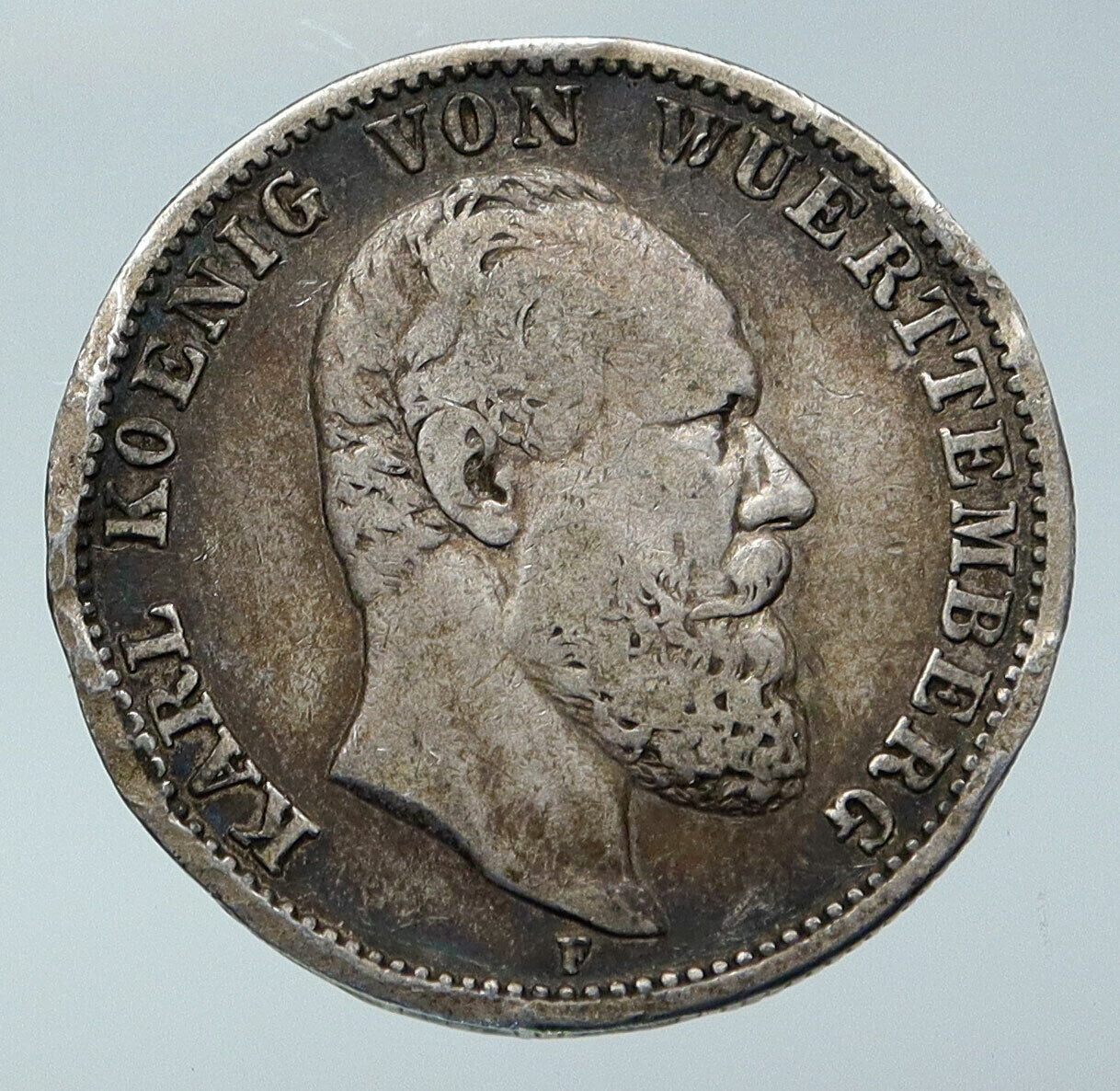
KINGDOM of PRUSSIA under Germany
King George IV – King of United Kingdom and Hanover: 29 January 1820 – 26 June 1830
1823 Bronze 1/4 Stuber 20mm (3.11 grams)
Reference: KM# 290
GR IV, Crowned monogram.
1/4 STÜBER OST- FRIESISCH 1823, Inscription in five lines.
You are bidding on the exact item pictured, provided with a Certificate of Authenticity and Lifetime Guarantee of Authenticity.
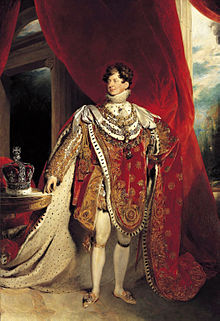 George IV (George Augustus Frederick; 12 August 1762 – 26 June 1830) was King of the United Kingdom of Great Britain and Ireland and King of Hanover from the death of his father, King George III, on 29 January 1820 until his own death ten years later. From 1811 until his accession, he served as regent during his father’s final mental illness.
George IV was the eldest child of King George III and Queen Charlotte. He led an extravagant lifestyle that contributed to the fashions of the Regency era. He was a patron of new forms of leisure, style and taste. He commissioned John Nash to build the Royal Pavilion in Brighton and remodel Buckingham Palace, and commissioned Sir Jeffry Wyatville to rebuild Windsor Castle. George’s charm and culture earned him the title “the first gentleman of England”, but his dissolute way of life and poor relationships with his parents and his wife, Caroline of Brunswick, earned him the contempt of the people and dimmed the prestige of the monarchy. He excluded Caroline from his coronation and asked the government to introduce the unpopular Pains and Penalties Bill in an unsuccessful attempt to divorce her.
 Despite presiding over the British Empire’s emergence as a global hegemon, George IV’s rule was tarnished by scandal and financial extravagance. His ministers found his behaviour selfish, unreliable and irresponsible, and he was strongly influenced by favourites.[1] Taxpayers were angry at his wasteful spending during the Napoleonic Wars. During most of George’s regency and reign, Lord Liverpool controlled the government as Prime Minister of the United Kingdom. Liverpool’s government presided over Britain’s ultimate victory over Napoleon and negotiated a peace settlement with the French. After Liverpool’s retirement, George IV was forced to accept Catholic emancipation despite opposing it. His only legitimate child, Princess Charlotte, predeceased him in 1817; on his death, he was succeeded by his younger brother, King William IV.
 Germany, officially the Federal Republic of  Germany is a federal parliamentary republic in western-central Europe. It includes 16 constituent states and covers an area of 357,021 square kilometres (137,847 sq mi) with a largely temperate seasonal climate. Its capital and largest city is Berlin. With 81 million inhabitants, Germany is the most populous member state in the European Union. After the United States, it is the second most popular migration destination in the world.
Various Germanic tribes have occupied northern Germany since classical antiquity. A region named Germania was documented before 100 CE. During the Migration Period the Germanic tribes expanded southward. Beginning in the 10th century, German territories formed a central part of the Holy Roman Empire. During the 16th century, northern German regions became the centre of the Protestant Reformation.
The rise of Pan-Germanism inside the German Confederation resulted in the unification of most of the German states in 1871 into the Prussian-dominated German Empire. After World War I and the German Revolution of 1918-1919, the Empire was replaced by the parliamentary Weimar Republic. The establishment of the Third Reich in 1933 led to World War II and the Holocaust. After 1945, Germany split into two states, East Germany and West Germany. In 1990, the country was reunified.
 In the 21st century, Germany is a great power and has the world’s fourth-largest economy by nominal GDP, as well as the fifth-largest by PPP. As a global leader in several industrial and technological sectors, it is both the world’s third-largest exporter and importer of goods. Germany is a developed country with a very high standard of living sustained by a skilled and productive society. It upholds a social security and universal health care system, environmental protection and a tuition free university education.
Germany was a founding member of the European Union in 1993. It is part of the Schengen Area, and became a co-founder of the Eurozone in 1999. Germany is a member of the United Nations, NATO, the G8, the G20, and the OECD. The national military expenditure is the 9th highest in the world. Known for its rich cultural history, Germany has been continuously the home of influential artists, philosophers, musicians, sportsmen, entrepreneurs, scientists and inventors.
|