|
Romania under Carol I – King: 15 March 1881 – 10 October 1914
1867 Copper 5 Bani 24mm (5.27 grams)
Reference: KM# 3 (1867)
ROMANIA NIHIL SINE DEO, Crowned arms with supporters within crowned mantle.
5 BANI 1867, Wreath.
You are bidding on the exact item pictured, provided with a Certificate of Authenticity and Lifetime Guarantee of Authenticity.
 Carol I (20 April 1839 – 27 September (O.S.) / 10 October (N.S.) 1914), born Prince Karl of Hohenzollern-Sigmaringen, was the monarch of Romania from 1866 to 1914. He was elected Ruling Prince (Domnitor) of the Romanian United Principalities on 20 April 1866 after the overthrow of Alexandru Ioan Cuza by a palace coup d’état. In May 1877, he proclaimed Romania an independent and sovereign nation. The defeat of the Ottoman Empire (1878) in the Russo-Turkish War secured Romanian independence, and he was proclaimed King of Romania on 26 March [O.S. 14 March] 1881. He was the first ruler of the Hohenzollern-Sigmaringen dynasty, which ruled the country until the proclamation of a republic in 1947.
During his reign, Carol I personally led Romanian troops during the Russo-Turkish War and assumed command of the Russo/Romanian army during the siege of Plevna. The country achieved internationally recognized independence via the Treaty of Berlin, 1878 and acquired Southern Dobruja from Bulgaria in 1913. Domestic political life was organized around the rival Liberal and Conservative parties. During Carol’s reign Romania’s industry and infrastructure improved a lot, but the country still had an agrarian economy and the situation of the peasantry failed to improve.
He married Princess Elisabeth of Wied in Neuwied on 15 November 1869. They only had one daughter, Maria, who died at the age of three.
Carol never produced a male heir, leaving his elder brother Leopold next in line to the throne. In October 1880 Leopold renounced his right of succession in favour of his son William, who in turn surrendered his claim six years later in favour of his younger brother, the future king Ferdinand.
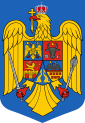 Romania is a country located at the crossroads of Central, Eastern, and Southeastern Europe. It borders the Black Sea to the southeast, Bulgaria to the south, Ukraine to the north, Hungary to the west, Serbia to the southwest, and Moldova to the east. It has a predominantly temperate-continental climate. With a total area of 238,397 square kilometres (92,046 sq mi), Romania is the 12th largest country and also the 7th most populous member state of the European Union, having almost 20 million inhabitants. Its capital and largest city is Bucharest and other major urban areas include Iași, Timișoara, Cluj-Napoca, and Constanța.
The River Danube, Europe’s second-longest river, rises in Germany’s Black Forest and flows in a general southeast direction for 2,857 km (1,775 mi), coursing through ten countries before emptying into Romania’s Danube Delta. The Carpathian Mountains, which cross Romania from the north to the southwest, include Moldoveanu Peak, at an altitude of 2,544 m (8,346 ft).
Modern Romania was formed in 1859 through a personal unionn of the Danubian Principalities of Moldavia and Wallachia. The new state, officially named Romania since 1866, gained independence from the Ottoman Empire in 1877. At the end of World War I, Transylvania, Banat, Bukovina, and Bessarabia united with the sovereign Kingdom of Romania. During World War II, Romania was an Axis power and, consequently, an ally of Nazi Germany against the Soviet Union, fighting side by side with the Wehrmacht until 1944, when it joined the Allies and faced occupation by the Red Army’s forces. Throughout wartime Romania had lost several territories, of which only Northern Transylvania was regained after the war. Following the war, Romania became a socialist republic and member of the Warsaw Pact. After the 1989 Revolution, Romania began a transition towards democracy and a capitalist market economy.
The sovereign state of Romania is a ddeveloping country and ranks 52nd in the Human Development Index. It has the world’s 47th largest economy by nominal GDP and an annual economic growth rate of 7% (2017), the highest in the EU at the time. Following rapid economic growth in the early 2000s, Romania has an economy predominantly based on services, and is a producer and net exporter of machines and electric energy, featuring companies like Automobile Dacia and OMV Petrom. It has been a member of the United Nations since 1955, part of NATO since 2004, and part of the European Union since 2007. An overwhelming majority of the population identifies themselves as Eastern Orthodox Christians and are native speakers of Romanian, a Romance language.
|


