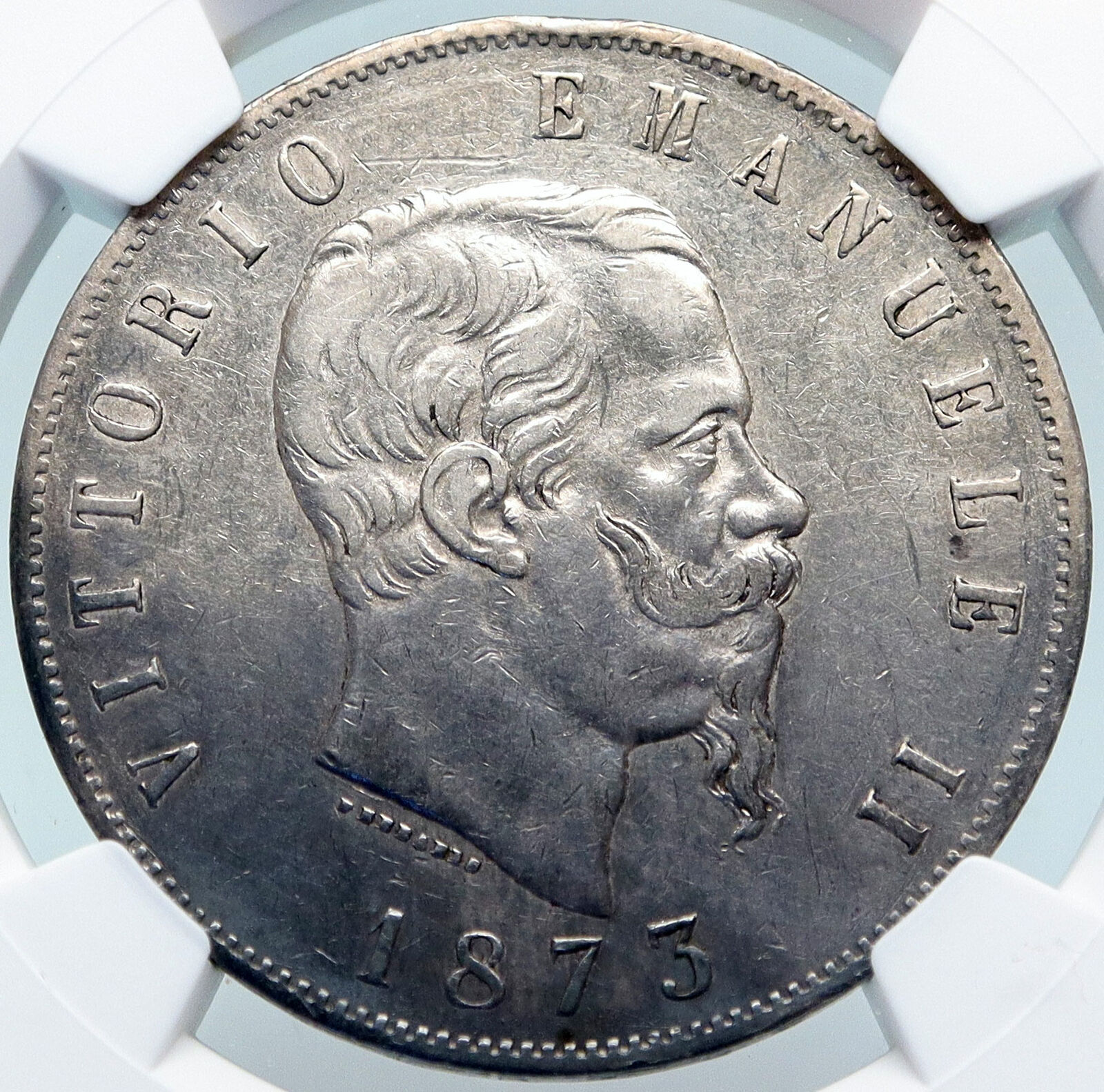
|
Vatican City – Paul VI – Pope: June 21, 1963 – August 6, 1978
FAO Commemorative issue
1968 Silver 500 Lire 29.3mm (11.00 grams) 0.835 Silver (0.2953 oz. ASW)
Reference: KM# 107 | Mintage: 110,000
PAVLVS VI P.MAX.A.VI G.PIRRONE-MONASSI INC; Bust of Pope Paul VI left.
CITTA’ DEL VATICANO LIRE 500, Wheat ears forming radiant cross.
You are bidding on the exact item pictured, provided with a Certificate of Authenticity and Lifetime Guarantee of Authenticity.
The Food and Agriculture Organization of the United Nations (FAO) ] is a specialized agency of the United Nations that leads international efforts to defeat hunger and improve nutrition and food security. Its Latin motto, fiat panis, translates to “let there be bread”. It was founded in October 1945.
The FAO is composed of 197 member states. It is headquartered in Rome, Italy, and maintains regional and field offices around the world, operating in over 130 countries. It helps governments and development agencies coordinate their activities to improve and develop agriculture, forestry, fisheries, and land and water resources. It also conducts research, provides technical assistance to projects, operates educational and training programs, and collects data on agricultural output, production, and development.
The FAO is governed by a biennial conference representing each member country and the European Union, which elects a 49-member executive council. The Director-General, currently Qu Dongyu of China, serves as the chief administrative officer. There are various committees governing matters such as finance, programs, agriculture, and fisheries.
In Christianity, feeding the multitude comprises two separate miracles of Jesus, reported in the Gospels, in which Jesus used modest resources to feed thousands of followers who had gathered to see him heal the sick. The first miracle, the “Feeding of the 5,000”, is the only miracle�”aside from the resurrection�”recorded in all four gospels (Matthew 14:13�”21; Mark 6:31�”44; Luke 9:12�”17; John 6:1�”14). The second miracle, the “Feeding of the 4,000”, with seven loaves of bread and a few small fish, is reported in Matthew 15:32�”39[6] and Mark 8:1�”9[7] but not by Luke or John.

Feeding the multitude. Armenian manuscript. Daniel of Uranc gospel, 1433.
The Feeding of the 5,000 is also known as the “miracle of the five loaves and two fish”; the Gospel of John reports that Jesus used five loaves and two fish supplied by a boy to feed a multitude. According to the Gospel of Matthew, when Jesus heard that John the Baptist had been killed, he withdrew by boat privately to a solitary place. Luke specifies that the place was near Bethsaida. The crowds followed Jesus on foot from the towns. When Jesus landed and saw a large crowd, he had compassion on them and healed their sick. As evening approached, the disciples came to him and said, “This is a remote place, and it’s already getting late. Send the crowds away, so they can go to the villages and buy themselves some food.”
Jesus said that they did not need to go away, and therefore the disciples were to give them something to eat. They said that they only had five loaves and two fish, which Jesus asked to be brought to him. Jesus directed the people to sit down in groups on the grass. In Mark’s Gospel, the crowds sat in groups of 50 and 100,[8] and in Luke’s gospel, Jesus’s instructions were to seat the crowd in groups of 50, implying that there were 100 such groups.
Taking the five loaves and the two fish and looking up to heaven, Jesus gave thanks and broke them. Then he gave them to the disciples, and the disciples gave them to the people. They all ate and were satisfied, and the disciples picked up twelve baskets full of broken pieces that were left over. The number of those who ate was about five thousand men, besides women and children.
In John’s gospel, the multitude was attracted to Jesus because of the healing works he performed, and the feeding of the multitude was taken as a further sign that Jesus was the Messiah.
Pope Paul VI (Latin: Paulus VI; Italian: Paolo VI), born Giovanni Battista Enrico Antonio Maria Montini ( 26 September 1897 – 6 August 1978), reigned as Pope from 21 June 1963 to his death in 1978. Succeeding Pope John XXIII, he continued the Second Vatican Council which he closed in 1965, implementing its numerous reforms, and fostered improved ecumenical relations with Eastern Orthodox and Protestants, which resulted in many historic meetings and agreements. Montini served in the Vatican’s Secretariat of State from 1922 to 1954. While in the Secretariat of State, Montini and Domenico Tardini were considered as the closest and most influential colleagues of Pope Pius XII, who in 1954 named him Archbishop of Milan, the largest Italian diocese. Montini later became the Secretary of the Italian Bishops Conference. John XXIII elevated him to the College of Cardinals in 1958, and after the death of John XXIII, Montini was considered one of his most likely successors.
Upon his election to the papacy, Montini took the name Paul VI. He re-convened the Second Vatican Council, which was automatically closed with the death of John XXIII, and gave it priority and direction. After the council had concluded its work, Paul VI took charge of the interpretation and implementation of its mandates, often walking a thin line between the conflicting expectations of various groups within Catholicism. The magnitude and depth of the reforms affecting all fields of Church life during his pontificate exceeded similar reform policies of his predecessors and successors. Paul VI was a Marian devotee, speaking repeatedly to Marian congresses and mariological meetings, visiting Marian shrines and issuing three Marian encyclicals. Following his famous predecessor Saint Ambrose of Milan, he named Mary as the Mother of the Church during the Second Vatican Council. Paul VI sought dialogue with the world, with other Christians, other religions, and atheists, excluding nobody. He saw himself as a humble servant for a suffering humanity and demanded significant changes of the rich in North America and Europe in favour of the poor in the Third World. His positions on birth control, promulgated most famously in the 1968 encyclical Humanae vitae, and other political issues, were often controversial, especially in Western Europe and North America.
Pope Benedict XVI declared that the late pontiff lived a life of heroic virtue and conferred the title of Venerable upon him. Pope Francis beatified him on 19 October 2014 after the recognition of a miracle attributed to his intercession. His liturgical feast is celebrated on the date of his birth on 26 September.
|