|
Zambia – under Kenneth Kaunda – President: 24 October 1964 – 2 November 1991
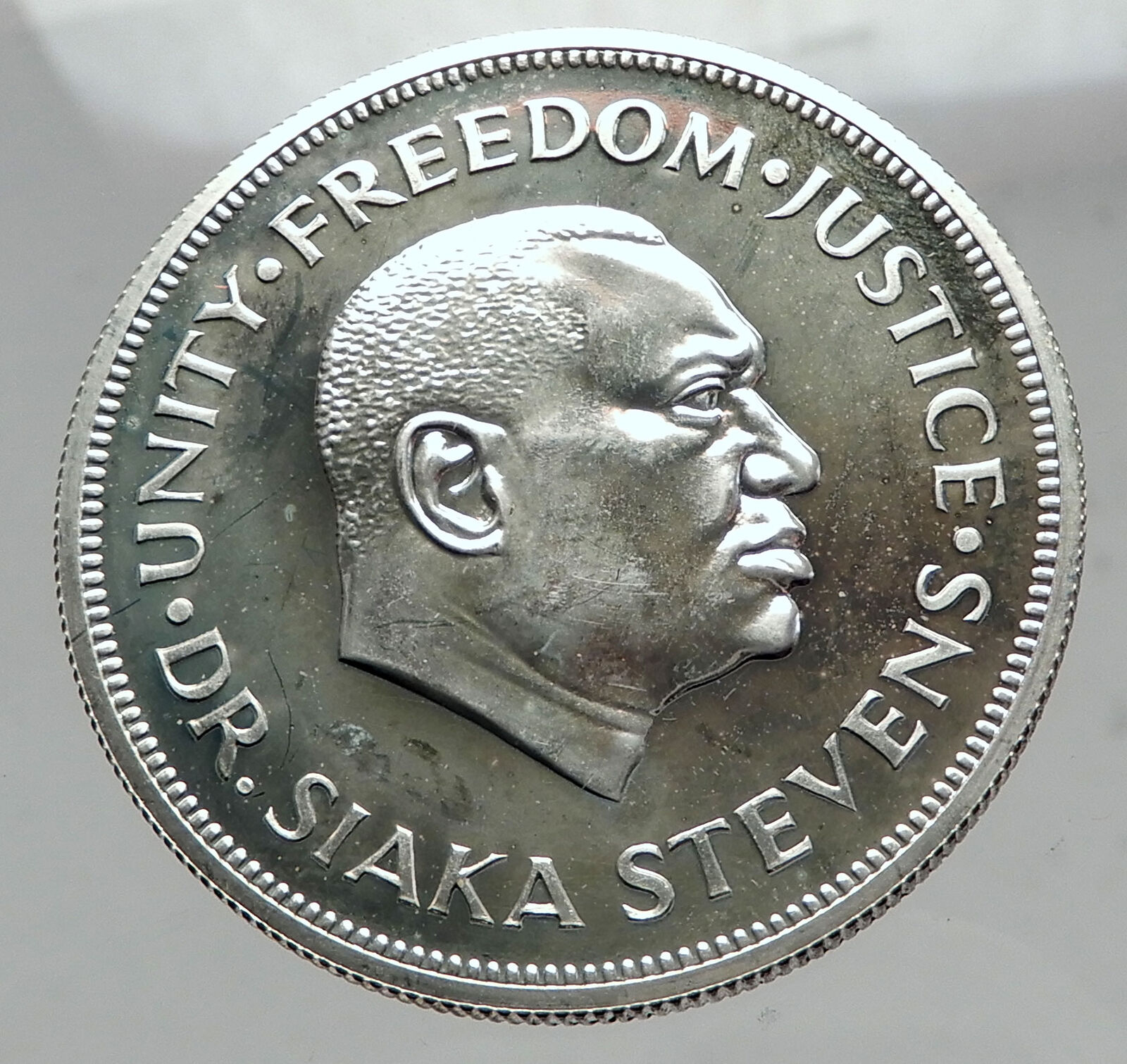
F.A.O. Commemorative issue
1960 Copper-nickel 50 Ngwee 30mm (11.66 grams)
Reference: KM# 14, Schön# 14
ZAMBIA 1964 · 24TH OCTOBER 1969, President Kaunda facing right.
GROW MORE FOOD 50 FIFTY NGWEE FOR MANKIND, Corn cob.
You are bidding on the exact item pictured, provided with a Certificate of Authenticity and Lifetime Guarantee of Authenticity.
The Food and Agriculture Organization of the United Nations (FAO) ] is a specialized agency of the United Nations that leads international efforts to defeat hunger and improve nutrition and food security. Its Latin motto, fiat panis, translates to “let there be bread”. It was founded in October 1945.
The FAO is composed of 197 member states. It is headquartered in Rome, Italy, and maintains regional and field offices around the world, operating in over 130 countries. It helps governments and development agencies coordinate their activities to improve and develop agriculture, forestry, fisheries, and land and water resources. It also conducts research, provides technical assistance to projects, operates educational and training programs, and collects data on agricultural output, production, and development.
The FAO is governed by a biennial conference representing each member country and the European Union, which elects a 49-member executive council. The Director-General, currently Qu Dongyu of China, serves as the chief administrative officer. There are various committees governing matters such as finance, programs, agriculture, and fisheries.


Zambia, officially the Republic of Zambia, is a landlocked country in Southern Africa, neighbouring the Democratic Republic of the Congo to the north, Tanzania to the north-east, Malawi to the east, Mozambique, Zimbabwe, Botswana and Namibia to the south, and Angola to the west. The capital city is Lusaka, in the south-central part of Zambia. The population is concentrated mainly around Lusaka in the south and the Copperbelt Province to the northwest, the core economic hubs of the country.
Originally inhabited by Khoisan peoples, the region was affected by the Bantu expansion of the thirteenth century. After visits by European explorers in the eighteenth century, the region became the British protectorates of Barotziland-North-Western Rhodesia and North-Eastern Rhodesia towards the end of the nineteenth century. These were merged in 1911 to form Northern Rhodesia. For most of the colonial period, Zambia was governed by an administration appointed from London with the advice of the British South Africa Company.

On 24 October 1964, Zambia became independent of the United Kingdom and prime minister Kenneth Kaunda became the inaugural president. Kaunda’s socialist United National Independence Party (UNIP) maintained power from 1964 until 1991. Kaunda played a key role in regional diplomacy, cooperating closely with the United States in search of solutions to conflicts in Rhodesia (Zimbabwe), Angola, and Namibia. From 1972 to 1991 Zambia was a one-party state with the UNIP as the sole legal political party under the motto “One Zambia, One Nation”. Kaunda was succeeded by Frederick Chiluba of the social-democratic Movement for Multi-Party Democracy in 1991, beginning a period of social-economic growth and government decentralisation. Levy Mwanawasa, Chiluba’s chosen successor, presided over Zambia from January 2002 until his death in August 2008, and is credited with campaigns to reduce corruption and increase the standard of living. After Mwanawasa’s death, Rupiah Banda presided as Acting President before being elected President in 2008. Holding office for only three years, Banda stepped down after his defeat in the 2011 elections by Patriotic Front party leader Michael Sata. Sata died on 28 October 2014, the second Zambian president to die in office. Guy Scott served briefly as interim president until new elections were held on 20 January 2015, in which Edgar Lungu was elected as the sixth President.
In 2010, the World Bank named Zambia one of the world’s fastest economically reformed countries. The Common Market for Eastern and Southern Africa (COMESA) is headquartered in Lusaka.
|