|
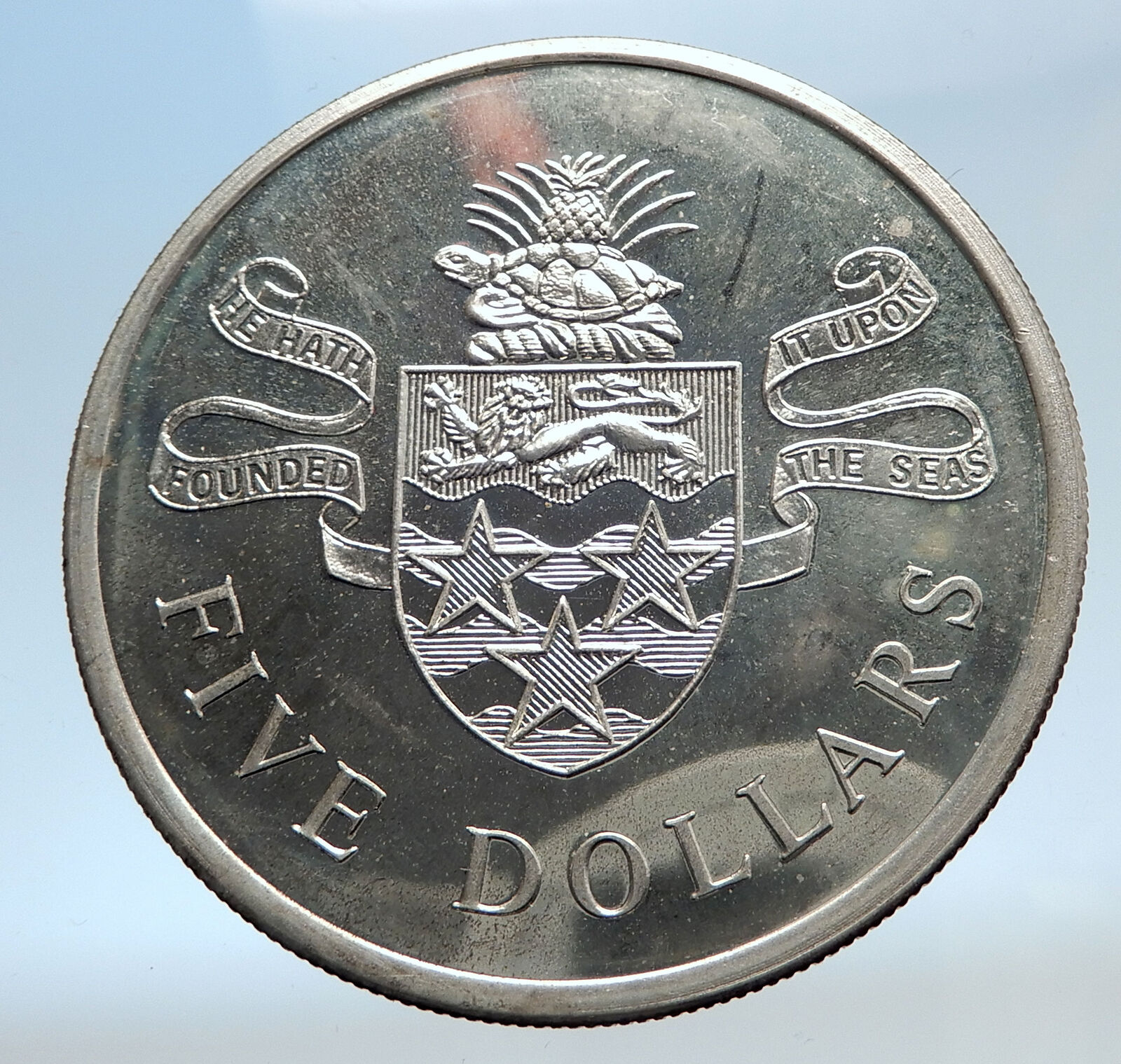
Montserrat (British Overseas Territories) – Commemorative issue – Inauguration of the Caribbean Development Bank – FAO
1970 Proof Copper-nickel 4 Dollars 38.5mm (28.3 grams)
Reference: KM# 30, Schön# 1 | Mintage: 2000 for proof issue
Coat of Arms (Consist of a shield featuring a lady representing Erin, the female personification of Ireland. The lady is holding a harp in one hand & embraces with another arm the Cross). Script: Latin Lettering: INAUGURATION OF THE CARIBBEAN DEVELOPMENT BANK MONTSERRAT 1970
Banana Plant Lettering: GROW MORE FOOD FOR MANKIND 4 DOLLARS
You are bidding on the exact item pictured, provided with a Certificate of Authenticity and Lifetime Guarantee of Authenticity.
 The Food and Agriculture Organization of the United Nations (FAO) is a specialized agency of the United Nations that leads international efforts to defeat hunger and improve nutrition and food security. Its Latin motto, fiat panis, translates to “let there be bread”. It was founded on 16 October 1945.
The FAO comprises 195 members, including 194 countries and the European Union. Its headquarters is in Rome, Italy, and it maintains regional and field offices worldwide, operating in over 130 countries. It helps governments and development agencies coordinate their activities to improve and develop agriculture, forestry, fisheries, and land and water resources. It also conducts research, provides technical assistance to projects, operates educational and training programs, and collects agricultural output, production, and development data.
The FAO is governed by a biennial conference representing each member country and the European Union, which elects a 49-member executive council. The Director-General, as of 2019 Qu Dongyu of China, serves as the chief administrative officer. Various committees govern matters such as finance, programs, agriculture, and fisheries.
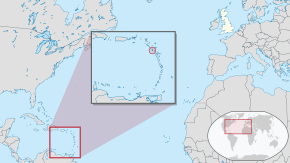
 Montserrat (is a British Overseas Territory in the Caribbean. It is part of the Leeward Islands, the northern portion of the Lesser Antilles chain of the West Indies. Montserrat is about 16 km (10 mi) long and 11 km (7 mi) wide, with roughly 40 km (25 mi) of coastline. It is nicknamed “The Emerald Isle of the Caribbean” both for its resemblance to coastal Ireland and for the Irish ancestry of many of its inhabitants. Montserrat is the only non-fully sovereign full member of the Caribbean Community and the Organisation of Eastern Caribbean States.
On 18 July 1995, the previously dormant Soufrière Hills volcano, in the southern part of the island, became active. Eruptions destroyed Montserrat’s Georgian era capital city of Plymouth. Between 1995 and 2000, two-thirds of the island’s population was forced to flee, primarily to the United Kingdom, leaving fewer than 1,200 people on the island in 1997 (rising to nearly 5,000 by 2016). The volcanic activity continues, mostly affecting the vicinity of Plymouth, including its docking facilities, and the eastern side of the island around the former W. H. Bramble Airport, the remnants of which were buried by flows from volcanic activity on 11 February 2010.
An exclusion zone, encompassing the southern part of the island to as far north as parts of the Belham Valley, was imposed because of the size of the existing volcanic dome and the resulting potential for pyroclastic activity. Visitors are generally not permitted entry into the exclusion zone, but a view of the destruction of Plymouth can be seen from the top of Garibaldi Hill in Isles Bay. Relatively quiet since early 2010, the volcano continues to be closely monitored by the Montserrat Volcano Observatory.
 In 2015, it was announced that planning would begin on a new town and port at Little Bay on the northwest coast of the island. While additional plans proceeded, the centre of government and businesses was moved to Brades.
|