|
Peru
Tupac Amaru
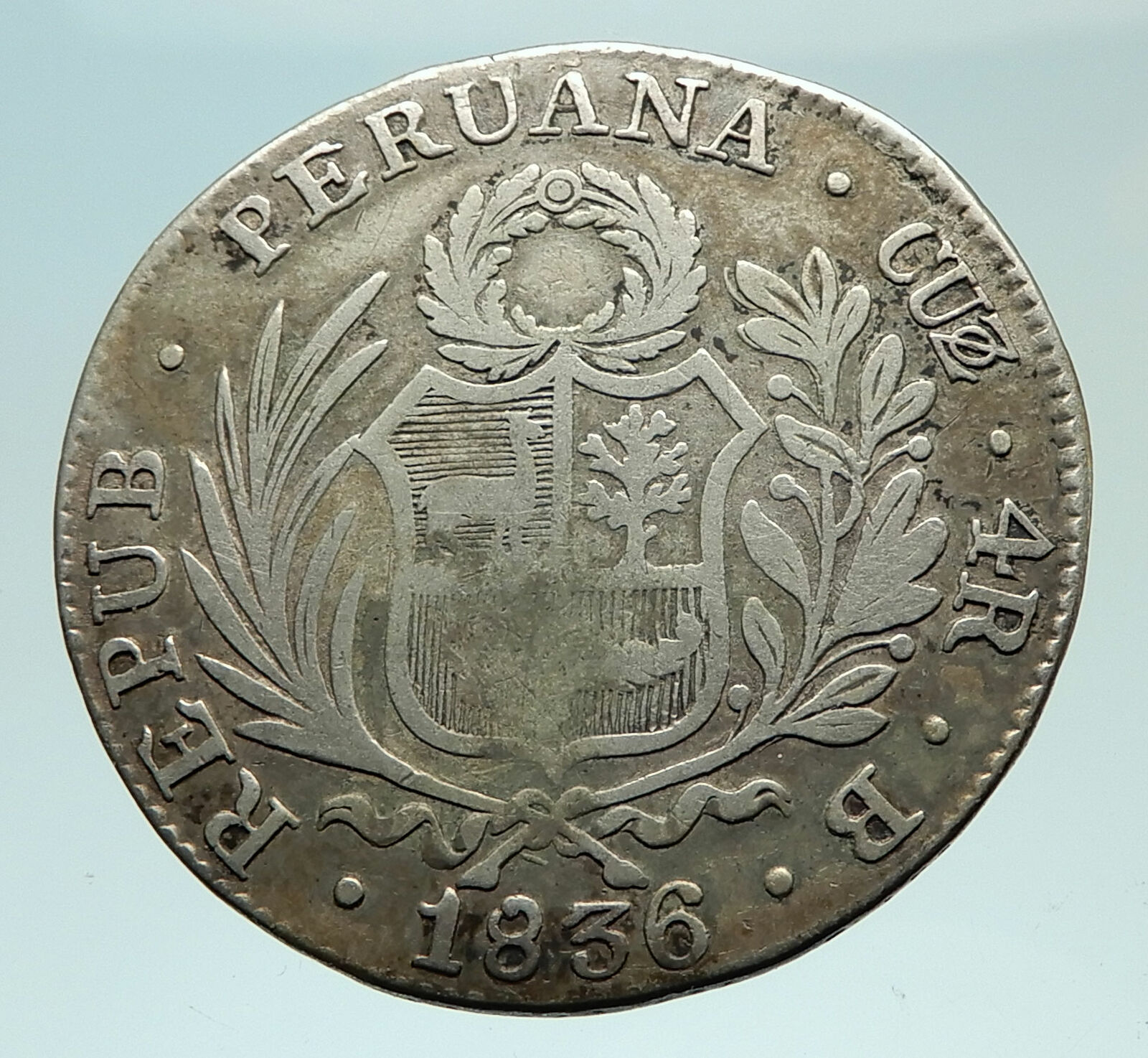
1973 Silver 10 Soles 30mm (11.37 grams) Rare Silver Issue
Reference: Cf KM# 258
BANCO CENTRAL DE RESERVA DEL PERU 1973, Coat-of-arms.
SESQUICENTENARIO DE LA INDEPENDENCIA DEL PERU TUPAC AMARU 10 DIEZ SOLES DE ORO, Tupac Amaru facing 3/4 right.
You are bidding on the exact item pictured, provided with a Certificate of Authenticity and Lifetime Guarantee of Authenticity.
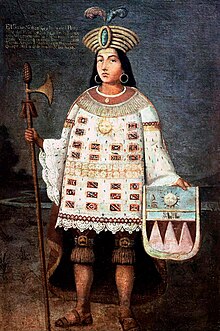 Túpac Amaru (1545 – 24 September 1572) was the last monarch (Sapa Inca) of the Neo-Inca State, the remnants of the Inca Empire in Vilcabamba, Peru. He was executed by the Spanish following a months-long pursuit after the fall of the last stronghold of the Neo-Inca State.
The name is also spelled Tupac, Topa, Tupaq, Thupaq, Thupa, or other similar variants, and Amaro instead of Amaru. It comes from Quechua Thupaq, “Royal” or “Shining”, and Amaru, “Serpent” (or a mythological serpent-like being).
Following the Spanish conquest of Peru in the 1530s, a few members of the royal family established the small independent Neo-Inca State in Vilcabamba, which was located in the relatively inaccessible Upper Amazon to the northeast of Cusco. The founder of this state was Manco Inca Yupanqui (also known as Manco Cápac II), who had initially allied himself with the Spanish, then led an unsuccessful war against them before establishing himself in Vilcabamba in 1540. After a Spanish attack in 1544 in which Manco Inca Yupanqui was killed, his son Sayri Tupac assumed the title of Sapa Inca (emperor, literally “only Inca”), before accepting Spanish authority in 1558, moving to Cuzco, and dying (perhaps by poison) in 1561. He was succeeded in Vilcabamba by his brother Titu Cusi, who himself died in 1571. Túpac Amaru, another brother of the two preceding emperors, then succeeded to the title in Vilcabamba.
At this time the Spanish were still unaware of the death of the previous Sapa Inca (Titu Cusi) and had routinely sent two ambassadors to continue ongoing negotiations being held with Titu Cusi. They were both killed on the border by an Inca captain.
Using the justification that the Incas had “broken the inviolate law observed by all nations of the world regarding ambassadors” the new viceroy, Francisco de Toledo, Count of Oropesa, decided to attack and conquer Vilcabamba. He declared war on 14 April 1572. The first engagement of the war commenced in the Vilcabamba valley on 1 June. The Inca people attacked first with much spirit despite being only lightly armed. Again and again, they attempted to lift the siege held by the Spanish and their native allies but each time they were forced to retreat. On 24 June the Spanish entered Vilcabamba to find it deserted and the Sapa Inca gone. The city had been entirely destroyed, and the last remnants of the Inca Empire, the Neo-Inca State now officially ceased to exist.
Túpac Amaru had left the previous day with a party of about 100 and headed west into the lowland forests. The group, which included his generals and family members, had then split up into smaller parties in an attempt to avoid capture.
Three groups of Spanish soldiers pursued them. One group captured Titu Cusi’s son and wife. A second returned with military prisoners along with gold, silver and other precious jewels. The third group returned with Túpac Amaru’s two brothers, other relatives and several of his generals. The Sapa Inca and his commander remained at large.
Following this, a group of forty hand-picked soldiers under Martín García Óñez de Loyola set out to pursue them. They followed the Masahuay river for 170 miles, where they found an Inca warehouse with quantities of gold and the Inca’s tableware. The Spanish captured a group of Chunco and compelled them to tell them what they had seen, and if they had seen the Sapa Inca. They reported that he had gone down river, by boat, to a place called Momorí. The Spaniards then constructed five rafts and pursued them.
At Momorí, they discovered that Tupac Amaru had escaped by land. They followed with the help of the Manarí, who advised which path the Inca had followed and reported that Túpac was slowed by his wife, who was about to give birth. After a fifty-mile march, they saw a campfire around nine o’clock at night. They found the Sapa Inca Túpac Amaru and his wife warming themselves. They assured them that no harm would come to them and secured their surrender. Túpac Amaru was arrested.
The captives were brought back to the ruins of Vilcabamba and together they were all marched into Cuzco on 21 September. The invaders also brought the mummified remains of Manco Cápac and Titu Cusi and a gold statue of Punchao, a representation of the Inca’s lineage containing the mortal remains of the hearts of the deceased Inca kings. These sacred items were then destroyed.
The five captured Inca generals received a summary trial and were sentenced to death by hanging. Several had already died of torture or disease.
The trial of the Sapa Inca himself began a couple of days later. Túpac Amaru was convicted of the murder of the priests in Vilcabamba. Túpac Amaru was sentenced to be beheaded. It was reported in various sources in 1598 that numerous Catholic clerics, convinced of Túpac Amaru’s innocence, pleaded to no avail, on their knees, that the Inca be sent to Spain for a trial instead of being executed.
Many have argued that Viceroy Toledo, in executing a head of state recognized by the Spanish as an independent king, exceeded his authority and committed a crime within the political ideas of his own time. Other claims have been made to the contrary — that Túpac Amaru was in rebellion (his predecessors having allegedly accepted Spanish authority), that Toledo had tried peaceful means to settle differences, that three of his ambassadors to the Inca were murdered, and that Túpac Amaru subsequently raised an army to resist the colonial army. The King of Spain, Philip II, disapproved of the execution.
An eyewitness report from the day recalls him riding a mule with hands tied behind his back and a rope around his neck. Other witnesses reported there were great crowds and the Sapa Inca was surrounded by hundreds of guards with lances. In front of the Cathedral of Santo Domingo in the central square of Cuzco a black-draped scaffold had been erected. Reportedly 10,000 to 15,000 witnesses were present.
Túpac Amaru mounted the scaffold accompanied by the Bishop of Cuzco. As he did, it was reported by the same witnesses that a “multitude of Indians, who completely filled the square, saw that lamentable spectacle ] that their lord and Inca was to die, they deafened the skies, making them reverberate with their cries and wailing.”
As reported by eyewitnesses Baltasar de Ocampa and Friar Gabriel de Oviedo, Prior of the Dominicans at Cuzco, the Sapa Inca raised his hand to silence the crowds, and his last words were: “Ccollanan Pachacamac ricuy auccacunac yawarniy hichascancuta.” (“Pacha Kamaq, witness how my enemies shed my blood.”)
 Peru, officially the Republic of Peru, is a country in western South America. It is bordered in the north by Ecuador and Colombia, in the east by Brazil, in the southeast by Bolivia, in the south by Chile, and in the west by the Pacific Ocean. Peru is an extremely biodiverse country with habitats ranging from the arid plains of the Pacific coastal region in the west to the peaks of the Andes mountains vertically extending from the north to the southeast of the country to the tropical Amazon Basin rainforest in the east with the Amazon river.

Peruvian territory was home to several ancient cultures, ranging from the Norte Chico civilization in the 32nd century BC, the oldest civilization in the Americas, to the Inca Empire, the largest and most sophisticated state in pre-Columbian America. The Spanish Empire conquered the region in the 16th century and established a Viceroyalty that encompassed most of its South American colonies, with its capital in Lima. Peru formally proclaimed independence in 1821, and following the military campaigns of José de San Martín and Simón Bolívar, and the decisive battle of Ayacucho, Peru secured independence in 1824. In the ensuing years, the country enjoyed relative economic and political stability, which ended shortly before the War of the Pacific with Chile. Throughout the 20th century, Peru endured armed territorial disputes, coups, social unrest, and internal conflicts, as well as periods of stability and economic upswing. Alberto Fujimori was elected to the presidency in 1990; his government was credited with economically stabilizing Peru and successfully ending the Shining Path insurgency, though he was widely accused of human rights violations and suppression of political dissent. Fujimori left the presidency in 2000 and was charged with human rights violations and imprisoned until his pardon by President Pedro Pablo Kuczynski in 2017.
 Peru is a representative democratic republic divided into 25 regions. It is classified as an emerging market[9] with a high level of human development and an upper middle income level with a poverty rate around 19 percent. It is one of the region’s most prosperous economies with an average growth rate of 5.9% and it has one of the world’s fastest industrial growth rates at an average of 9.6%. Its main economic activities include mining, manufacturing, agriculture and fishing; along with other growing sectors such as telecommunications and biotechnology. The country forms part of The Pacific Pumas, a political and economic grouping of countries along Latin America’s Pacific coast that share common trends of positive growth, stable macroeconomic foundations, improved governance and an openness to global integration. Peru ranks high in social freedom and it has the third lowest homicide rate in South America; it is an active member of the Asia-Pacific Economic Cooperation, the Pacific Alliance, the Trans-Pacific Partnership and the World Trade Organization; and is considered as a middle power.
Peru has a multiethnic population of over 31 million, which includes Amerindians, Europeans, Africans and Asians. The main spoken language is Spanish, although a significant number of Peruvians speak Quechua, Aymara or other native languages. This mixture of cultural traditions has resulted in a wide diversity of expressions in fields such as art, cuisine, literature, and music.
|