|
Barbados
1974 Proof Brass 5 Cents 21mm (3.75 grams)
Reference: KM# 11 (1973-2007) | Engraver: Philip Nathan
PRIDE AND INDUSTRY BARBADOS, National Coat-of-Arms of Barbados.
PN FIVE CENTS, South Point Lighthouse with light beams amid clouds.
You are bidding on the exact item pictured, provided with a Certificate of Authenticity and Lifetime Guarantee of Authenticity.
 South Point Lighthouse is a lighthouse located in the south of Barbados. Its height is 89 feet (27 m). It is the oldest lighthouse in Barbados. It was brought to Barbados in 1852, one year after being shown at London’s Great Exhibition, and reassembled on the southernmost point of the island. Although still listed as active, the lighthouse is now considered to be more of a national landmark and tourist attraction, with its grounds (but not tower) being made open to the public. The lighthouse has been depicted on the reverse of the 5 cent coin of the Barbadian coinage since 1973.
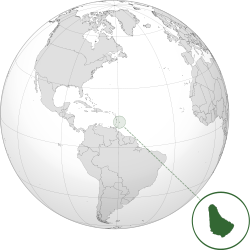
 Barbados is an island country in the Lesser Antilles of the West Indies, in the Caribbean region of North America. It is 34 kilometres (21 miles) in length and up to 23 km (14 mi) in width, covering an area of 432 km2 (167 sq mi). It is situated in the western area of the North Atlantic and 100 km (62 mi) east of the Windward Islands and the Caribbean Sea;[6] therein, Barbados is east of the Windwards, part of the Lesser Antilles, roughly at 13°N of the equator. It is about 168 km (104 mi) east of both the countries of Saint Lucia and Saint Vincent and the Grenadines and 400 km (250 mi) north-east of Trinidad and Tobago. Barbados is outside the principal Atlantic hurricane belt. Its capital and largest city is Bridgetown.
 Inhabited by Kalinago people since the 13th century, and prior to that by other Amerindians, Barbados was visited by Spanish navigators in the late 15th century and claimed for the Spanish Crown. It first appeared in a Spanish map in 1511. The Portuguese visited the island in 1536, but they left it unclaimed, with their only remnants being an introduction of wild hogs for a good supply of meat whenever the island was visited. An English ship, the Olive Blossom, arrived in Barbados in 1625; its men took possession of it in the name of King James I. In 1627, the first permanent settlers arrived from England, and it became an English and later British colony. As a wealthy sugar colony, it became an English centre of the African slave trade until that trade was outlawed in 1807, with final emancipation of slaves in Barbados occurring over a period of years from 1833.
 On 30 November 1966, Barbados became an independent state and Commonwealth realm with the British monarch (currently Queen Elizabeth II) as hereditary head of state. It has a population of 284,996 people, predominantly of African descent. Despite being classified as an Atlantic island, Barbados is considered to be a part of the Caribbean, where it is ranked as a leading tourist destination. Forty percent of the tourists come from the UK, with the US and Canada making up the next large groups of visitors to the island.
|


