|
Philippines – I.M.F. Meeting
1976 Proof Silver 50 Piso 40mm (27.40 grams) 0.925 Silver (0.8149 oz. ASW) San Francisco Mint
Reference: KM# 215, Schön# 54
Certification: NGC Ancients PF 69 ULTRA CAMEO 2863749-003
REPUBLIKA NG PILIPINAS MANILA * 50 PISO *, Map of the Philippines, Manila marked.
BOARDS OF GOVERNORS ANNUAL MEETINGS 1976 MANILA, Stylized star in center of world globe emblems.
You are bidding on the exact item pictured, provided with a Certificate of Authenticity and Lifetime Guarantee of Authenticity.
 The International Monetary Fund (IMF) is an international organization, headquartered in Washington, D.C., consisting of 190 countries working to foster global monetary cooperation, secure financial stability, facilitate international trade, promote high employment and sustainable economic growth, and reduce poverty around the world while periodically depending on the World Bank for its resources. Formed in 1944 at the Bretton Woods Conference primarily by the ideas of Harry Dexter White and John Maynard Keynes, it came into formal existence in 1945 with 29 member countries and the goal of reconstructing the international payment system. It now plays a central role in the management of balance of payments difficulties and international financial crises. Countries contribute funds to a pool through a quota system from which countries experiencing balance of payments problems can borrow money. As of 2016, the fund had XDR 477 billion (about US$667 billion).
 Through the fund and other activities such as the gathering of statistics and analysis, surveillance of its members’ economies, and the demand for particular policies, the IMF works to improve the economies of its member countries. The organization’s objectives stated in the Articles of Agreement are: to promote international monetary co-operation, international trade, high employment, exchange-rate stability, sustainable economic growth, and making resources available to member countries in financial difficulty. IMF funds come from two major sources: quotas and loans. Quotas, which are pooled funds of member nations, generate most IMF funds. The size of a member’s quota depends on its economic and financial importance in the world. Nations with larger economic importance have larger quotas. The quotas are increased periodically as a means of boosting the IMF’s resources in the form of special drawing rights.
The current Managing Director (MD) and Chairwoman of the IMF is Bulgarian economist Kristalina Georgieva, who has held the post since October 1, 2019. Gita Gopinath was appointed as Chief Economist of IMF from 1 October 2018. Prior to her IMF appointment she was economic adviser to the Chief Minister of Kerala, India.
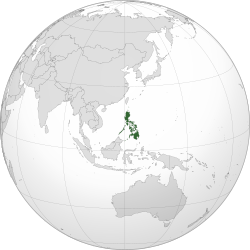  The Philippines, officially known as the Republic of the Philippines (Filipino: Republika ng Pilipinas), is a sovereign island country in Southeast Asia situated in the western Pacific Ocean. It consists of about 7,641 islands that are categorized broadly under three main geographical divisions from north to south: Luzon, Visayas, and Mindanao. The capital city of the Philippines is Manila and the most populous city is Quezon City, both part of Metro Manila.
 The Philippines’ location on the Pacific Ring of Fire and close to the equator makes the Philippines prone to earthquakes and typhoons, but also endows it with abundant natural resources and some of the world’s greatest biodiversity. The Philippines has an area of approximately 300,000 square kilometers (115,831 sq mi), and a population of more than 100 million with faster growth than any other east Asian country. It is the seventh-most populated country in Asia and the 12th most populated country in the world. An additional 12 million Filipinos live overseas, comprising one of the world’s largest diasporas. Multiple ethnicities and cultures are found throughout the islands. In prehistoric times, Negritos were some of the archipelago’s earliest inhabitants. They were followed by successive waves of Austronesian peoples. Exchanges with Chinese, Malay, Indian, and Islamic states occurred. Then, various nations were established under the rule of Datus, Rajahs, Sultans or Lakans.
The arrival of Ferdinand Magellan in Homonhon, Eastern Samar in 1521 marked the beginning of Hispanic colonization. In 1543, Spanish explorer Ruy López de Villalobos named the archipelago Las Islas Filipinas in honor of Philip II of Spain. With the arrival of Miguel López de Legazpi from Mexico City, in 1565, the first Hispanic settlement in the archipelago was established. The Philippines became part of the Spanish Empire for more than 300 years. This resulted in Roman Catholicism becoming the dominant religion. During this time, Manila became the western hub of the trans-Pacific trade connecting Asia with Acapulco in the Americas using Manila galleons.
As the 19th century gave way to the 20th, there followed in quick succession the Philippine Revolution, which spawned the short-lived First Philippine Republic, followed by the bloody Philippne-American War of conquest by US military force. Aside from the period of Japanese occupation, the United States retained sovereignty over the islands until after World War II, when the Philippines was recognized as an independent nation. Since then, the Philippines has often had a tumultuous experience with democracy, which included the overthrow of a dictatorship by a non-violent revolution.
The nation’s large population and economic potential have led it to be classified as a middle power. It is a founding member of the United Nations, World Trade Organization, Association of Southeast Asian Nations, the Asia-Pacific Economic Cooperation forum, and the East Asia Summit. It also hosts the headquarters of the Asian Development Bank. The Philippines is considered to be an emerging market and a newly industrialized country, which has an economy transitioning from being one based on agriculture to one based more on services and manufacturing.
|


