|
Trinidad and Tobago
F.A.O. – Food for All Commemorative issue
1979 Copper-nickel 1 Dollar 32mm (12.7 grams)
Reference: KM# 38, Schön# 37
REPUBLIC OF TRINIDAD AND TOBAGO TOGETHER WE ASPIRE TOGETHER WE ACHIEVE 1979 around the national coat-of-arms.
FOOD FOR ALL1 DOLLAR, Value in front of leaves.
You are bidding on the exact item pictured, provided with a Certificate of Authenticity and Lifetime Guarantee of Authenticity..
The Food and Agriculture Organization of the United Nations (FAO) ] is a specialized agency of the United Nations that leads international efforts to defeat hunger and improve nutrition and food security. Its Latin motto, fiat panis, translates to “let there be bread”. It was founded in October 1945.
The FAO is composed of 197 member states. It is headquartered in Rome, Italy, and maintains regional and field offices around the world, operating in over 130 countries. It helps governments and development agencies coordinate their activities to improve and develop agriculture, forestry, fisheries, and land and water resources. It also conducts research, provides technical assistance to projects, operates educational and training programs, and collects data on agricultural output, production, and development.
The FAO is governed by a biennial conference representing each member country and the European Union, which elects a 49-member executive council. The Director-General, currently Qu Dongyu of China, serves as the chief administrative officer. There are various committees governing matters such as finance, programs, agriculture, and fisheries.
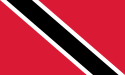 Tobago, is a twin island sovereign state that is the southernmost nation of the West Indies in the Caribbean. It is situated 130 kilometres (81 miles) south of Grenada off the northern edge of the South American mainland, 11 kilometres (6.8 miles) off the coast of northeastern Venezuela. It shares maritime boundaries with Barbados to the northeast, Grenada to the northwest, Guyana to the southeast, and Venezuela to the south and west.
 The island of Trinidad was a Spanish colony from the arrival of Christopher Columbus in 1498 until Spanish governor Don José María Chacón surrendered the island to a British fleet under the command of Sir Ralph Abercromby in 1797. During the same period, the island of Tobago changed hands among Spanish, British, French, Dutch and Courlander colonizers more times than any other island in the Caribbean. Trinidad and Tobago were ceded to Britain in 1802 under the Treaty of Amiens as separate states and unified in 1889. Trinidad and Tobago obtained independence in 1962 and became a republic in 1976.
 As of 2015, Trinidad and Tobago had the third highest GDP per capita based on purchasing power parity (PPP) in the Americas after the United States and Canada. It is recognised by the World Bank as a high-income economy. Unlike most of the English-speaking Caribbean, the economy is primarily industrial with an emphasis on petroleum and petrochemicals; much of the nation’s wealth is derived from its large reserves of oil and natural gas.
Trinidad and Tobago is known for its Carnival celebration and as the birthplace of steelpan, the limbo, and music styles such as calypso, soca, parang and chutney.
|


