|
Belgium
Hapsburg Netherlands under Charles V
30th Anniversary – Treaties of Rome
1987 Silver 5 Ecu 37mm (22.85 grams) 0.833 Silver (0.612 oz. ASW)
Reference: KM# 166, LA# ECM-1, Schön# 143
Belgique België Belgien 5 ecu 1987, Stars surround inscription.
CAROLVS·DG·ROM·IMP.HISP. REX·DVX·BVRG:C·F, Charles V facing right.
You are bidding on the exact item pictured, provided with a Certificate of Authenticity and Lifetime Guarantee of Authenticity.
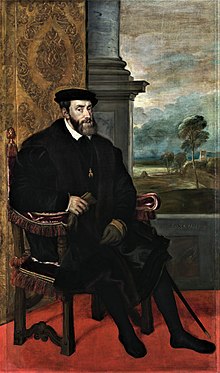 Charles V (24 February 1500 – 21 September 1558) was Holy Roman Emperor and Archduke of Austria from 1519 to 1556, King of Spain (Castile and Aragon) from 1516 to 1556, and Lord of the Netherlands as titular Duke of Burgundy from 1506 to 1555. As he was head of the rising House of Habsburg during the first half of the 16th century, his dominions in Europe included the Holy Roman Empire, extending from Germany to northern Italy with direct rule over the Austrian hereditary lands and the Burgundian Low Countries, and the Kingdom of Spain with its southern Italian possessions of Naples, Sicily, and Sardinia. Furthermore, he oversaw both the continuation of the long-lasting Spanish colonization of the Americas and the short-lived German colonization of the Americas. The personal union of the European and American territories of Charles V was the first collection of realms labelled “the empire on which the sun never sets”.
Charles was born in the County of Flanders to Philip of Habsburg (son of Maximilian I of Habsburg and Mary of Burgundy) and Joanna of Trastámara (daughter of Isabella I of Castile and Ferdinand II of Aragon, the Catholic Monarchs of Spain). The ultimate heir of his four grandparents, Charles inherited all of his family dominions at a young age. After the death of Philip in 1506, he inherited the Burgundian states originally held by his paternal grandmother Mary. In 1516, inheriting the dynastic union formed by his maternal grandparents Isabella I and Ferdinand II, he became king of Spain as co-monarch of the Spanish kingdoms with his mother. Spain’s possessions at his accession also included the Castilian colonies of the West Indies and the Spanish Main as well as the Aragonese kingdoms of Naples, Sicily and Sardinia. At the death of his paternal grandfather Maximilian in 1519, he inherited Austria and was elected to succeed him as Holy Roman Emperor. He adopted the Imperial name of Charles V as his main title, and styled himself as a new Charlemagne.
Charles V revitalized the medieval concept of universal monarchy and spent most of his life attempting to defend the integrity of the Holy Roman Empire from the Protestant Reformation, the expansion of the Ottoman Empire, and a series of wars with France. With no fixed capital city, he made 40 journeys, travelling from country to country; he spent a quarter of his reign on the road. The imperial wars were fought by German Landsknechte, Spanish tercios, Burgundian knights, and Italian condottieri. Charles V borrowed money from German and Italian bankers and, in order to repay such loans, he relied on the proto-capitalist economy of the Low Countries and on the flows of gold and especially silver from South America to Spain, which caused widespread inflation. He ratified the Spanish conquest of the Aztec and Inca empires by the Spanish conquistadores Hernán Cortés and Francisco Pizarro, as well as the establishment of Klein-Venedig by the German Welser family in search of the legendary El Dorado. In order to consolidate power in his early reign, Charles overcame two Spanish insurrections (the Comuneros’ Revolt and Brotherhoods’ Revolt) and two German rebellions (the Knights’ Revolt and Great Peasants’ Revolt).
Crowned King in Germany, Charles sided with Pope Leo X and declared Martin Luther an outlaw at the Diet of Worms (1521). The same year, Francis I of France, surrounded by the Habsburg possessions, started a conflict in Lombardy that lasted until the Battle of Pavia (1525), which led to the French king’s temporary imprisonment. The Protestant affair re-emerged in 1527 as Rome was sacked by an army of Charles’s mutinous soldiers, largely of Lutheran faith. After his forces left the Papal States, Charles V defended Vienna from the Turks and obtained a coronation as King of Italy and Holy Roman Emperor from Pope Clement VII. In 1535, he annexed the vacant Duchy of Milan and captured Tunis. Nevertheless, the loss of Buda during the struggle for Hungary and the Algiers expedition in the early 1540s frustrated his anti-Ottoman policies. Meanwhile, Charles V had come to an agreement with Pope Paul III for the organisation of the Council of Trent (1545). The refusal of the Lutheran Schmalkaldic League to recognize the council’s validity led to a war, won by Charles V with the imprisonment of the Protestant princes. However, Henry II of France offered new support to the Lutheran cause and strengthened a close alliance with the sultan Suleiman the Magnificent, the ruler of the Ottoman Empire since 1520.
Ultimately, Charles V conceded the Peace of Augsburg and abandoned his multi-national project with a series of abdications in 1556 that divided his hereditary and imperial domains between the Spanish Habsburgs headed by his son Philip II of Spain and the Austrian Habsburgs headed by his brother Ferdinand, who had been archduke of Austria in Charles’s name since 1521 and the designated successor as emperor since 1531. The Duchy of Milan and the Habsburg Netherlands were also left in personal union to the king of Spain, although initially also belonging to the Holy Roman Empire. The two Habsburg dynasties remained allied until the extinction of the Spanish line in 1700. In 1557, Charles retired to the Monastery of Yuste in Extremadura and died there a year later.
Belgium, officially the Kingdom of Belgium, is a sovereign state in Western Europe. It is a small, densely populated country which covers an area of 30,528 square kilometres (11,787 sq mi) and has a population of about 11 million people.
 Straddling the cultural boundary between Germanic and Latin Europe, Belgium is home to two main linguistic groups: the Dutch-speaking, mostly Flemish community, which constitutes about 59% of the population, and the French-speaking, mostly Walloon population, which comprises 41% of all Belgians. Additionally, there is a small group of German-speakers who live in the East Cantons located around the High Fens area, and bordering Germany.
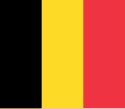 Belgium is a federal constitutional monarchy with a parliamentary system of governance. It is divided into three regions and three communities, that exist next to each other. Its two largest regions are the Dutch-speaking region of Flanders in the north and the French-speaking southern region of Wallonia. The Brussels-Capital Region, officially bilingual, is a mostly French-speaking enclave within the Flemish Region. A German-speaking Community exists in eastern Wallonia. Belgium’s linguistic diversity and related political conflicts are reflected in its political history and complex system of government.
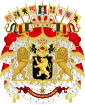 Historically, Belgium, the Netherlands and Luxembourg were known as the Low Countries; it once covered a somewhat larger area than the current Benelux group of states. The region was called Belgica in Latin, after the Roman province of Gallia Belgica. From the end of the Middle Ages until the 17th century, the area of Belgium was a prosperous and cosmopolitan centre of commerce and culture. From the 16th century until the Belgian Revolution in 1830, when Belgium seceded from the Netherlands, the area of Belgium served as the battleground between many European powers, causing it to be dubbed the “Battlefield of Europe,” a reputation strengthened by both world wars.
Upon its independence, Belgium participated in the Industrial Revolution and, during the course of the 20th century, possessed a number of colonies in Africa. The second half of the 20th century was marked by rising tensions between the Dutch-speaking and the French-speaking citizens fueled by differences in language and the unequal economic development of Flanders and Wallonia. This continuing antagonism has led to several far-reaching reforms, resulting in a transition from a unitary to a federal arrangement during the period from 1970 to 1993. Despite the reforms, tensions between the groups remain; the formation of a coalition government took 18 months following the June 2010 federal election.
Belgium is a founding member of the European Union, Eurozone, NATO, OECD and WTO, and a part of the trilateral Benelux Union. Its capital, Brussels, hosts several of the EU’s official seats as well as the headquarters of many major international organizations such as NATO. Belgium is also a part of the Schengen Area.
Belgium is a developed country, with an advanced high-income economy and is categorized as “very high” in the Human Development Index.
|