|
Cook Islands
1988 Olympic Games – Seoul, South Korea
1987 Proof Silver 50 Dollars 38mm (19.58 grams) 0.925 Silver (0.6227 oz. ASW)
Reference: KM# 40, Schön# 61 | Engraver: Raphael David Maklouf
ELIZABETH II COOK ISLANDS PM 1987, Effigy of Queen Elizabeth II facing right.
XXIV OLYMPIC GAMES SEOUL 1988 · 50 DOLLARS ·, Torch bearer, globe in background.
You are bidding on the exact item pictured, provided with a Certificate of Authenticity and Lifetime Guarantee of Authenticity.
 The 1988 Summer Olympics, officially known as the Games of the XXIV Olympiad (Korean: 제24회 올림픽경기대회; RR: Je 24hoe Ollimpiggyeong-gidaehoe) and commonly known as Seoul 1988 (Korean: 서울 1988), was an international multi-sport event held from 17 September to 2 October 1988 in Seoul, South Korea. 159 nations were represented at the games by a total of 8,391 athletes (6,197 men and 2,194 women). 237 events were held and 27,221 volunteers helped to prepare the Olympics.
The 1988 Seoul Olympics were the second summer Olympic Games held in Asia, the first held in South Korea, and the first in a developing country. As the host country, South Korea ranked fourth overall, winning 12 gold medals and 33 medals in the competition. 11,331 media (4,978 written press and 6,353 broadcasters) showed the Games all over the world. These were the last Olympic Games of the Cold War, as well as for the Soviet Union and East Germany, as both ceased to exist before the next Olympic Games in 1992. The Soviet Union utterly dominated the medal count, winning 55 gold and 132 total medals. The results that got closest to that medal haul are China’s 48 gold medals in 2008 and USA’s 121 total medals in 2016.
Compared to the 1980 Summer Olympics (Moscow) and the 1984 Summer Olympics (Los Angeles), which were divided into two camps by ideology, the 1988 Seoul Olympics was a competition in which the boycotts virtually disappeared, although they were not completely over. North Korea boycotted the 1988 Seoul Olympics, as well as five socialist countries including Cuba, an ally of North Korea. Albania, Ethiopia, and Seychelles did not respond to the invitation sent by the IOC. Nicaragua did not participate due to athletic and financial considerations, while the expected participation of Madagascar was withdrawn for financial reasons. Nonetheless, the much larger boycotts seen in the three previous editions were avoided, resulting in the largest number of participating nations during the Cold War era, and thus regarded as the Olympics that laid the groundwork for the end of the Cold War.
For South Korea, the 1988 Olympics was a symbolic event that elevated its international image while also contributing to national pride. Only thirty-five years after the Korean War which devastated the nation, and during a decade of social unrest in South Korea, the Olympics was successfully held and became the culmination of what was deemed the “Miracle on the Han River”.
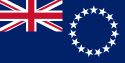 The Cook Islands (Cook Islands Māori: Kūki ‘Āirani) is a self-governing island country in the South Pacific Ocean in free association with New Zealand. It comprises 15 islands whose total land area is 240 square kilometres (92.7 sq mi). The Cook Islands’ Exclusive Economic Zone (EEZ) covers 1,800,000 square kilometres (690,000 sq mi) of ocean.

New Zealand is responsible for the Cook Islands’ defence and foreign affairs, but they are exercised in consultation with the Cook Islands. In recent times, the Cook Islands have adopted an increasingly independent foreign policy. Although Cook Islanders are citizens of New Zealand, they have the status of Cook Islands nationals, which is not given to other New Zealand citizens.
 The Cook Islands’ main population centres are on the island of Rarotonga (10,572 in 2011), where there is an international airport. There is a larger population of Cook Islanders in New Zealand itself; in the 2013 census, 61,839 people said they were Cook Islanders, or of Cook Islands descent.
With about 100,000 visitors travelling to the islands in the 2010-11 financial year, tourism is the country’s main industry, and the leading element of the economy, ahead of offshore banking, pearls, and marine and fruit exports.
|


