|
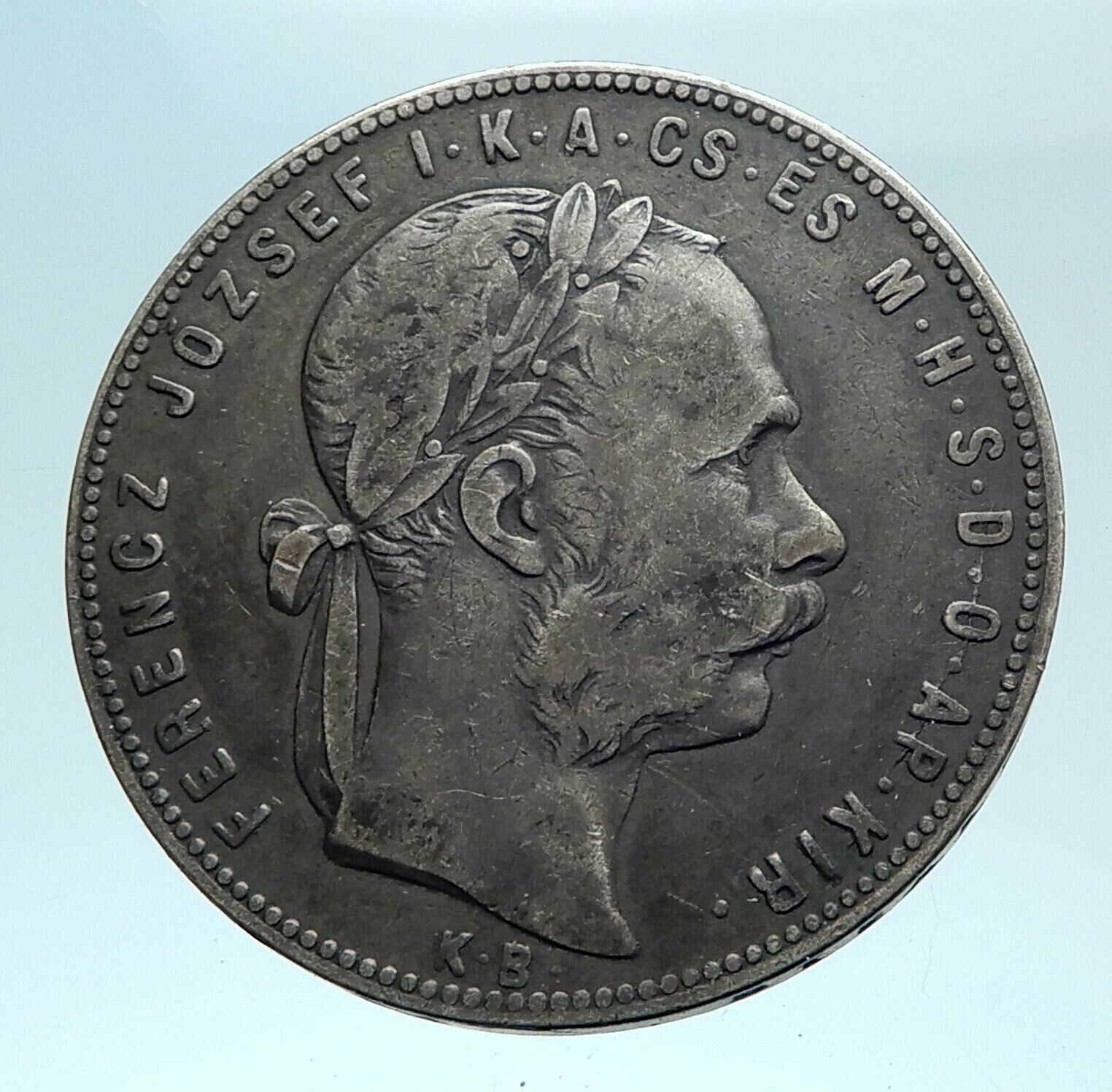
Hungary – 200th Anniversary – Birth of Ferenc Kölcsey
1990 Proof Silver 500 Forint 40mm (28.15 grams) 0.900 Silver (0.8102 oz. ASW)
Reference: KM# 699
MAGYAR KÖZT 500 FORINT BP. 1990, Coat-of-arms atop text.
Isten áldd meg a magyart… Kölcsey Ferenc 1790-1838, The portrait of poet Ferenc Kölcsey, author of the “Himnusz”, the national anthem of Hungary, with a pen. Around the first line of the “Himnusz”.
You are bidding on the exact item pictured, provided with a Certificate of Authenticity and Lifetime Guarantee of Authenticity.
 Ferenc Kölcsey (archaically English: Francis Kolcsey,[1] 8 August 1790 in Sződemeter – 24 August 1838) was a Hungarian poet, literary critic, orator, and politician, noted for his support of the liberal current in Hungary regarding the politics involving the Austrian Empire. He wrote Himnusz, the national anthem of Hungary in 1823.
Kölcsey was born in Sződemeter, Hungary (now Săuca, Romania). He was orphaned at an early age and handicapped by the loss of an eye to smallpox. At age fifteen, he made the acquaintance of Ferenc Kazinczy and adopted his linguistic reforms. In 1809 Kölcsey went to Pest and became a notary to the Royal board. He was disenchanted with the office, and, while in Szatmárcseke, he devoted his time to aesthetical study, poetry, criticism, and the defense of Kazinczy’s theories.
Kölcsey’s early metrical pieces contributed to the Transylvanian Museum did not attract much attention, while his severe criticisms of Mihály Csokonai Vitéz, János Kis, and especially Dániel Berzsenyi, published in 1817, rendered him very unpopular. From 1821 to 1826 he published many separate poems of great beauty in the Aurora, Hebe, Aspasia, and other magazines of polite literature. He joined Pál Szemere in a new periodical, styled Élet és Literatúra (Life and Literature), which appeared from 1826 to 1829, in 4 vols., and gained for Kölcsey the highest reputation as a critical writer.
From 1832 to 1835 he sat in the Hungarian Diet, where his extreme liberal views and his eloquence soon rendered him famous as a parliamentary leader. Elected on 17 November 1830 a member of the Hungarian Academy of Sciences, he took part in its first grand meeting; in 1832, he delivered his famous oration on Kazinczy, and in 1836 that on his former opponent Dániel Berzsenyi. In 1838, when the opposition leader Miklós Wesselényi was thrown into prison upon a disputed charge of treason, Kölcsey conducted his defense with noted eloquence, but without success. He died about a week afterwards at Szatmárcseke, from internal inflammation.
Kölcsey’s strong moral sense and deep devotion to his country are reflected in his poems, his often severe but masterly literary criticism, and his funeral orations and parliamentary speeches. His collected works, in 6 volumes, were published at Pest, 1840-1848, and his journal of the Diet of 1832-1836 appeared in 1848. The first collected edition of all his works appeared in 1886-87.
A monument erected to the memory of Kölcsey was unveiled at Szatmárnémeti on 25 September 1864. His poem Himnusz (1823), evoking the glory of Hungary’s past, became the national anthem of Hungary.
  Hungary is a sovereign state in Europe. It is situated in the Carpathian Basin and is bordered by Slovakia to the north, Romania to the east, Serbia to the south, Croatia to the southwest, Slovenia to the west, Austria to the northwest, and Ukraine to the northeast. The country’s capital and largest city is Budapest. Hungary is a member of the European Union, NATO, the OECD, the Visegrád Group, and the Schengen Area. The official language is Hungarian, which is the most widely spoken non-Indo-European language in Europe.
 Following centuries of successive habitation by Celts, Romans, Huns, Slavs, Gepids, and Avars, the foundation of Hungary was laid in the late 9th century by the Hungarian grand prince Árpád in the Honfoglalás (“homeland-conquest”). His great-grandson Stephen I ascended to the throne in 1000 CE, converting the country to a Christian kingdom. By the 12th century, Hungary became a middle power within the Western world, reaching a golden age by the 15th century. Following the Battle of Mohács in 1526 and about 150 years of partial Ottoman occupation (1541-1699), Hungary came under Habsburg rule, and later formed a significant part of the Austro-Hungarian Empire (1867-1918).
Hungary’s current borders were first established by the Treaty of Trianon (1920) after World War I, when the country lost 71% of its territory, 58% of its population, and 32% of ethnic Hungarians. Following the interwar period, Hungary joined the Axis Powers in World War II, suffering significant damage and casualties. Hungary came under the influence of the Soviet Union, which contributed to the establishment of a four-decade-long communist dictatorship (1947-1989). The country gained widespread international attention regarding the Revolution of 1956 and the seminal opening of its previously-restricted border with Austria in 1989, which accelerated the collapse of the Eastern Bloc.
On 23 October 1989, Hungary again became a democratic parliamentary republic, and today has a high-income economy with a very high Human Development Index. Hungary is a popular tourist destination attracting 10.675 million tourists a year (2013). It is home to the largest thermal water cave system and the second-largest thermal lake in the world (Lake Hévíz), the largest lake in Central Europe (Lake Balaton), and the largest natural grasslands in Europe (the Hortobágy National Park).
|