|
British Virgin Islands under Elizabeth II – Queen: 6 February 1952–present
Discovery of America – Ship of Columbus
1992 Proof Silver 25 Dollars 40mm (21.38 grams) 0.925 Silver (0.6406 oz. ASW)
Reference: KM# 109
ELIZABETH THE SECOND···BRITISH VIRGIN ISLANDS RDM ·1492· 1992, Elizabeth facing right.
$25, Ship sailing with square cross on sail, intricate rim.
You are bidding on the exact item pictured, provided with a Certificate of Authenticity and Lifetime Guarantee of Authenticity.

Christopher Columbus (born between 25 August and 31 October 1451, died 20 May 1506) was an Italian explorer and navigator who completed four Spanish-based voyages across the Atlantic Ocean sponsored by the Catholic Monarchs of Spain, opening the way for the widespread European exploration and colonization of the Americas. His expeditions were the first known European contact with the Caribbean, Central America, and South America.
The name Christopher Columbus is the anglicisation of the Latin Christophorus Columbus. Scholars generally agree that Columbus was born in the Republic of Genoa and spoke a dialect of Ligurian as his first language. He went to sea at a young age and travelled widely, as far north as the British Isles and as far south as what is now Ghana. He married Portuguese noblewoman Filipa Moniz Perestrelo, who bore his son Diego, and was based in Lisbon for several years. He later took a Castilian mistress, Beatriz Enríquez de Arana, who bore his son, Fernando (also given as Hernando).
Largely self-educated, Columbus was widely read in geography, astronomy, and history. He developed a plan to seek a western sea passage to the East Indies, hoping to profit from the lucrative spice trade. After the Granada War, and following Columbus’s persistent lobbying in multiple kingdoms, the Catholic Monarchs Queen Isabella I and King Ferdinand II agreed to sponsor a journey west. Columbus left Castile in August 1492 with three ships and made landfall in the Americas on 12 October, ending the period of human habitation in the Americas now referred to as the pre-Columbian era. His landing place was an island in the Bahamas, known by its native inhabitants as Guanahani. He subsequently visited the islands now known as Cuba and Hispaniola, establishing a colony in what is now Haiti. Columbus returned to Castile in early 1493, bringing a number of captured natives with him. Word of his voyage soon spread throughout Europe.
Columbus made three further voyages to the Americas, exploring the Lesser Antilles in 1493, Trinidad and the northern coast of South America in 1498, and the eastern coast of Central America in 1502. Many of the names he gave to geographical features, particularly islands, are still in use. He also gave the name indios (“Indians”) to the indigenous peoples he encountered. The extent to which he was aware that the Americas were a wholly separate landmass is uncertain; he never clearly renounced his belief that he had reached the Far East. As a colonial governor, Columbus was accused by his contemporaries of significant brutality and was soon removed from the post. Columbus’s strained relationship with the Crown of Castile and its appointed colonial administrators in America led to his arrest and removal from Hispaniola in 1500, and later to protracted litigation over the perquisites that he and his heirs claimed were owed to them by the crown.
Columbus’s expeditions inaugurated a period of exploration, conquest, and colonization that lasted for centuries, helping create the modern Western world. The transfers between the Old World and New World that followed his first voyage are known as the Columbian exchange. Columbus was widely celebrated in the centuries after his death, but public perception has fractured in the 21st century as scholars have given greater attention to the harms committed under his governance, particularly the beginning of the depopulation of Hispaniola’s indigenous Taínos caused by mistreatment and Old World diseases, as well as by that people’s enslavement. Proponents of the Black Legend theory of historiography claim that Columbus has been unfairly maligned as part of a wider anti-Catholic sentiment. Many places in the Western Hemisphere bear his name, including the country of Colombia, the District of Columbia, and British Columbia.
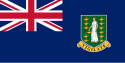 The British Virgin Islands (BVI), officially simply “Virgin Islands”, are a British Overseas Territory in the Caribbean, to the east of Puerto Rico. The islands are geographically part of the Virgin Islands archipelago and are located in the Leeward Islands of the Lesser Antilles.
 The British Virgin Islands consist of the main islands of Tortola, Virgin Gorda, Anegada, and Jost Van Dyke, along with over 50 other smaller islands and cays. About 15 of the islands are inhabited. The capital, Road Town, is on Tortola, the largest island, which is about 20 km (12 mi) long and 5 km (3 mi) wide. The islands had a population of about 28,000 at the 2010 Census, of whom approximately 23,500 lived on Tortola. For the islands, the latest United Nations estimate (2016) is 30,661.
 British Virgin Islanders are British Overseas Territories citizens and since 2002 are British citizens as well. Although the territory is not part of the European Union and not directly subject to EU law, British Virgin Islanders are deemed to be citizens of the EU by virtue of their British citizenship.
|


