|
Portugal
500th Anniversary of the Tratado de Tordesilhas – Treaty of Tordesillas
1994 Silver 1000 Escudos 40mm (27.91 grams) 0.500 Silver (0.4501 oz. ASW)
Reference: KM# 675, Gomes# R 155.01 | Engraver: Nogueira da Silva
REPUBLICA PORTUGUESA 1000 ESC NOGUEIRA DA SILVA INCM, Upright design above value.
TRATADO DE TORDESILHAS 1494-1994, Cross on top of shield within mapped scroll.
You are bidding on the exact item pictured, provided with a Certificate of Authenticity and Lifetime Guarantee of Authenticity.
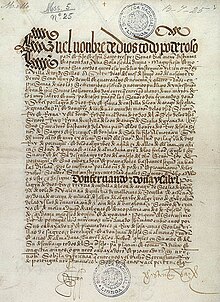 The Treaty of Tordesillas, signed in Tordesillas, Spain on 7 June 1494, and authenticated in Setúbal, Portugal, divided the newly discovered lands outside Europe between the Portuguese Empire and the Spanish Empire (Crown of Castile), along a meridian 370 leagues ] west of the Cape Verde islands, off the west coast of Africa. That line of demarcation was about halfway between the Cape Verde islands (already Portuguese) and the islands entered by Christopher Columbus on his first voyage (claimed for Castile and León), named in the treaty as Cipangu and Antillia (Cuba and Hispaniola).
The lands to the east would belong to Portugal and the lands to the west to Castile, modifying an earlier division proposed by Pope Alexander VI. The treaty was signed by Spain, 2 July 1494, and by Portugal, 5 September 1494. The other side of the world was divided a few decades later by the Treaty of Zaragoza, signed on 22 April 1529, which specified the antimeridian to the line of demarcation specified in the Treaty of Tordesillas. Originals of both treaties are kept at the General Archive of the Indies in Spain and at the Torre do Tombo National Archive in Portugal.
Despite considerable lack of information regarding the geography of the New World, Portugal and Spain largely respected the treaty. The other European powers however did not sign the treaty and generally ignored it, particularly those that became Protestant after the Reformation. Similarly, the indigenous peoples of the Americas did not acknowledge the treaty, and as the legal foundation for the discovery doctrine, it has been a source of ongoing tension regarding land ownership into modern times, cited as recently as the 2005 United States Supreme Court case Sherrill v. Oneida Nation.
The treaty was included by UNESCO in 2007 in its Memory of the World Programme.
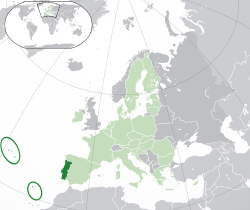 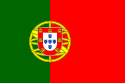 Portugal, officially the Portuguese Republic (Portuguese: República Portuguesa), is a country on the Iberian Peninsula, in Southwestern Europe. It is the westernmost country of mainland Europe, being bordered by the Atlantic Ocean to the west and south and by Spain to the north and east. The Portugal-Spain border is 1,214 km (754 mi) long and considered the longest uninterrupted border within the European Union. The republic also includes the Atlantic archipelagos of the Azores and Madeira, both autonomous regions with their own regional governments.
 The territory of modern Portugal has been continuously settled, invaded and fought over since prehistoric times. The Pre-Celts, Celts, Phoenicians, Carthaginians and the Romans were followed by the invasions of the Visigothic and the Suebi Germanic peoples, who were themselves later invaded by the Moors. These Muslim peoples were eventually expelled during the Christian Reconquista. Portuguese nationality can be traced back to the creation of the First County of Portugal, in 868. In 1139, Afonso Henriques was proclaimed King of Portugal, thus firmly establishing Portuguese independence, under the Portuguese House of Burgundy.
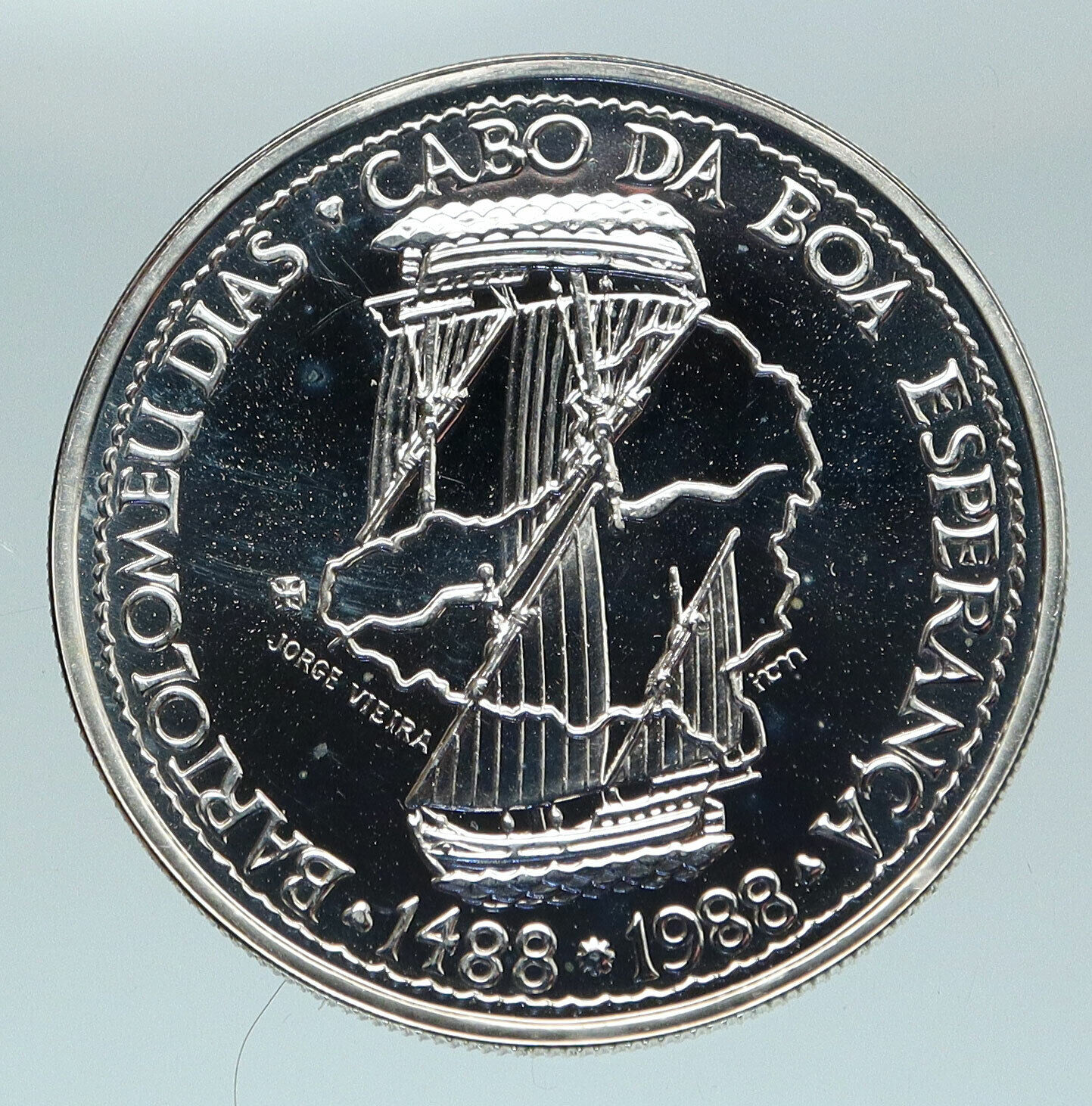
In the 15th and 16th centuries, under the House of Aviz, which took power following the 1383-85 Crisis, Portugal expanded Western influence and established the first global empire, becoming one of the world’s major economic, political and military powers. During this time, Portuguese explorers pioneered maritime exploration in the Age of Discovery, notably under royal patronage of Prince Henry the Navigator and King João II, with such notable discoveries as Vasco da Gama’s sea route to India (1497-98), Pedro Álvares Cabral’s discovery of Brazil (1500), and Bartolomeu Dias’s reaching of the Cape of Good Hope. Portugal monopolized the spice trade during this time, under royal command of the Casa da Índia, and the Portuguese Empire expanded with military campaigns led in Asia, notably under Afonso de Albuquerque, who was known as the “Caesar of the East”t”.
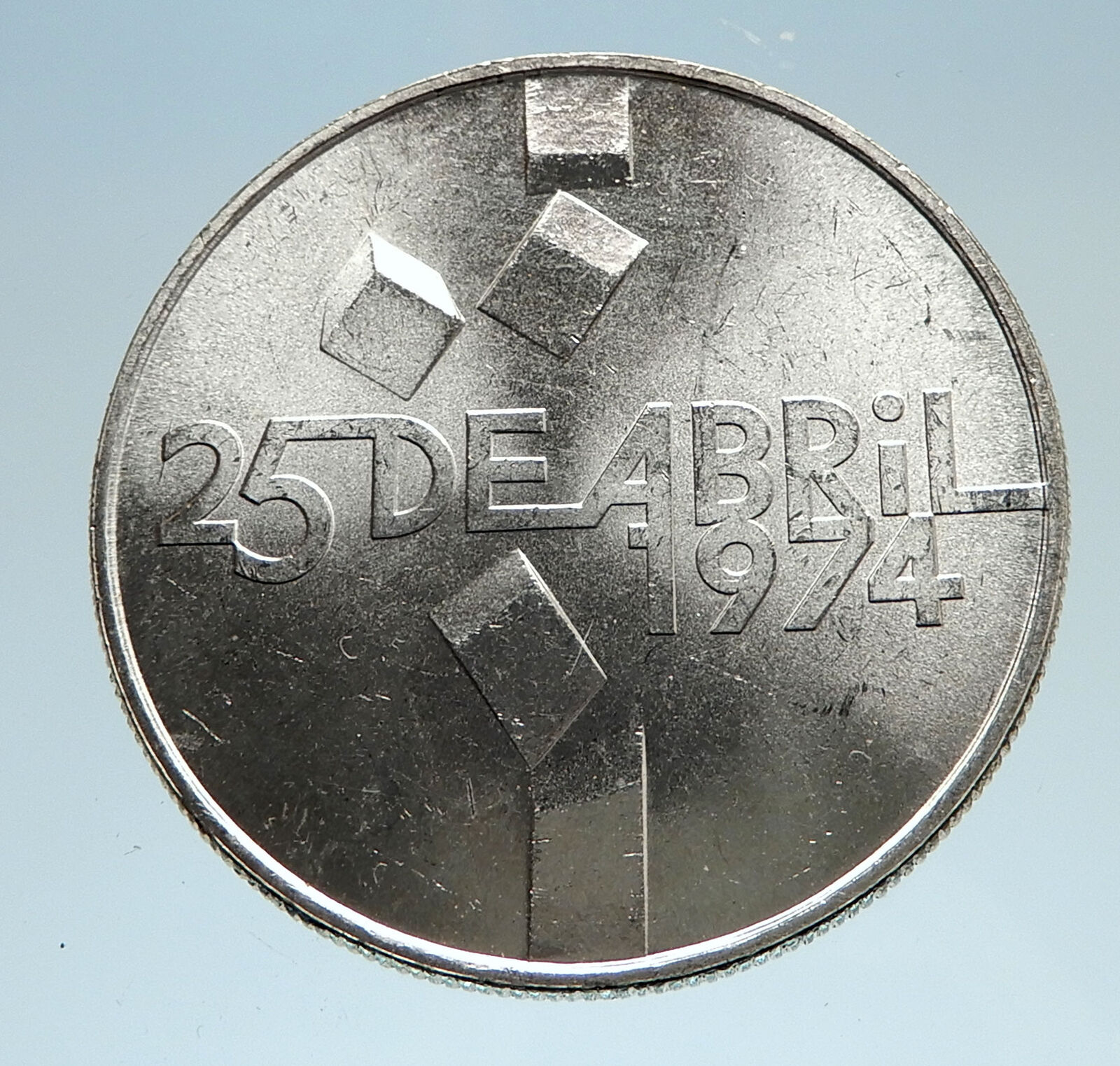
The destruction of Lisbon in a 1755 earthquake, the country’s occupation during the Napoleonic Wars, the independence of Brazil (1822), and the Liberal Wars (1828-1834), all left Portugal crippled from war and diminished in its world power. After the 1910 revolution deposed the monarchy, the democratic but unstable Portuguese First Republic was established, later being superseded by the “Estado Novo” right-wing authoritarian regime. Democracy was restored after the Portuguese Colonial War and the Carnation Revolution in 1974. Shortly after, independence was granted to all its colonies and East Timor, with the exception of Macau, which was handed over to China in 1999. This marked the end of the longest-lived European colonial empire, leaving a profound cultural and architectural influence across the globe and a legacy of over 250 million Portuguese speakers today.
Portugal is a developed country with a high-income advanced economy and high living standards. It is the 5th most peaceful country in the world, maintaining a unitary semi-presidential republican form of government. It has the 18th highest Social Progress in the world, putting it ahead of other Western European countries like France, Spain and Italy. It is a member of numerous international organizations, including the United Nations, the European Union, the eurozone, OECD, NATO and the Community of Portuguese Language Countries. Portugal is also known for having decriminalized the usage of all common drugs in 2001, the first country in the world to do so. However, the sale and distribution of these drugs is still illegal in Portugal.
|