|
Turks & Caicos – 50th Anniversary of the Normandy Invasion Commemorative issue
1994 Proof Silver 20 Crowns 40mm (31.16 grams) 0.999 Silver (1.0008 oz. ASW)
Reference: KM# 220
ELIZABETH II-TURKS AND CAICOS ISLANDS 1994 -20 CROWNS-, Crowned bust of Queen Elizabeth II right (3rd Portrait).
50th ANNIVERSARY·NORMANDY LANDINGS·1944-1994 *D-Day 6 JUNE 44’* SIR BERTRAM H. RAMSAY, Admiral Ramsay facing left, Normandy scene behind.
You are bidding on the exact item pictured, provided with a Certificate of Authenticity and Lifetime Guarantee of Authenticity.
 Admiral Sir Bertram Home Ramsay, KCB, KBE, MVO (20 January 1883 – 2 January 1945) was a Royal Navy officer. He commanded the destroyer HMS Broke during the First World War. In the Second World War, he was responsible for the Dunkirk evacuation in 1940 and planning and commanding the naval forces in the invasion of France in 1944.
Ramsay was born in London, into an old family (see Ramsay Baronets). His parents were Brigadier General William Alexander Ramsay and Susan Newcombe Minchener. He attended Colchester Royal Grammar School.
On 26 February 1929, Ramsay married Helen Margaret Menzies, daughter of Colonel Charles Thomson Menzies. They had two sons,
- David Francis Ramsay (born 1 Oct 1933) who has written a couple of books, had two children, Michael Ramsay and James Ramsay;
- Charles Alexander Ramsay (12 Oct 1936 – 31 Dec 2017) was educated at the Royal Military Academy Sandhurst and rose to become Director General of the Territorial Army and the Queen’s Body Guard for Scotland.
Early naval career
Ramsay joined the Royal Navy in 1898. As a naval cadet, he was posted to HMS Crescent in April 1899. Later serving on HMS Britannia, he became a midshipman within a year. By the middle of 1902 he was an acting sub-lieutenant, and he was confirmed in this rank on 15 September 1902. He was promoted to lieutenant on 15 December 1904.
First World War
During the First World War, Ramsay was given his first command, HMS M25, a small monitor, in August 1915. For two years his ship was part of the Dover Patrol off the Belgian coast. Promoted to commander on 30 June 1916, in October 1917 he took command of another Dover Patrol vessel, the destroyer HMS Broke. On 9 May 1918, his ship took part in the Second Ostend Raid, a follow up to the Zeebrugge Raid, for which he was mentioned in despatches.
Second World War
 Ramsey retired from the navy in 1938, but was coaxed out of retirement by Winston Churchill one year later to help deal with the Axis threat. Promoted to vice-admiral, he was named Commander-in-Chief, Dover on 24 August 1939. His duties included overseeing the defence against possible destroyer raids, the protection of cross-Channel military traffic and the denial of the passage through the Straits of Dover by submarines.
Operation Dynamo
Main article: Dunkirk evacuation
As Vice-Admiral Dover, Ramsay was responsible for the Dunkirk evacuation, codenamed Operation Dynamo. Working from the underground tunnels beneath Dover Castle, he and his staff worked for nine days straight to rescue troops trapped in France by the German forces. For his success in bringing home 338,226 British and allied soldiers from the beaches of Dunkirk, he was asked to personally report on the operation to King George VI and was made a Knight Commander of the Order of the Bath.
Defending Dover
After Operation Dynamo was completed, he was faced with the enormous problems of defending the waters off Dover from the expected German invasion. For nearly two years, he commanded forces striving to maintain control against the Germans, gaining a second Mention in Despatches. Ramsay was in command when the German battleships Scharnhorst and Gneisenau together with escorts passed through the Channel in February 1942. Though the British had made plans to deal with this (Operation Fuller), British forces were taken by surprise, and failed in their efforts to stop them.
Operation Torch
Ramsay was to be appointed the Naval Force Commander for the invasion of Europe on 29 April 1942, but the invasion was postponed and he was transferred to become deputy naval commander of the Allied invasion of North Africa.
Operation Husky
During the Allied invasion of Sicily (Operation Husky) in July 1943, Ramsay was Naval Commanding Officer, Eastern Task Force and prepared the amphibious landings.
Operation Neptune
Ramsay was reinstated to the Active List on 26 April 1944 and promoted to the rank of admiral on 27 April 1944. He was appointed Naval Commander-in-Chief of the Allied Naval Expeditionary Force for the invasion.
In this, he executed what has been described by historian Correlli Barnett as a “never surpassed masterpiece of planning”- coordinating and commanding a fleet of almost 7,000 vessels to delivering over 160,000 men onto the beaches of Normandy on D-Day alone, with over 875,000 disembarked by the end of June.
He defused a potential conflict between Prime Minister Winston Churchill and the British Sovereign, King George VI, when Churchill informed the King that he intended to observe the D-Day landings from aboard HMS Belfast, a cruiser assigned to bombardment duties for the operation. The King, himself a seasoned sailor and a veteran of the Battle of Jutland in the First World War, likewise announced that he would accompany his Prime Minister. The two were at civil loggerheads until meeting with Admiral Ramsay, who flatly refused to take the responsibility for the safety of either of them. Ramsay cited the danger to both the King and the Prime Minister, the risks of the planned operational duties of HMS Belfast, and the fact that both the King and Churchill would be needed at home in case the landings went badly and immediate decisions were required. This settled the matter and both Churchill and King George VI remained ashore on D-Day.
While the port of Antwerp was vital for the Allies after D-Day, Admirals Cunningham and Ramsay warned SHAEF and Montgomery that the port was of no use while the Germans held the approaches. But Montgomery postponed the Battle of the Scheldt, and the delay in opening the port was a grave blow to the Allied build-up before winter approached.
Death
On 2 January 1945, Ramsay was killed when his plane crashed on takeoff at Toussus-le-Noble Airport southwest of Paris. He was en route to a conference with General Bernard Montgomery in Brussels. Ramsay was interred in Saint-Germain-en-Laye New Communal Cemetery. A memorial to all who died in the crash was erected at Toussus-le-Noble in May 1995.
 The Western Allies of World War II launched the largest amphibious invasion in history when they assaulted Normandy, located on the northern coast of France, on 6 June 1944. The invaders were able to establish a beachhead as part of Operation Overlord after a successful “D-Day,” the first day of the invasion.
Allied land forces came from the United States, Britain, Canada, and Free French forces. In the weeks following the invasion, Polish forces and contingents from Belgium, Czechoslovakia, Greece and the Netherlands participated in the ground campaign; most also provided air and naval support alongside elements of the Royal Australian Air Force, the Royal New Zealand Air Force, and the Royal Norwegian Navy.
The Normandy invasion began with overnight parachute and glider landings, massive air attacks and naval bombardments. In the early morning, amphibious landings commenced on five beaches codenamed Sword, Juno, Gold, Omaha and Utah, with troops from the United States landing on Omaha and Utah, Great Britain landing on Gold and Sword and Canada landing on Juno. During the evening the remaining elements of the airborne divisions landed. Land forces used on D-Day sailed from bases along the south coast of England, the most important of these being Portsmouth.
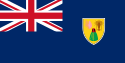 The Turks and Caicos Islands, or TCI for short, are a British Overseas Territory consisting of the larger Caicos Islands and smaller Turks Islands, two groups of tropical islands in the Lucayan Archipelago of the Atlantic Ocean and northern West Indies. They are known primarily for tourism and as an offshore financial centre. The resident population is 31,458 as of 2012 of whom 23,769 live on Providenciales in the Caicos Islands.
 The Turks and Caicos Islands lie southeast of Mayaguana in the Bahamas island chain and north of the island of Hispaniola (Haiti and the Dominican Republic) and the other Antilles archipelago islands. Cockburn Town, the capital since 1766, is situated on Grand Turk Island about 1,042 kilometres (647 mi) east-southeast of Miami, United States. The islands have a total land area of 430 square kilometres (170 sq mi).
 The first recorded European sighting of the islands now known as the Turks and Caicos occurred in 1512. In the subsequent centuries, the islands were claimed by several European powers with the British Empire eventually gaining control. For many years the islands were governed indirectly through Bermuda, the Bahamas, and Jamaica. When the Bahamas gained independence in 1973, the islands received their own governor, and have remained a separate autonomous British Overseas Territory since.
|


