|
Liberia
US President Rutherford B. Hayes
2000 Proof Silver 20 Dollars 40mm (20.00 grams) 0.999 Silver (0.6424 oz. ASW)
Reference: KM# 886
REPUBLIC OF LIBERIA THE LOVE OF LIBERTY BROUGHT US HERE 20 00 REPUBLIC OF LIBERIA 20 DOLLARS, Seal of Liberia.
XIX U.S. PRESIDENT RUTHERFORD B. HAYES 1877 1881 $20, Hayes facing 1/2 left.
You are bidding on the exact item pictured, provided with a Certificate of Authenticity and Lifetime Guarantee of Authenticity.
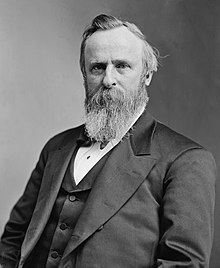 Rutherford Birchard Hayes (/ˈrʌðərfərd/; October 4, 1822 – January 17, 1893) was an American lawyer and politician who served as the 19th president of the United States from 1877 to 1881, after serving in the U.S. House of Representatives and as governor of Ohio. Before the American Civil War, Hayes was a lawyer and staunch abolitionist who defended refugee slaves in court proceedings. He served in the Union Army and the House of Representatives before assuming the presidency. His presidency represents a turning point in U.S. history, as historians consider it the formal end of Reconstruction. Hayes, a prominent member of the Republican “Half-Breed” faction, placated both Southern Democrats and Whiggish Republican businessmen by ending the federal government’s involvement in attempting to bring racial equality in the South.
As an attorney in Ohio, Hayes served as Cincinnati’s city solicitor from 1858 to 1861. At the start of the American Civil War, he left a fledgling political career to join the Union Army as an officer. Hayes was wounded five times, most seriously at the Battle of South Mountain in 1862. He earned a reputation for bravery in combat and was promoted to brevet major general. After the war, he served in Congress from 1865 to 1867 as a Republican. Hayes left Congress to run for governor of Ohio and was elected to two consecutive terms, from 1868 to 1872. He served half of a third two-year term from 1876 to 1877 before his swearing-in as president.
In 1877, Hayes assumed the presidency following the 1876 United States presidential election, one of the most contentious in U.S. history. Hayes lost the popular vote to Democrat Samuel J. Tilden, and neither candidate secured enough electoral votes. According to the U.S. Constitution, if no candidate wins the Electoral College, the House of Representatives is tasked with selecting the new president. Hayes secured a victory when a Congressional Commission awarded him 20 contested electoral votes in the Compromise of 1877. The electoral dispute was resolved with a backroom deal whereby the southern Democrats acquiesced to Hayes’s election on the condition that he end both federal support for Reconstruction and the military occupation in the former Confederate States.
Hayes’s administration was influenced by his belief in meritocratic government and in equal treatment without regard to wealth, social standing, or race. One of the defining events of his presidency was the Great Railroad Strike of 1877, which he resolved by calling in the US Army against the railroad workers. It remains the deadliest conflict between workers and strikebreakers in American history. As president, Hayes implemented modest civil-service reforms that laid the groundwork for further reform in the 1880s and 1890s. He vetoed the Bland–Allison Act of 1878, which put silver money into circulation and raised nominal prices; Hayes saw the maintenance of the gold standard as essential to economic recovery. His policy toward western Indians anticipated the assimilationist program of the Dawes Act of 1887.
At the end of his term, Hayes kept his pledge not to run for reelection and retired to his home in Ohio. He became an advocate of social and educational reform. Biographer Ari Hoogenboom has written that Hayes’s greatest achievement was to restore popular faith in the presidency and to reverse the deterioration of executive power that had established itself after the assassination of Abraham Lincoln in 1865. His supporters have praised his commitment to civil-service reform; his critics have derided his leniency toward former Confederate states as well as his withdrawal of federal support for African Americans’ voting and civil rights. Historians and scholars generally rank Hayes as an average to below-average president.
 Liberia officially the Republic of Liberia, is a country on the West African coast. Liberia means “Land of the Free” in Latin. It is bordered by Sierra Leone to its west, Guinea to its north and Ivory Coast to its east. It covers an area of 111,369 square kilometres (43,000 sq mi) and is home to 4,503,000 people. English is the official language and over 20 indigenous languages are spoken, representing the numerous tribes who make up more than 95% of the population.
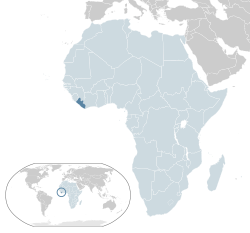 Forests on the coastline are composed mostly of salt-tolerant mangrove trees, while the more sparsely populated inland has forests opening onto a plateau of drier grasslands. The climate is equatorial, with significant rainfall during the May-October rainy season and harsh harmattan winds the remainder of the year. Liberia possesses about forty percent of the remaining Upper Guinean rainforest. It was an important producer of rubber in the early 20th century.
The Republic of Liberia, beginning as a settlement of the American Colonization Society (ACS), declared its independence on July 26, 1847. The United States did not recognize Liberia’s independence until after the American Civil War on February 5, 1862. Between January 7, 1822 and the American Civil War, more than 15,000 freed and free-born Black Americans from United States and 3,198 Afro-Caribbeans relocated to the settlement. The Black American settlers carried their culture with them to Liberia. The Liberian constitution and flag were modeled after the United States. In January 3, 1848 Joseph Jenkins Roberts, a wealthy free-born Black American from Virginia who settled in Liberia, was elected as Liberia’s first president after the people proclaimed independence.
Unlike other African countries, Liberia is the only African republic to have self-proclaimed independence without gaining independence through revolt from any other nation, being Africa’s first and oldest republic. Although it is said that neither Liberia nor Ethiopia, which was a kingdom, were controlled or colonized by foreign powers, this seems contradictory since the country was actually started by the American Colonization Society (ACS). Liberia maintained and kept its independence during the European colonial era.
During World War II, Liberia supported the United States war efforts against Germany and in turn the United States invested in considerable infrastructure in Liberia to help its war effort, which also aided the country in modernizing and improving its major air transportation facilities. In addition, President William Tubman encouraged economic changes. Internationally, Liberia was a founding member of League of Nations, United Nations and the Organisation of African Unity.
Longstanding political tensions from the 27 year rule of William Tubman resulted in a military coup in 1980 that overthrew the leadership soon after his death, marking the beginning of political instability. Five years of military rule by the People’s Redemption Council and five years of civilian rule by the National Democratic Party of Liberia were followed by two civil wars – the First and Second Liberian Civil Wars. These resulted in the deaths and displacement of more than half a million people and devastated Liberia’s economy. A peace agreement in 2003 led to democratic elections in 2005. Recovery proceeds but about 85% of the population live below the international poverty line.
|


