|
Somaliland – Zodiac Series – CAPRICORN –
2006 Stainless steel 10 Shillings 24.9mm (4.64 grams)
Reference: KM# 18
• BAANKA SOMALILAND • 10/- TEN SOMALILAND SHILLINGS
CAPRICORN, Capricorn, the Sea-Goat, astrological symbol right, 2006 below.
You are bidding on the exact item pictured, provided with a Certificate of Authenticity and Lifetime Guarantee of Authenticity.
 Capricorn (♑) is the tenth astrological sign in the zodiac, originating from the constellation of Capricornus. It spans the 270-300th degree of the zodiac, corresponding to celestial longitude. Capricorn is ruled by the planet Saturn. Under the tropical zodiac, the sun transits this area from December 22 to January 19 each year, and under the sidereal zodiac, the sun currently transits the constellation of Capricorn from approximately January 15 to February 14. In astrology, Capricorn is considered an earth sign, introvert sign, and one of the four cardinal signs.
Zodiac symbol Goat Duration (tropical, western) 22 December – 20 January (2014, UTC) Constellation Capricornus Zodiac element Earth Zodiac quality Cardinal Sign ruler Saturn Detriment Moon Exaltation Mars Fall Jupiter
Capricorn-Sagittarius cusps (those born from December 22 to December 28) are considered to be slightly different from the typical Capricorn, being more outgoing, jovial and less ambitious and money-orientated than the Capricorn who is not born on a cusp.
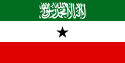 Somaliland (Somali: Somaliland; Arabic: صوماليلاند Ṣūmālīlānd, أرض الصومال Arḍ aṣ-Ṣūmāl), officially the Republic of Somaliland (Somali: Jamhuuriyadda Soomaaliland, Arabic: جمهورية صوماليلاند Jumhūrīyat Ṣūmālīlānd), is a self-declared country in the Horn of Africa, internationally considered to be part of Somalia. The government of Somaliland regards itself as the successor state to British Somaliland, which, as the briefly independent State of Somaliland, united in 1960 with the Trust Territory of Somaliland (the former Italian Somaliland) to form the Somali Republic.
 Somaliland lies in the Horn of Africa, on the southern coast of the Gulf of Aden. It is bordered by Djibouti to the northwest, Ethiopia to the south and west, and Somalia to the east. Its claimed territory has an area of 176,120 square kilometres (68,000 sq mi), with approximately 3.5 million residents in 2014. The capital and largest city is Hargeisa.
 In 1988, the Siad Barre government began a crackdown against the Hargeisa-based Somali National Movement (SNM) and other militant groups, which were among the events that led to the Somali Civil War. The conflict left the country’s economic and military infrastructure severely damaged. Following the collapse of Barre’s government in early 1991, local authorities, led by the SNM, unilaterally declared independence from Somalia on 18 May of the same year and reinstated the borders of the former short-lived independent State of Somaliland.
Since 1991, the territory has been governed by democratically elected governments that seek international recognition as the Government of the Republic of Somaliland. The central government maintains informal ties with some foreign governments, who have sent delegations to Hargeisa. Ethiopia also maintains a trade office in the region. However, Somaliland’s self-proclaimed independence has not been officially recognised by any country or international organisation. It is a member of the Unrepresented Nations and Peoples Organization, an advocacy group whose members consist of indigenous peoples, minorities and unrecognised or occupied territories.
|


