|
Spain
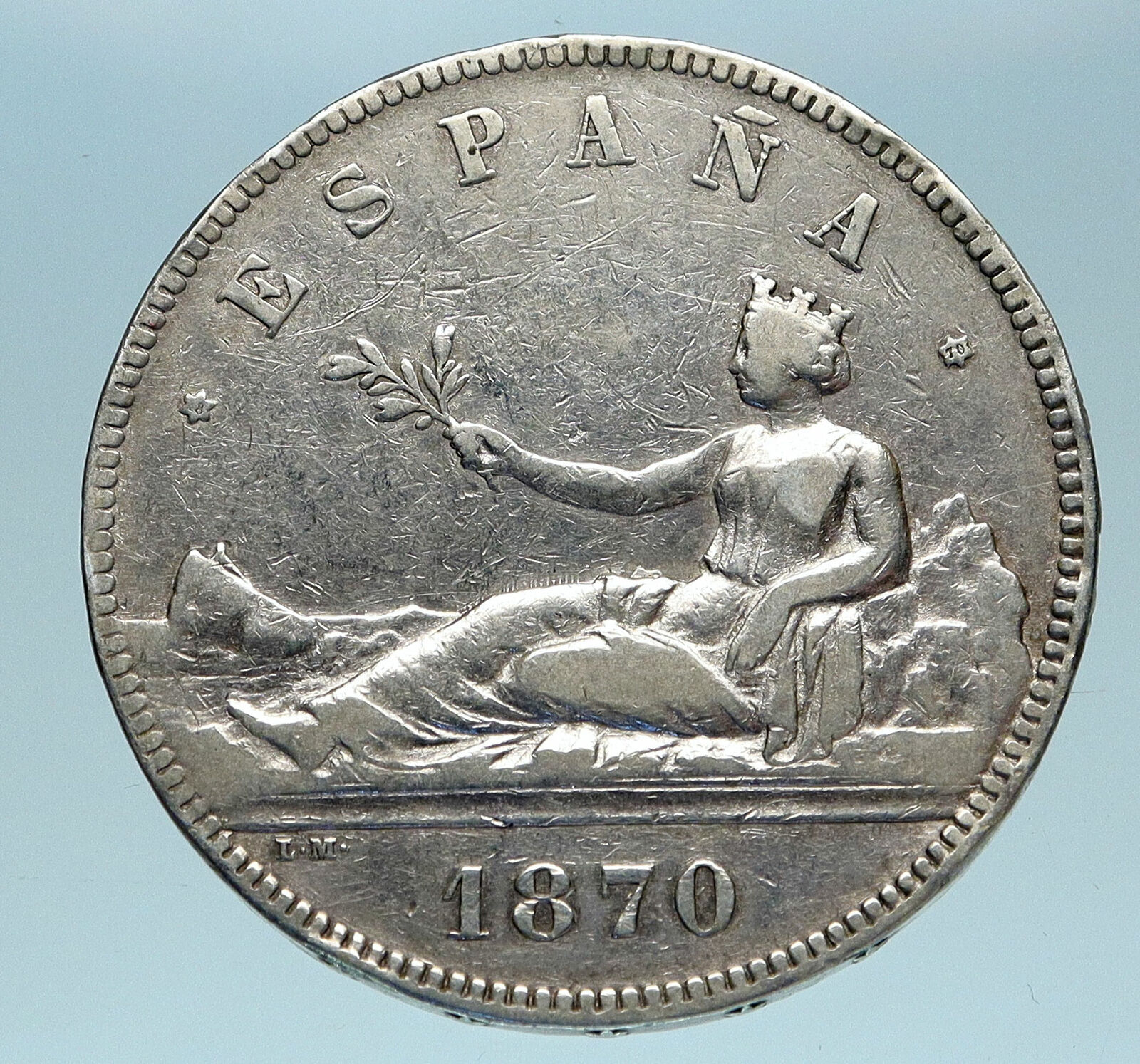
Distinguished European Figures – King Carlos V – Series: Europa Coin Programme
2006 Proof Silver 10 Euro 40mm (27.00 grams) 0.925 Silver (0.803 oz. ASW)
Reference: KM# 1122 (Mintage: 35,000)
JUAN CARLOS I REY DE ESPAÑA · 2006 ·, Don Juan Carlos I facing left.
EURO M CAROLVS IMPERATOR, Emperor Charles V is reproduced from the Manuscript Codex of the Order of the Golden Fleece, which is kept at the Valencia Institute of Don Juan, in Madrid. On the right appears the common brand of the 10 Europe Program.
Coin Notes:
In 2004, coinciding with the enlargement of the European Union, several Mint Houses of the old continent joined the European numismatic program, coining collectible coins with a common logo. With the slogan “European Personalities”, during the year 2006 the third series of currencies of this Program is issued.
You are bidding on the exact item pictured, provided with a Certificate of Authenticity and Lifetime Guarantee of Authenticity.
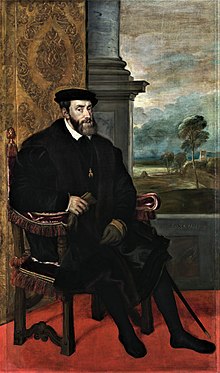 Charles V (24 February 1500 – 21 September 1558) was Holy Roman Emperor and Archduke of Austria from 1519 to 1556, King of Spain (Castile and Aragon) from 1516 to 1556, and Lord of the Netherlands as titular Duke of Burgundy from 1506 to 1555. As he was head of the rising House of Habsburg during the first half of the 16th century, his dominions in Europe included the Holy Roman Empire, extending from Germany to northern Italy with direct rule over the Austrian hereditary lands and the Burgundian Low Countries, and the Kingdom of Spain with its southern Italian possessions of Naples, Sicily, and Sardinia. Furthermore, he oversaw both the continuation of the long-lasting Spanish colonization of the Americas and the short-lived German colonization of the Americas. The personal union of the European and American territories of Charles V was the first collection of realms labelled “the empire on which the sun never sets”.
Charles was born in the County of Flanders to Philip of Habsburg (son of Maximilian I of Habsburg and Mary of Burgundy) and Joanna of Trastámara (daughter of Isabella I of Castile and Ferdinand II of Aragon, the Catholic Monarchs of Spain). The ultimate heir of his four grandparents, Charles inherited all of his family dominions at a young age. After the death of Philip in 1506, he inherited the Burgundian states originally held by his paternal grandmother Mary. In 1516, inheriting the dynastic union formed by his maternal grandparents Isabella I and Ferdinand II, he became king of Spain as co-monarch of the Spanish kingdoms with his mother. Spain’s possessions at his accession also included the Castilian colonies of the West Indies and the Spanish Main as well as the Aragonese kingdoms of Naples, Sicily and Sardinia. At the death of his paternal grandfather Maximilian in 1519, he inherited Austria and was elected to succeed him as Holy Roman Emperor. He adopted the Imperial name of Charles V as his main title, and styled himself as a new Charlemagne.
Charles V revitalized the medieval concept of universal monarchy and spent most of his life attempting to defend the integrity of the Holy Roman Empire from the Protestant Reformation, the expansion of the Ottoman Empire, and a series of wars with France. With no fixed capital city, he made 40 journeys, travelling from country to country; he spent a quarter of his reign on the road. The imperial wars were fought by German Landsknechte, Spanish tercios, Burgundian knights, and Italian condottieri. Charles V borrowed money from German and Italian bankers and, in order to repay such loans, he relied on the proto-capitalist economy of the Low Countries and on the flows of gold and especially silver from South America to Spain, which caused widespread inflation. He ratified the Spanish conquest of the Aztec and Inca empires by the Spanish conquistadores Hernán Cortés and Francisco Pizarro, as well as the establishment of Klein-Venedig by the German Welser family in search of the legendary El Dorado. In order to consolidate power in his early reign, Charles overcame two Spanish insurrections (the Comuneros’ Revolt and Brotherhoods’ Revolt) and two German rebellions (the Knights’ Revolt and Great Peasants’ Revolt).
Crowned King in Germany, Charles sided with Pope Leo X and declared Martin Luther an outlaw at the Diet of Worms (1521). The same year, Francis I of France, surrounded by the Habsburg possessions, started a conflict in Lombardy that lasted until the Battle of Pavia (1525), which led to the French king’s temporary imprisonment. The Protestant affair re-emerged in 1527 as Rome was sacked by an army of Charles’s mutinous soldiers, largely of Lutheran faith. After his forces left the Papal States, Charles V defended Vienna from the Turks and obtained a coronation as King of Italy and Holy Roman Emperor from Pope Clement VII. In 1535, he annexed the vacant Duchy of Milan and captured Tunis. Nevertheless, the loss of Buda during the struggle for Hungary and the Algiers expedition in the early 1540s frustrated his anti-Ottoman policies. Meanwhile, Charles V had come to an agreement with Pope Paul III for the organisation of the Council of Trent (1545). The refusal of the Lutheran Schmalkaldic League to recognize the council’s validity led to a war, won by Charles V with the imprisonment of the Protestant princes. However, Henry II of France offered new support to the Lutheran cause and strengthened a close alliance with the sultan Suleiman the Magnificent, the ruler of the Ottoman Empire since 1520.
Ultimately, Charles V conceded the Peace of Augsburg and abandoned his multi-national project with a series of abdications in 1556 that divided his hereditary and imperial domains between the Spanish Habsburgs headed by his son Philip II of Spain and the Austrian Habsburgs headed by his brother Ferdinand, who had been archduke of Austria in Charles’s name since 1521 and the designated successor as emperor since 1531. The Duchy of Milan and the Habsburg Netherlands were also left in personal union to the king of Spain, although initially also belonging to the Holy Roman Empire. The two Habsburg dynasties remained allied until the extinction of the Spanish line in 1700. In 1557, Charles retired to the Monastery of Yuste in Extremadura and died there a year later.
 Spain, officially the Kingdom of Spain (Spanish: Reino de España), is a country mostly located on the Iberian Peninsula in Europe, with there also being two large archipelagoes, the Balearic Islands in the Mediterranean Sea and the Canary Islands off the African Atlantic coast, two cities, Ceuta and Melilla, on the African mainland and several small islands in the Alboran Sea near the African coast. The country’s mainland is bordered to the south and east by the Mediterranean Sea except for a small land boundary with Gibraltar; to the north and northeast by France, Andorra, and the Bay of Biscay; and to the west and northwest by Portugal and the Atlantic Ocean. It is the only European country to have a border with an African country (Morocco) and its African territory accounts for nearly 5% of its population, mostly in the Canary Islands but also in Ceuta and Melilla.
Flag & Coat of Arms
With an area of 505,990 km2 (195,360 sq mi), Spain is the largest country in Southern Europe, the second largest country in Western Europe and the European Union, and the fourth largest country in the European continent. By population, Spain is the sixth largest in Europe and the fifth in the European Union. Spain’s capital and largest city is Madrid; other major urban areas include Barcelona, Valencia, Seville, Bilbao and Málaga.
Modern humans first arrived in the Iberian Peninsula around 35,000 years ago. Iberian cultures along with ancient Phoenician, Greek and Carthaginian settlements developed on the peninsula until it came under Roman rule around 200 BCE, after which the region was named Hispania, based on the earlier Phoenician name Sp(a)n or Spania. At the end of the Western Roman Empire the Germanic tribal confederations in migration from Central Europe invaded the Iberian peninsula and established themselves in relatively independent realms in its western provinces, including the Sueves, Alans and Vandals. Eventually, the Visigoths would integrate by force all remaining independent territories in the peninsula, including Byzantine provinces into the Kingdom of Toledo that more or less unified politically, ecclesiastically and legally all the former Roman provinces or successor kingdoms of what was then known in documents as Hispania.
The Visigothic kingdom fell to the Moors except in the north where shortly after started a process known as Reconquista. Spain emerged as a unified country in the 15th century under the Catholic Monarchs, who completed the eight centuries-long Reconquista in 1492. In the early modern period, Spain became one of history’s first global empires, leaving a vast cultural and linguistic legacy that includes over 500 million Hispanophones, making Spanish the world’s second most spoken native language, after Mandarin Chinese.
Spain is a parliamentary democracy and constitutional monarchy, with King Felipe VI as head of state. It is a major developed country with the world’s fourteenth largest economy by nominal GDP and sixteenth largest by purchasing power parity. It is a member of the United Nations (UN), the European Union (EU), the Eurozone, the Council of Europe (CoE), the Organization of Ibero-American States (OEI), the Union for the Mediterranean, the North Atlantic Treaty Organization (NATO), the Organisation for Economic Co-operation and Development (OECD), OSCE, the Schengen Area, the World Trade Organization (WTO) and many other international organisations. Spain has a “permanent invitation” to the G20 summits that occur generally once a year.
|