|
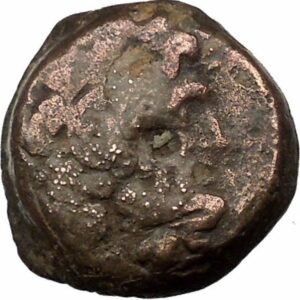
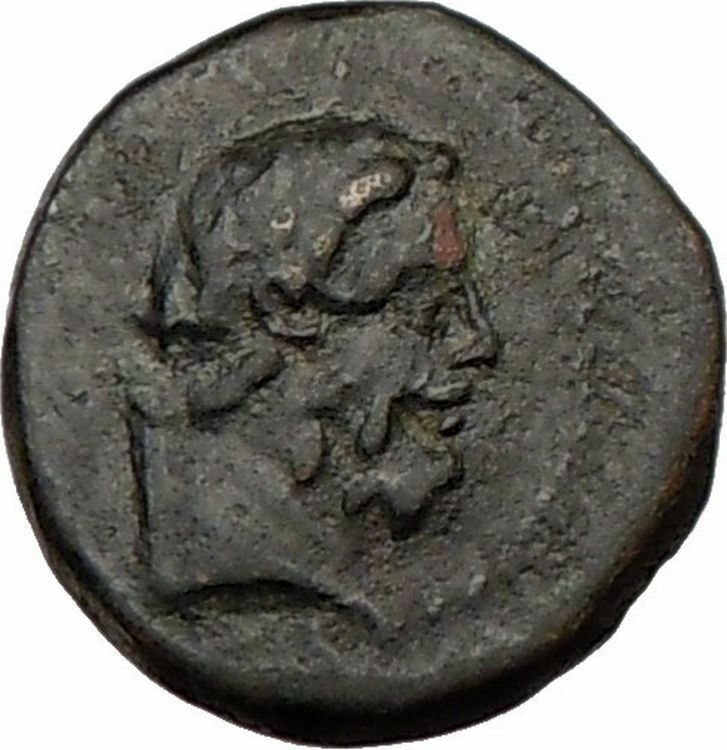
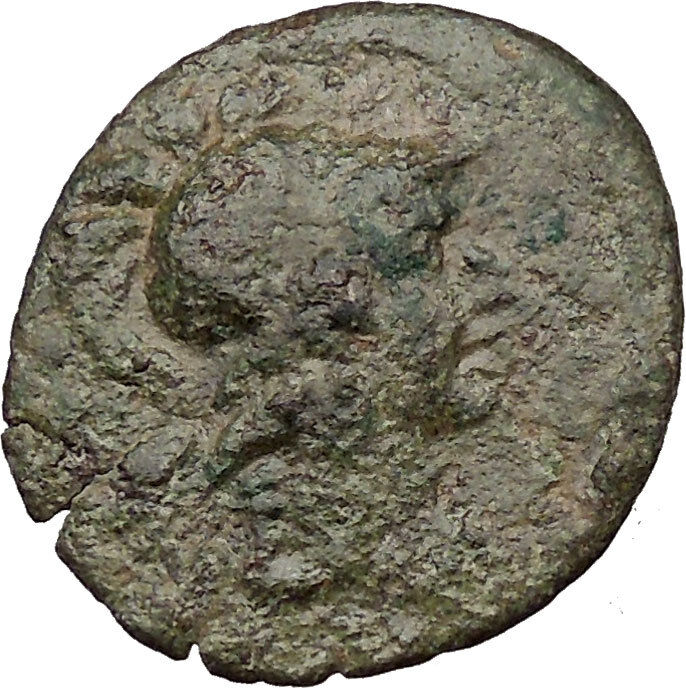
Greek city of
Chersonesos in
Thrace
Bronze 13mm (1.17 grams) Struck circa 386-309 B.C.
Reference: SNG Copenhagen 848–9
Helmeted head of Athena right.
XER-PO, barley grain.
Possibly the same place as the later Kardia.
You are bidding on the exact item pictured,
provided with a Certificate of Authenticity and Lifetime Guarantee of
Authenticity.

Athena
or Athene (Latin:
Minerva
),
also referred to as Pallas Athena, is the goddess of war, civilization,
wisdom, strength, strategy, crafts, justice and skill in
Greek mythology
.
Minerva
,
Athena’s Roman incarnation, embodies similar attributes. Athena is also a shrewd
companion of heroes
and the goddess
of heroic
endeavour. She is the
virgin
patron of Athens
.
The Athenians built the
Parthenon
on the Acropolis of her namesake city, Athens, in her honour (Athena Parthenos).
Athena’s cult as the patron of Athens seems to have existed from the earliest
times and was so persistent that archaic myths about her were recast to adapt to
cultural changes. In her role as a protector of the city (polis),
many people throughout the Greek world worshiped Athena as Athena Polias
(“Athena of the city”).
Athens
and Athena bear etymologically connected names.
Chersonesos (Ancient
Greek: ) was an
ancient Greek
city located in Thrace , located in the region of the
Thracian Chersonesos
.
The Thracian Chersonese was the ancient name of the
Gallipoli
peninsula, in the part of historic
Thrace
that is
now part of modern Turkey
.
The peninsula runs in a south-westerly direction into the
Aegean Sea
,
between the
Hellespont
(now known as the
Dardanelles
) and the bay of Melas (today Saros bay). Near
Agora
it
was protected by a wall running across its full breadth. The isthmus traversed
by the wall was only 36
stadia
in
breadth (about 6.5 km), but the length of the peninsula from this wall to its
southern extremity, Cape Mastusia, was 420 stadia (about 77.5 km).
//
History
The Thracian Chersonese was originally inhabited by
Thracians
.
Settlers from
Ancient Greece
, mainly of
Ionian
and
Aeolian
stock, founded about 12 cities on the peninsula in the
7th century BC. The
Athenian
statesman Miltiades the Elder
founded a major Athenian colony there around 560 BC. He
took authority over the entire peninsula, building up its defences against
incursions from the mainland. It eventually passed to his nephew, the more
famous
Miltiades the Younger
, around 524 BC. The peninsula was abandoned to the
Persians
in 493 BC after the outbreak of the
Greco-Persian Wars
(499–478 BC).
The Persians were eventually expelled, after which the peninsula was for a
time ruled over by Athens, which enrolled it into the
Delian League
in 478 BC. The Athenians established a number of
cleruchies
on the Thracian Chersonese and sent an additional 1,000 settlers around 448 BC.
Sparta gained control between 431 BC-404 BC, but the peninsula subsequently
reverted to the Athenians. In the
4th century BC, the
Thracian Chersonese became the focus of a bitter territorial dispute between
Athens and
Macedon
, whose king
Philip
II
sought possession. It was eventually ceded to Philip in 338 BC.
After the death of Philip’s son
Alexander
the Great
in 323 BC, the Thracian Chersonese became the object of contention
among Alexander’s successors
.
Lysimachus
established his capital
Lysimachia
here. In 196 BC, the
Seleucid
king
Antiochus III
seized the peninsula. This alarmed the Greeks and prompted
them to seek the aid of the
Romans
, who
conquered the Thracian Chersonese, which they gave to their ally
Eumenes II
of Pergamon
in 188 BC. At the extinction of the
Attalid dynasty
in 133 BC it passed again to the Romans, who from 129 BC administered it in the
Roman province of
Asia
. It was subsequently made a state-owned territory (ager publicus)
and during the reign of the emperor
Caesar Augustus
it was imperial property.
The Thracian Chersonese subsequently passed to the
Byzantine Empire
,
which ruled it until the rise of the
Ottoman Empire
in
the 14th century AD. In 1356 the peninsula became the first part of Europe to
fall to the Ottomans, who subsequently made it a major base for raids and
incursions into territories further afield.
Towns
and economy
The principal towns of the Thracian Chersonese were
Cardia
,
Pactya
,
Callipolis
(Gallipoli),
Alopeconnesus
, Sestos
,
Madytus
, and
Elaeus
. The peninsula was renowned for its
wheat
. It also
benefited from its strategic importance on the main route between
Europe
and
Asia, as well as
from its control of the shipping route from
Crimea
. The
city of Sestos was the main crossing-point on the Hellespont (Dardanelles).
|