|
Gordian III –
Roman Emperor
: 238-244 A.D. –
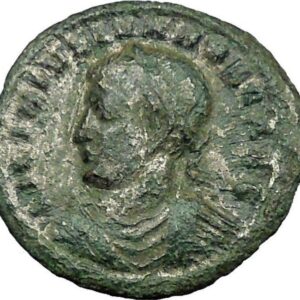
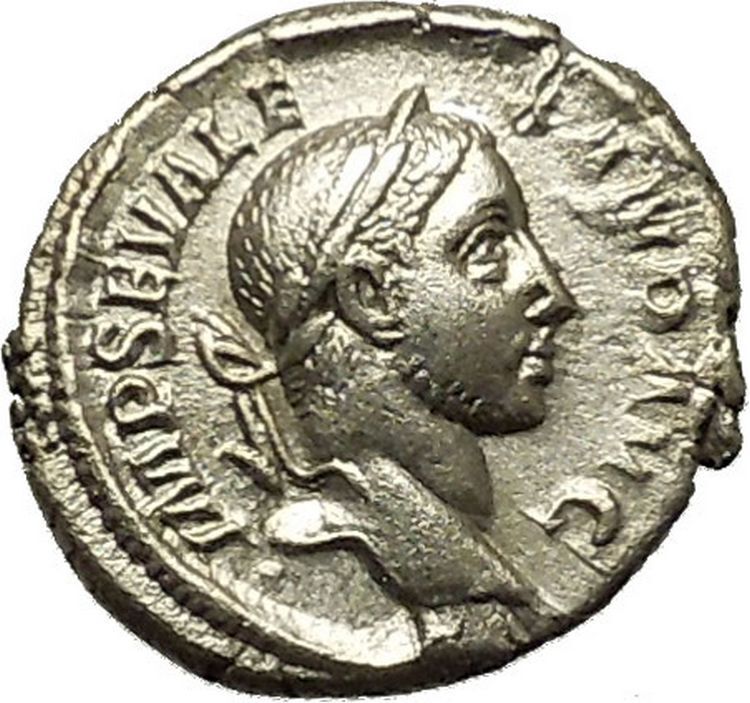
Silver Antoninianus 23mm (4.81 grams) Antioch mint 243-244 A.D.
Reference: RIC 212, C 162
IMPGORDIANVSPIVSFELAVG – Radiate, draped and cuirassed bust right.
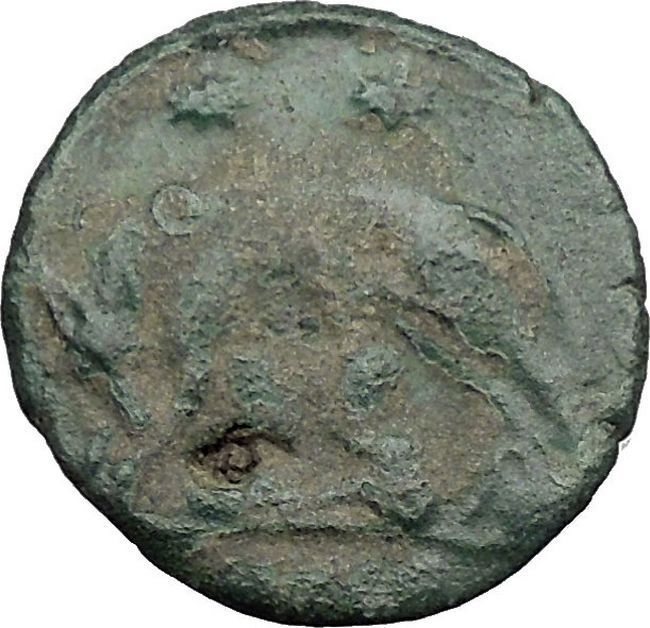
MARTIPACIFERO – Mars advancing left, holding branch and spear with shield.
You are bidding on the exact
item pictured, provided with a Certificate of Authenticity and Lifetime
Guarantee of Authenticity.
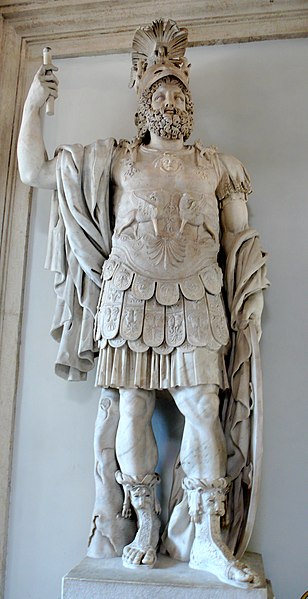
Mars (Latin:
Martis) was the
Roman
god of war
and also an
agricultural
guardian, a combination
characteristic of early
Rome
. He was second in importance only to
Jupiter
, and he was the most prominent of the
military gods in the
religion of the Roman army
. Most of his
festivals
were held in March, the month named
for him (MartiusLatin
), and in October, which
began and ended the season for military campaigning and farming.
Mars was
identified with
the
Greek god
Ares, whose
myths
were reinterpreted in
Roman literature
and
art
under the name of Mars. But the character
and dignity of Mars differed in fundamental ways from that of his Greek
counterpart, who is often treated with contempt and revulsion in
Greek literature
.Mars was a part of the
Archaic Triad
along with Jupiter and
Quirinus
, the latter of whom as a guardian of
the Roman people had no Greek equivalent. Mars’ altar in the
Campus Martius
, the area of Rome that took its
name from him, was supposed to have been dedicated by
Numa
, the peace-loving semi-legendary second
king of Rome
. Although the center of Mars’
worship was originally located outside the sacred boundary of Rome (pomerium),
Augustus
made the god a renewed focus of
Roman religion
by establishing the Temple of
Mars Ultor in
his new forum
.
Although Ares was viewed primarily as a destructive and destabilizing force,
Mars represented military power as a way
to secure peace
, and was a father (pater)
of the Roman people. In the mythic
genealogy
and
founding myths of Rome
, Mars was the father of
Romulus and Remus
with
Rhea Silvia
. His love affair with
Venus
symbolically reconciled the two different
traditions of Rome’s founding; Venus was the divine mother of the hero
Aeneas
, celebrated as the
Trojan refugee
who “founded” Rome several
generations before Romulus laid out the city walls.
The importance of Mars in establishing religious and cultural identity within
the Roman Empire
is indicated by the vast number of
inscriptions
identifying him with a local
deity, particularly in the
Western provinces
.
Venus and Mars
The union of Venus and Mars held greater appeal for poets and philosophers,
and the couple were a frequent subject of art. In Greek myth, the adultery of
Ares and Aphrodite
had been exposed to ridicule when her
husband Hephaestus
(whose Roman equivalent was
Vulcan
) caught them in the act by means of a
magical snare. Although not originally part of the Roman tradition, in 217 BC
Venus and Mars were presented as a complementary pair in the
lectisternium
, a public banquet at which
images of twelve major gods of the Roman state
were presented on couches as if present and participating.

Wall painting (mid-1st century AD) from which the House of Venus and
Mars at
Pompeii
takes its name
Scenes of Venus and Mars in
Roman art
often ignore the adulterous
implications of their union, and take pleasure in the good-looking couple
attended by Cupid
or multiple Loves (amores). Some
scenes may imply marriage, and the relationship was romanticized in funerary or
domestic art in which husbands and wives had themselves portrayed as the
passionate divine couple.
The uniting of deities representing Love and War lent itself to
allegory
, especially since the lovers were the
parents of
Harmonia
. The Renaissance philosopher
Marsilio Ficino
notes that “only Venus
dominates Mars, and he never dominates her”.In ancient Roman and Renaissance
art, Mars is often shown disarmed and relaxed, or even sleeping, but the
extramarital nature of their affair can also suggest that this peace is
impermanent.
Sacred animals

She-wolf and twins from an altar to Venus and Mars
Temples and topography
The earliest center in Rome for cultivating Mars as a deity was the Altar of
Mars (Ara
Martis) in the
Campus Martius
(“Field of Mars”) outside the
sacred boundary of Rome (pomerium).
The Romans thought that this altar had been established by the semi-legendary
Numa Pompilius
, the peace-loving successor of
Romulus. According to Roman tradition, the Campus Martius had been consecrated
to Mars by their ancestors to serve as horse pasturage and an equestrian
training ground for youths.[49]
During the
Roman Republic
(509–27 BC), the Campus was a
largely open expanse. No temple was built at the altar, but from 193 BC a
covered walkway connected it to the
Porta Fontinalis
, near the office and archives
of the Roman censors
. Newly elected censors placed
their
curule chairs
by the altar, and when they had
finished conducting the census, the citizens were collectively
purified
with a suovetaurilia there. A
frieze
from the so-called
“Altar” of Domitius Ahenobarbus
is thought to
depict the census, and may show Mars himself standing by the altar as the
procession of victims advances.
The main Temple of Mars (Aedes
Martis) in the Republican period also lay outside the sacred boundary and
was devoted to the god’s warrior aspect. It was built to fulfill a vow (votum)
made by a
Titus Quinctius
in 388 BC during the
Gallic siege of Rome
.[53]
The founding day (dies
natalis) was commemorated on June 1, and the temple is attested
by several inscriptions and literary sources. The sculpture group of Mars and
the wolves was displayed there.Soldiers sometimes assembled at the temple before
heading off to war, and it was the point of departure for a major parade of
Roman cavalry
held annually on July 15.
A temple to Mars in the
Circus Flaminius
was built around 133 BC,
funded by
Decimus Junius Brutus Callaicus
from war booty.
It housed a colossal statue of Mars and a nude Venus.
The Campus Martius continued to provide venues for equestrian events such as
chariot racing
during the
Imperial period
, but under the first emperor
Augustus
it underwent a major program of urban
renewal, marked by monumental architecture. The Altar of Augustan Peace (Ara
Pacis Augustae) was located there, as was the
Obelisk of Montecitorio
, imported from
Egypt
to form the pointer (gnomon)
of the
Solarium Augusti
, a giant
sundial
. With its public gardens, the Campus
became one of the most attractive places in the city to visit.
Augustus chose the Campus Martius as the site of his new Temple to Mars Ultor,
a manifestation of Mars he cultivated as the avenger (ultor) of the
murder of Julius Caesar
and of the military
disaster suffered at the
Battle of Carrhae
. When the legionary standards
lost to the Parthians were recovered, they were housed in the new temple. The
date of the temple’s dedication on May 12 was aligned with the
heliacal setting
of the constellation
Scorpio
, the
house
of war. The date continued to be marked
with
circus games
as late as the mid-4th century AD.
A large statue of Mars was part of the short-lived
Arch of Nero
, which was built in 62 AD but
dismantled after Nero
‘s suicide and disgrace (damnatio
memoriae).
Mars Quirinus

Mars celebrated as peace-bringer on a Roman coin issued by
Aemilianus
Mars was the
Roman
god of war
, the son of
Juno
and
Jupiter
, husband of
Bellona
, and the lover of
Venus
. He was the most prominent of the
military
gods that were
 worshipped
by the
Roman legions
. The martial Romans considered him second in importance only
to Jupiter (their main god). His
festivals
were held in
March
(named for
him) and October. As the word Mars has no
Indo-European
derivation, it is most likely the
Latinised
form of the agricultural
Etruscan
god Maris
. Initially Mars was a Roman god of
fertility
and vegetation
and a protector of cattle, fields and boundaries and farmers. In
the second century BC, the conservative
Cato the Elder
advised “For your cattle, for them to be healthy, make this
sacrifice to Mars Silvanus you must make this sacrifice each year”.
Mars later became associated with battle as the growing
Roman
Empire
began to expand, and he came to be identified with the
Greek
god Ares
.
Unlike his Greek counterpart, Mars was generally revered and rivaled Jupiter as
the most honoured god. He was also the
tutelary
god of the city of Rome. As he was regarded as the legendary father
of Rome’s founder,
Romulus
, it was believed that all Romans were descendants of Mars.
Marcus Antonius Gordianus Pius (January
20, 225
–
February
11
, 244
),
known in
English
as Gordian III,
 was
Roman
Emperor
from 238 to 244. Gordian was the son of
Antonia Gordiana
and his father was an unnamed Roman Senator who died before
238. Antonia Gordiana was the daughter of Emperor
Gordian I
and younger sister of Emperor
Gordian II
.
Very little is known on his early life before becoming Roman Emperor. Gordian
had assumed the name of his maternal grandfather in 238.
Following the murder of emperor
Alexander Severus
in Moguntiacum (modern
Mainz
), the
capital of the
Roman province
Germania Inferior
,
Maximinus Thrax
was acclaimed emperor, despite strong opposition of the
Roman senate
and the majority of the population. In response to what was
considered in Rome as a rebellion, Gordian’s grandfather and uncle, Gordian I
and II, were proclaimed joint emperors in the
Africa Province
. Their revolt was suppressed within a month by Cappellianus,
governor of Numidia
and a loyal supporter of Maximinus Thrax. The elder Gordians died,
but public opinion cherished their memory as peace loving and literate men,
victims of Maximinus’ oppression.
Meanwhile, Maximinus was on the verge of marching on Rome and
the Senate elected
Pupienus
and Balbinus
as joint emperors. These senators were not popular men and the population of
Rome was still shocked by the elder Gordian’s fate, so that the Senate decided
to take the teenager Gordian, rename him Marcus Antonius Gordianus as his
grandfather, and raise him to the rank of
Caesar
and imperial heir.
Pupienus
and Balbinus
defeated Maximinus, mainly due to the defection of several
legions
,
namely the
Parthica II
who assassinated Maximinus. But their joint reign was
doomed from the start with popular riots, military discontent and even an
enormous fire that consumed Rome in June 238. On
July 29
,
Pupienus and Balbinus were killed by the
Praetorian guard
and Gordian proclaimed sole emperor.
Rule
Due to Gordian’s age, the imperial government was surrendered
to the aristocratic families, who controlled the affairs of Rome through the
senate. In 240,
Sabinianus
revolted in the African province, but the situation was dealt quickly. In 241,
Gordian was married to Furia Sabinia
Tranquillina
, daughter of the newly appointed praetorian prefect,
Timesitheus
. As chief of the Praetorian guard and father in law of the
emperor, Timesitheus quickly became the de facto ruler of the Roman
empire.
In the 3rd century, the Roman frontiers weakened against the
Germanic tribes across the
Rhine
and
Danube
, and the
Sassanid
kingdom across the
Euphrates
increased its own attacks. When the Persians under
Shapur I
invaded Mesopotamia
, the young emperor opened the doors of the
Temple of Janus
for the last time in Roman history, and sent a huge army to
the East. The Sassanids were driven back over the Euphrates and defeated in the
Battle of Resaena
(243). The campaign was a success and Gordian, who had
joined the army, was planning an invasion of the enemy’s territory, when his
father-in-law died in unclear circumstances. Without Timesitheus, the campaign,
and the emperor’s security, were at risk.
Marcus Julius Philippus, also known as
Philip the Arab
, stepped in at this moment as the new Praetorian Prefect and
the campaign proceeded. In the beginning of 244, the Persians counter-attacked.
Persian sources claim that a battle was fought (Battle
of Misiche) near modern
Fallujah
(Iraq)
and resulted in a major Roman defeat and the death of Gordian III[1].
Roman sources do not mention this battle and suggest that Gordian died far away,
upstream of the Euphrates. Although ancient sources often described Philip, who
succeeded Gordian as emperor, as having murdered Gordian at Zaitha (Qalat es
Salihiyah), the cause of Gordian’s death is unknown.
Gordian’s youth and good nature, along with the deaths of his
grandfather and uncle and his own tragic fate at the hands of another usurper,
granted him the everlasting esteem of the Romans. Despite the opposition of the
new emperor, Gordian was deified by the Senate after his death, in order to
appease the population and avoid riots.
|