|
Julia Mamaea – Augusta: 222-235 A.D.
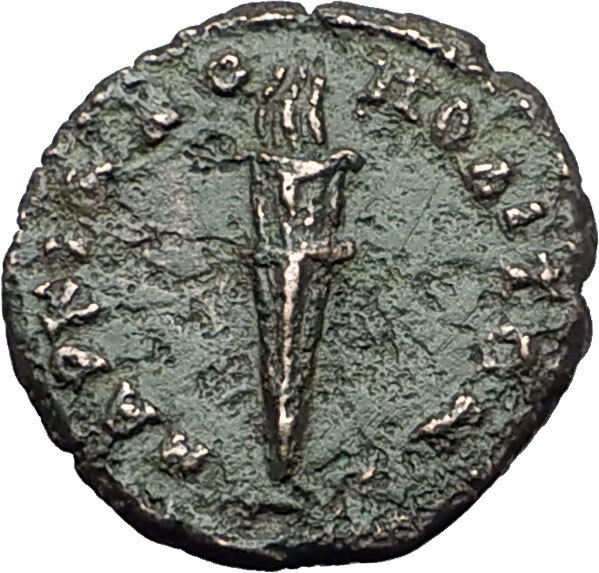
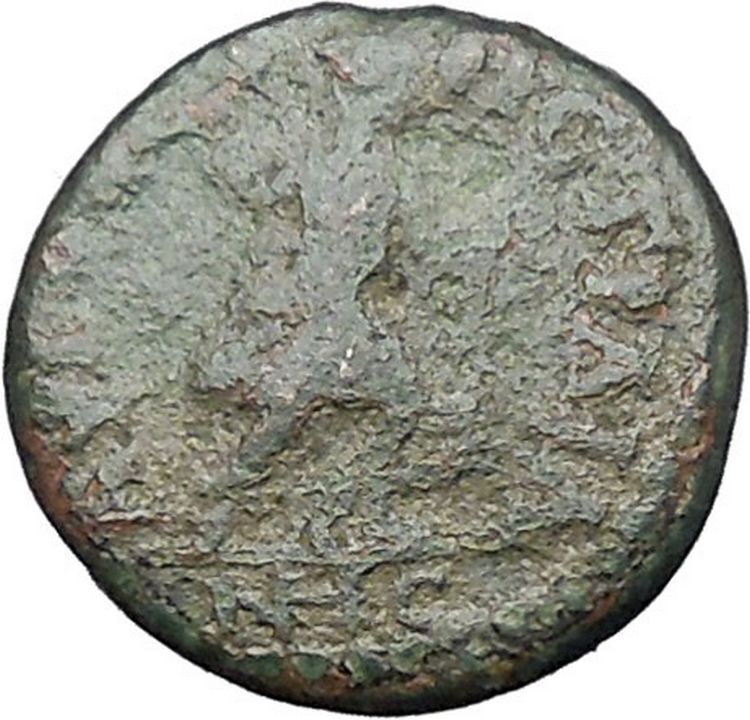
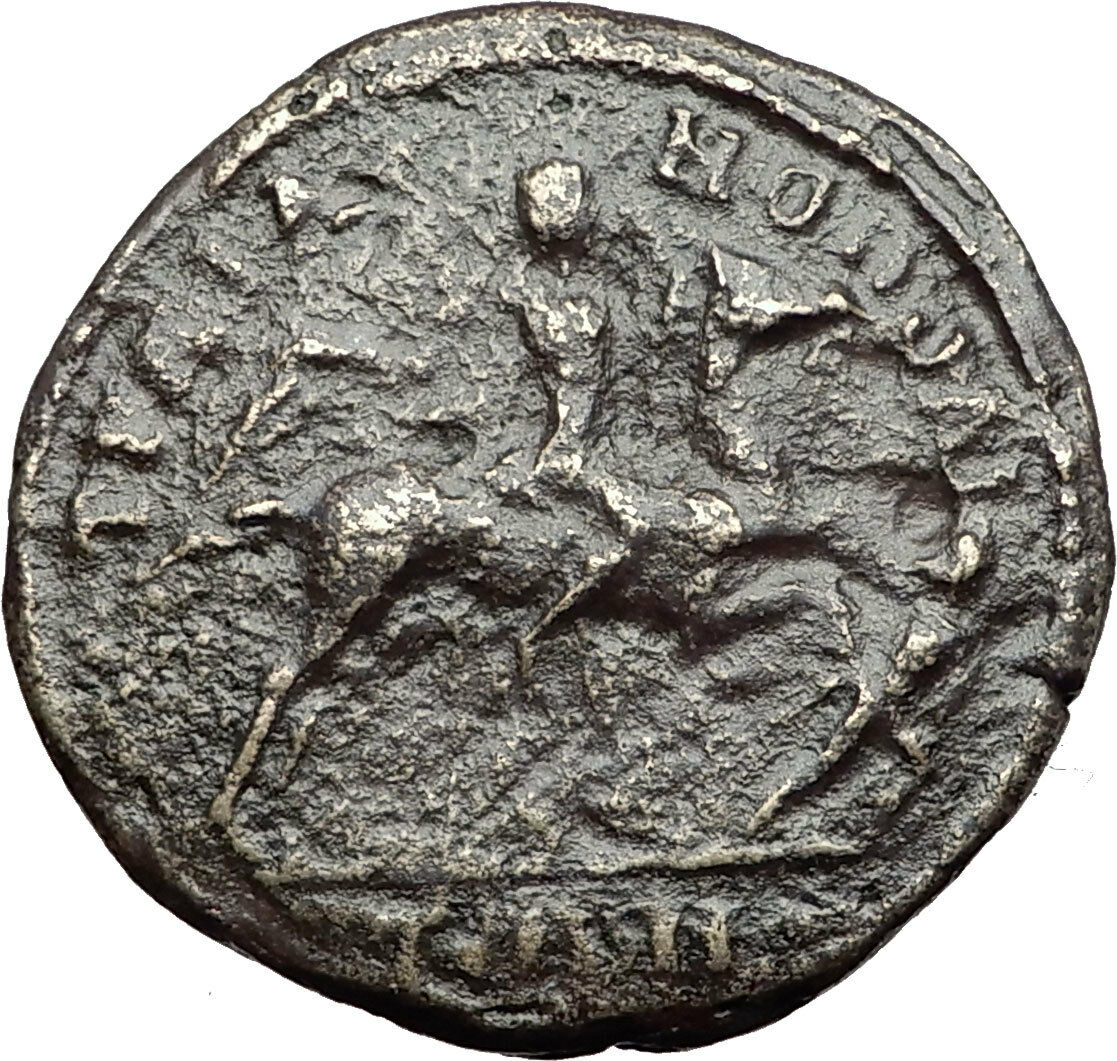
Bronze 24mm (8.28 grams) Thessalonica mint: 222-235 A.D.
Reference: Varbanov 4484; Touratsoglou V2/R5
IOVΛIA MAMЄA AVΓ, diademed draped bust right.
ΘЄCCAΛONIKЄΩN, Nike advancing left, holding small Cabeirus and palm.
You are bidding on the exact item pictured, provided with a Certificate of Authenticity and Lifetime Guarantee of Authenticity.
 In Greek mythology, Nike was a goddess who personified victory, also known as the Winged Goddess of Victory. The Roman equivalent was Victoria. Depending upon the time of various myths, she was described as the daughter of Pallas (Titan) and Styx (Water) and the sister of Kratos (Strength), Bia (Force), and Zelus (Zeal). Nike and her siblings were close companions of Zeus, the dominant deity of the Greek pantheon. According to classical (later) myth, Styx brought them to Zeus when the god was assembling allies for the Titan War against the older deities. Nike assumed the role of the divine charioteer, a role in which she often is portrayed in Classical Greek art. Nike flew around battlefields rewarding the victors with glory and fame.
Nike is seen with wings in most statues and paintings. Most other winged deities in the Greek pantheon had shed their wings by Classical times. Nike is the goddess of strength, speed, and victory. Nike was a very close acquaintance of Athena, and is thought to have stood in Athena’s outstretched hand in the statue of Athena located in the Parthenon. Nike is one of the most commonly portrayed figures on Greek coins.
Names stemming from Nike include amongst others: Nicholas, Nicola, Nick, Nikolai, Nils, Klaas, Nicole, Ike, Niki, Nikita, Nika, Niketas, and Nico.
Julia Mamaea – Augusta: 222-235 A.D.
| Mother of Severus Alexander | Daughter of Julia Maesa | Mother-in-law of Orbiana | Sister of Julia Soaemias | Nice of Julia Domna and Septimius Severus | Aunt of Elagabalus | Cousin of Caracalla and Geta |

Julia Avita Mamaea (14 or 29 August after 180-235) was the second daughter of Julia Maesa, a powerful Roman woman of Syrian Arab origin and Syrian noble Julius Avitus. She was a niece of empress Julia Domna and emperor Septimius Severus and sister of Julia Soaemias. She was born and raised in Emesa (modern Homs, Syria).
Julia’s first husband was a former consul (whose name is unknown) who died. Julia married as her second husband Syrian Promagistrate Marcus Julius Gessius Marcianus. Julia bore Marcianus two children, a daughter called Theoclia (little is known of her) and a son, Marcus Julius Gessius Bassianus Alexianus, later emperor Alexander Severus. Unlike her sister, Julia Mamaea was reported to be a virtuous woman, never involved in scandals.
As a member of the Imperial Roman family, she watched closely the death of her cousin Caracalla and the ascent to power of her nephew Elagabalus, the oldest grandson of Julia Maesa and her choice to the throne. Eventually Elagabalus and his mother Julia Soaemias proved incompetent rulers and favour fell on Alexander, Julia’s son. He became emperor in 222, following Elagabalus’ murder by the Praetorian Guard. Julia and her mother became regents in the name of Alexander, then 14 years old. Upon adulthood, Alexander confirmed his esteem for his mother and named her consors imperii (imperial consort). It was in this condition that she accompanied her son in his campaigns: a custom started with Julia Domna. Thus she travelled to the East, for the campaign against Parthia and to the Germania provinces. Julia Mamaea was with Alexander in Moguntiacum (modern Mainz), capital of Germania Superior, when he was assassinated by his troops. She suffered the same fate.
|