|
Greek city of Tripolis in Lydia Pseudo-Autonomous Issue
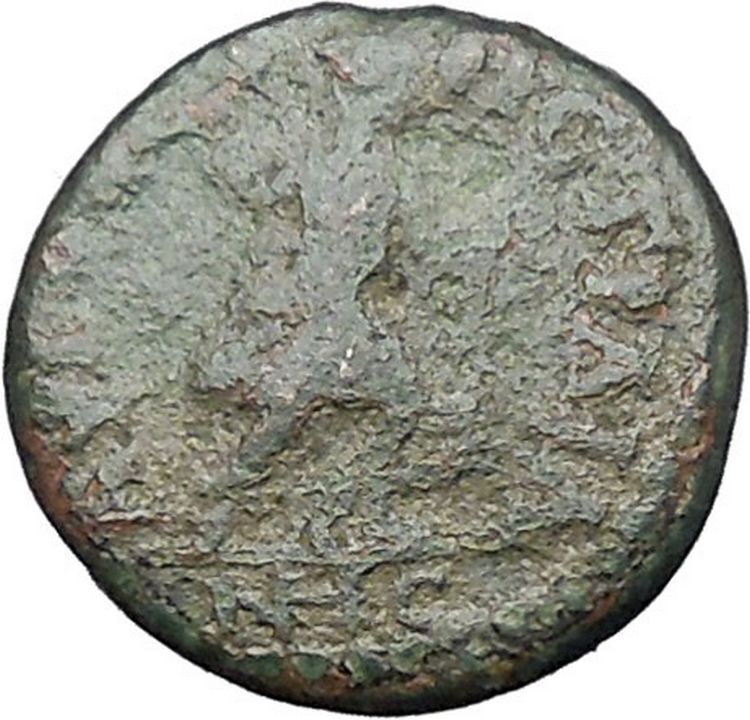
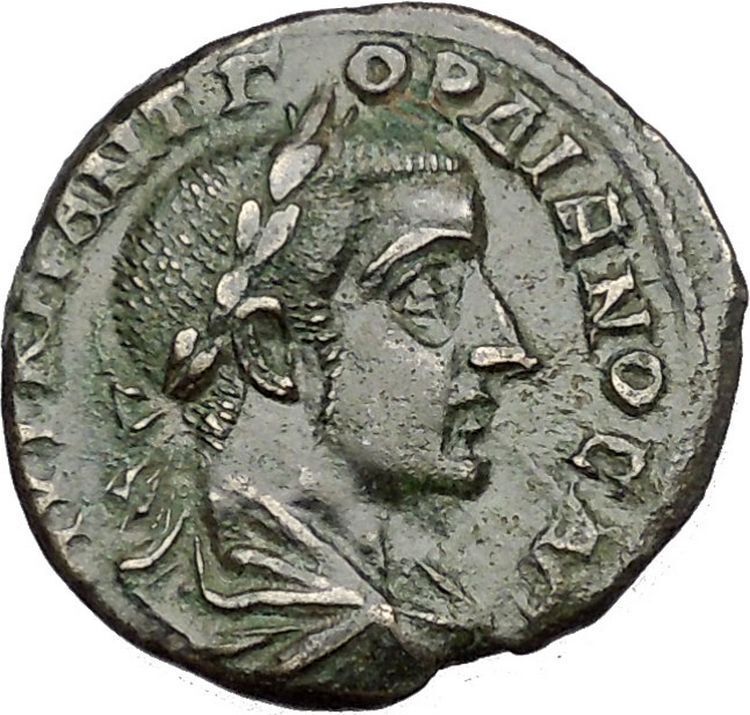
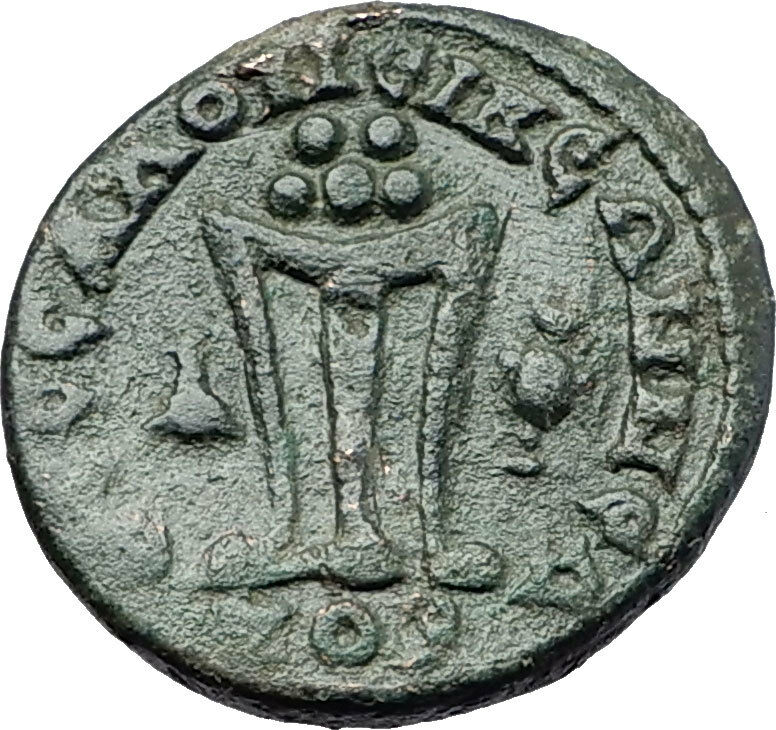
Bronze 20mm (4.31 grams) Struck time of Roman emperor Trajan, circa 98-117 A.D.
Reference: BMC 55. SNG Copenhagen 745. SNG München 811
Certification: NGC Ancients
Ch VF 6155927-014
TPIΠOΛ, Bust of Athena to right, wearing Corinthian helmet, Aegis bound around neck.
AV KAI TPAIANOC Trajan standing to left, holding long scepter in his left and erecting trophy with his right.
You are bidding on the exact item pictured, provided with a Certificate of Authenticity and Lifetime Guarantee of Authenticity.
 Athena or Athene (Latin: Minerva), also referred to as Pallas Athena, is the goddess of war, civilization, wisdom, strength, strategy, crafts, justice and skill in Greek mythology. Minerva, Athena’s Roman incarnation, embodies similar attributes. Athena is also a shrewd companion of heroes and the goddess of heroic endeavour. She is the virgin patron of Athens. The Athenians built the Parthenon on the Acropolis of her namesake city, Athens, in her honour (Athena Parthenos). Athena’s cult as the patron of Athens seems to have existed from the earliest times and was so persistent that archaic myths about her were recast to adapt to cultural changes. In her role as a protector of the city (polis), many people throughout the Greek world worshiped Athena as Athena Polias (“Athena of the city”). Athens and Athena bear etymologically connected names.
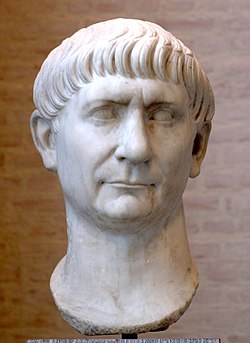 Trajan – Roman Emperor : 98-117 A.D.
Caesar: 97 A.D. (under Nerva) | Augustus: 98-117 A.D.
| Adopted son of Nerva | Son of Trajan Pater | Husband of Plotina | Brother of Marciana | Uncle of Matidia | Grand-uncle of Sabina |
Marcus Ulpius Nerva Traianus, commonly known as Trajan (18 September, 53 – 8 August, 117), was a Roman Emperor who reigned from AD 98 until his death in AD 117. Born Marcus Ulpius Traianus into a non-patrician family in the Hispania Baetica province (modern day Spain), Trajan rose to prominence during the reign of emperor Domitian, serving as a general in the Roman army along the German frontier, and successfully crushing the revolt of Antonius Saturninus in 89. On September 18, 96, Domitian was succeeded by Marcus Cocceius Nerva, an old and childless senator who proved to be unpopular with the army. After a brief and tumultuous year in power, a revolt by members of the Praetorian Guard compelled him to adopt the more popular Trajan as his heir and successor. Nerva died on January 27, 98, and was succeeded by his adopted son without incident.
As a civilian administrator, Trajan is best known for his extensive public building program, which reshaped the city of Rome and left multiple enduring landmarks such as Trajan’s Forum, Trajan’s Market and Trajan’s Column. It was as a military commander however that Trajan celebrated his greatest triumphs. In 101, he launched a punitive expedition into the kingdom of Dacia against king Decebalus, defeating the Dacian army near Tapae in 102, and finally conquering Dacia completely in 106. In 107, Trajan pushed further east and annexed the Nabataean kingdom, establishing the province of Arabia Petraea. After a period of relative peace within the Empire, he launched his final campaign in 113 against Parthia, advancing as far as the city of Susa in 116, and expanding the Roman Empire to its greatest extent. During this campaign Trajan was struck by illness, and late in 117, while sailing back to Rome, he died of a stroke on August 9, in the city of Selinus. He was deified by the Senate and his ashes were laid to rest under Trajan’s Column. He was succeeded by his adopted son (not having a biological heir) Publius Aelius Hadrianus-commonly known as Hadrian.
As an emperor, Trajan’s reputation has endured – he is one of the few rulers whose reputation has survived the scrutiny of nineteen centuries of history. Every new emperor after him was honoured by the Senate with the prayer felicior Augusto, melior Traiano, meaning “may he be luckier than Augustus and better than Trajan”. Among medieval Christian theologians, Trajan was considered a virtuous pagan, while the 18th century historian Edward Gibbon popularized the notion of the Five Good Emperors, of which Trajan was the second.
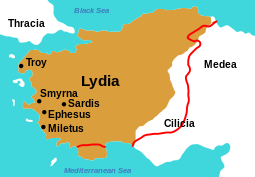 Lydia was an Iron Age kingdom of western Asia Minor located generally east of ancient Ionia in the modern western Turkish provinces of Uşak, Manisa and inland İzmir. Its population spoke an Anatolian language known as Lydian.
At its greatest extent, the Kingdom of Lydia covered all of western Anatolia. Lydia (known as Sparda by the Achaemenids) was a satrapy (province) of the Achaemenid Persian Empire, with Sardis as its capital. Tabalus, appointed by Cyrus the Great, was the first satrap (governor). (See: Lydia (satrapy).)
Lydia was later the name of a Roman province. Coins are said to have been invented in Lydia around the 7th century BC.
|