|
Trebonianus Gallus – Roman Emperor : 251-253 A.D.
Bronze 29mm (14.28 grams) of Antioch on the Orontes in Seleukis and Pieria. Struck circa 251-253 A.D.
Reference: RPC IX 1851; BMC 639; McAlee 1181; Butcher 507a
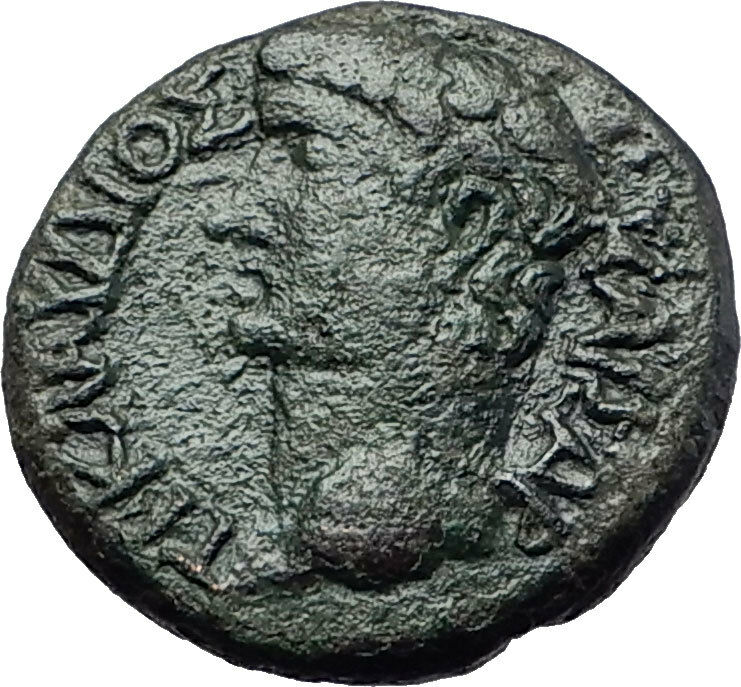
ΑΥΤΟΚ Κ Γ ΟΥΙΒ ΤΡЄΒ ΓΑΛΛΟϹ ϹЄΒ, laureate, draped and cuirassed bust to right, seen from behind.
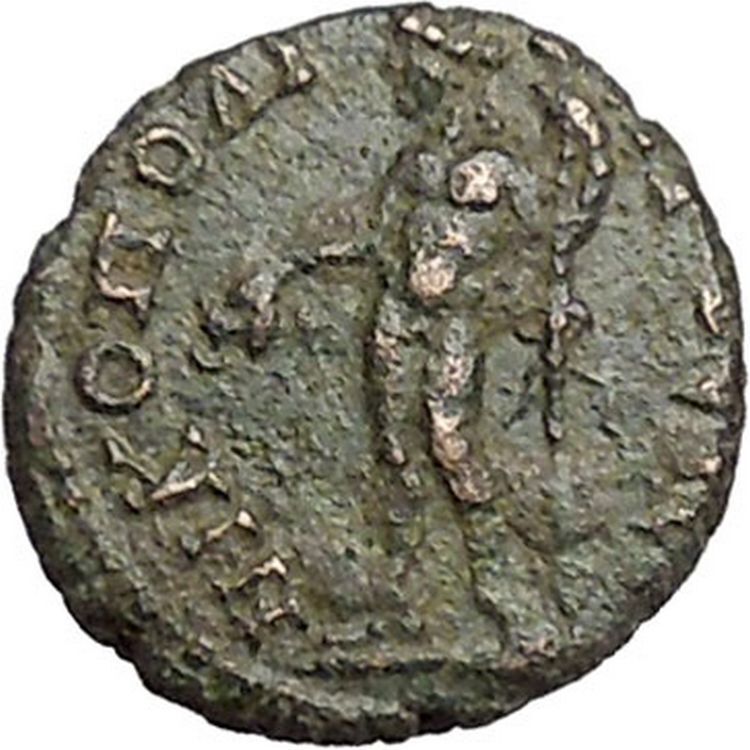
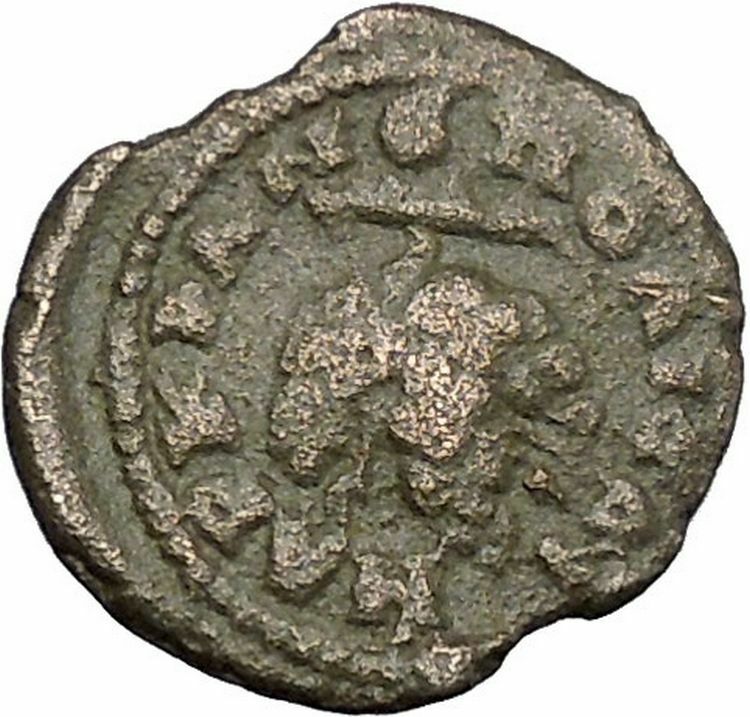
ΑΝΤΙΟΧЄΩΝ ΜΗΤΡΟ ΚΟΛΩΝ, Δ-Є above portable tetrastyle shrine in which the city goddess (Tyche) is seated facing on rock, river god Orontes swimming at feet; ram running to right above; SC in exergue.
Founded by Seleukos I circa 300 B.C. with Greek and Macedonian settlers brought from the destroyed city of Antigoneia on the Orontes. The city was named after Seleukos’ father with the purpose of being a western capital to guard against the northern expansion of the Ptolemaic kingdom. Eventually as many territories were lost, Antioch became the only capital of the Seleukid kingdom. Pompey the Great deposed the last king Antiochos XIII in 64 B.C. The Romans then made it a capital of a new Roman province and the seat of the Roman governors. There were temples of Olympian Zeus, Apollo in Daphne, hippodrome (built under the Seleukids and embellished by the Romans) and colonnaded main streets (being a gift from Herod the Great). It was an important center for the arts and learning.
You are bidding on the exact item pictured, provided with a Certificate of Authenticity and Lifetime Guarantee of Authenticity.
 Tyche (meaning “luck”; Roman equivalent: Fortuna) was the presiding tutelary deity that governed the fortune and prosperity of a city, its destiny. She is the daughter of Aphrodite and Zeus or Hermes.
In literature, she might be given various genealogies, as a daughter of Hermes and Aphrodite, or considered as one of the Oceanids, daughters of Oceanus and Tethys, or of Zeus. She was connected with Nemesis and Agathos Daimon (“good spirit”).
The Greek historian Polybius believed that when no cause can be discovered to events such as floods, droughts, frosts or even in politics, then the cause of these events may be fairly attributed to Tyche.
Worship
Increasingly during the Hellenistic period, cities venerated their own specific iconic version of Tyche, wearing a mural crown (a crown like the walls of the city).
Tyche had temples at Caesarea Maritima, Antioch, Alexandria and Constantinople. In Alexandria the Tychaeon, the temple of Tyche, was described by Libanius as one of the most magnificent of the entire Hellenistic world.
She was uniquely venerated at Itanos in Crete, as Tyche Protogeneia, linked with the Athenian Protogeneia (“firstborn”), daughter of Erechtheus, whose self-sacrifice saved the city.
Stylianos Spyridakis concisely expressed Tyche’s appeal in a Hellenistic world of arbitrary violence and unmeaning reverses: “In the turbulent years of the Epigoni of Alexander, an awareness of the instability of human affairs led people to believe that Tyche, the blind mistress of Fortune, governed mankind with an inconstancy which explained the vicissitudes of the time.”
Depictions
Tyche appears on many coins of the Hellenistic period in the three centuries before the Christian era, especially from cities in the Aegean. Unpredictable turns of fortune drive the complicated plotlines of Hellenistic romances, such as Leucippe and Clitophon or Daphnis and Chloe. She experienced a resurgence in another era of uneasy change, the final days of publicly sanctioned Paganism, between the late-fourth-century emperors Julian and Theodosius I who definitively closed the temples. The effectiveness of her capricious power even achieved respectability in philosophical circles during that generation, though among poets it was a commonplace to revile her for a fickle harlot.
In medieval art, she was depicted as carrying a cornucopia, an emblematic ship’s rudder, and the wheel of fortune, or she may stand on the wheel, presiding over the entire circle of fate.
The constellation of Virgo is sometimes identified as the heavenly figure of Tyche, as well as other goddesses such as Demeter and Astraea.
 Gaius Vibius Trebonianus Gallus (206 – August, 253), was Roman Emperor from 251 to 253, in a joint rule with his son Volusianus.
Gallus was born in Italy, in a family with respected ancestry of Etruscan senatorial background. He had two children in his marriage with Afinia Gemina Baebiana: Gaius Vibius Volusianus, later Emperor, and a daughter, Vibia Galla. His early career was a typical cursus honorum, with several appointments, both political and military. He was suffect consul and in 250 was nominated governor of the Roman province of Moesia Superior, an appointment that showed the confidence of emperor Trajan Decius in him. In Moesia, Gallus was a key figure in repelling the frequent invasion attacks by the Gothic tribes of the Danube and became popular with the army, catered to during his brief Imperial rule by his official image: military haircut, gladiatorial physique, intimidating stance (illustration, left).
In June 251, Decius and his co-emperor and son Herennius Etruscus died in the Battle of Abrittus, at the hands of the Goths they were supposed to punish for raids into the empire, largely owing to the failure of Gallus to attack aggressively. When the army heard the news, the soldiers proclaimed Gallus emperor, despite Hostilian, Decius’ surviving son, ascending the imperial throne in Rome. Gallus did not back down from his intention to become emperor, but accepted Hostilian as co-emperor, perhaps to avoid the damage of another civil war. While Gallus marched on Rome, an outbreak of plague struck the city and killed young Hostilian. With absolute power now in his hands, Gallus nominated his son Volusianus co-emperor.
Eager to show himself competent and gain popularity with the citizens, Gallus swiftly dealt with the epidemic, providing burial for the victims. Gallus is often accused of persecuting the Christians, but the only solid evidence of this allegation is the imprisoning of Pope Cornelius in 252.
Like his predecessors, Gallus did not have an easy reign. In the East, Persian Emperor Shapur I invaded and conquered the province of Syria, without any response from Rome. On the Danube, the Gothic tribes were once again on the loose, despite the peace treaty signed in 251. The army was not long pleased with the emperor, and when Aemilianus, governor of Moesia Superior and Pannonia, took the initiative of battle and defeated the Goths, the soldiers proclaimed him emperor. With a usurper threatening the throne, Gallus prepared for a fight. He recalled several legions and ordered reinforcements to return to Rome from the Rhine frontier. Despite these dispositions, Aemilianus marched onto Italy ready to fight for his claim. Gallus did not have the chance to face him in battle: he and Volusianus were murdered by their own troops in August 253, in Interamna (modern Terni).
|