|
German States – Bavaria
Charles Theodore – Elector: 30 December 1777 – 16 February 1799
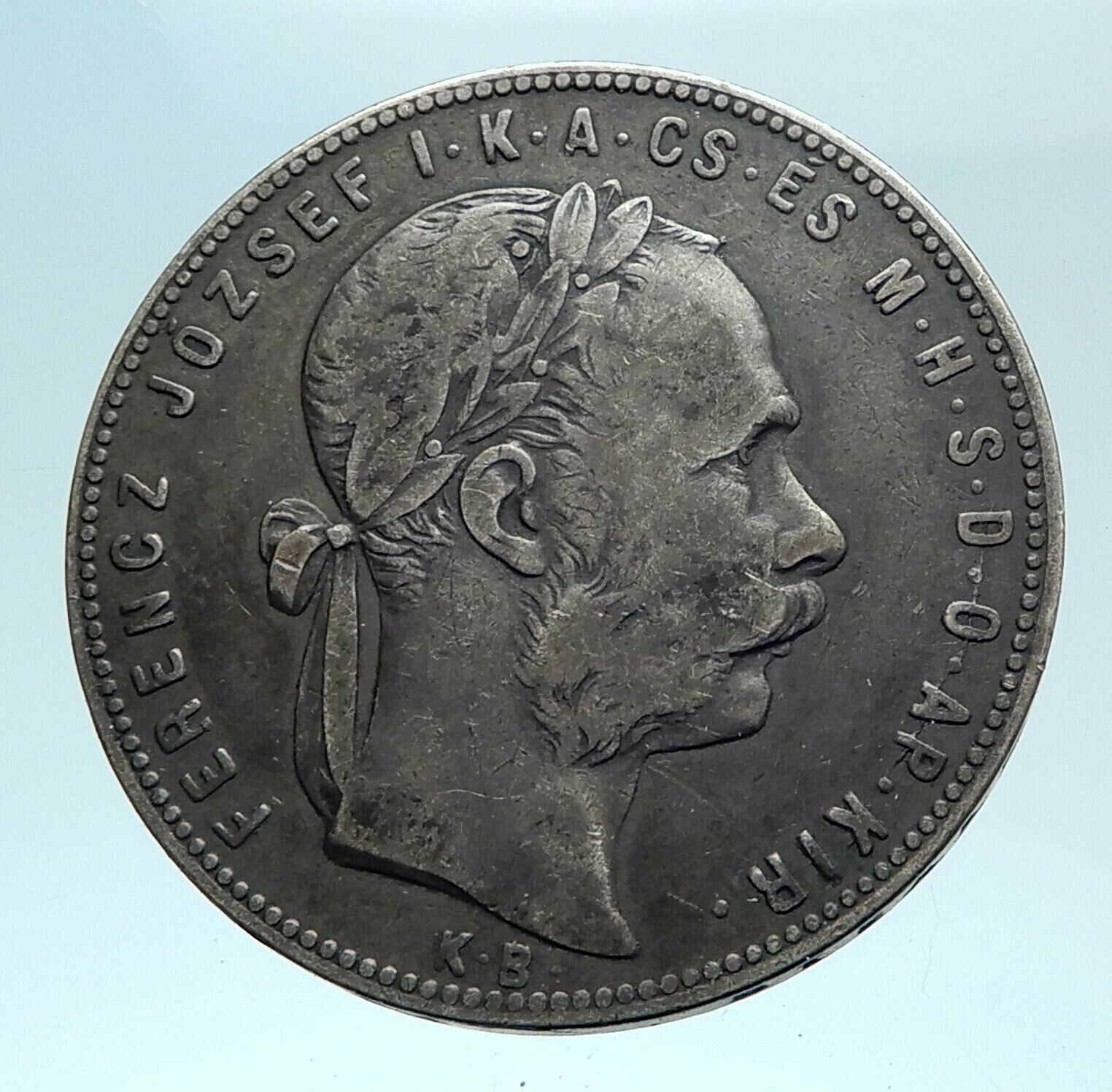
1781 A Silver 20 Krajczar 28mm (6.36 grams)
Reference: KM# 557
CAR • THEOD • D • G • C • P • R • (-) (U)(V) (-) • B • D • S • R • I • A • & EL • D • I • C • M •, Head to right in laurel wreath.
PATRONA – BAVARIAE· 20, Seated Madonna with Child on pedestal with value ’20,’ laurel and palm branches to left and right.
You are bidding on the exact item pictured, provided with a Certificate of Authenticity and Lifetime Guarantee of Authenticity.
 Charles Theodore (German: Karl Theodor; 11 December 1724 – 16 February 1799) reigned as Prince-elector and Count Palatine from 1742, as Duke of Jülich and Berg from 1742 and also as prince-elector and Duke of Bavaria from 1777 to his death. He was a member of the House of Palatinate-Sulzbach, a branch of the House of Wittelsbach.
Charles Theodore was of the Wittelsbach house Palatinate-Sulzbach. His father was Johann Christian, who later became Count Palatine of Sulzbach. His mother was Marie-Anne-Henriette-Leopoldine de La Tour d’Auvergne, Margravine of Bergen op Zoom, a grandniece of Henri de La Tour d’Auvergne, Viscount of Turenne. Charles Theodore was born in Drogenbos near Brussels and educated in Mannheim.
Charles Theodore was the Margrave of Bergen op Zoom from 1728 onwards. He then succeeded his father as Count Palatine of Sulzbach in 1733 and inherited the Electoral Palatinate and the duchies of Jülich and Berg in 1742, with the death of Charles III Philip, Elector Palatine. To strengthen the union of all lines of the Wittelsbach dynasty Charles III Philip had organised a wedding on 17 January 1742 when his granddaughter Elizabeth Augusta was married to Charles Theodore and her sister Maria Anna to the Bavarian prince Clement.
As reigning Prince Elector Palatine, Charles Theodore won the hearts of his subjects by founding an academy of science, stocking up the museums’ collections and supporting the arts. When Maximilian III Joseph of Bavaria died in 1777, Charles Theodore became also Elector and Duke of Bavaria and moved to Munich.
Charles Theodore did not immediately take up his new title. He had several mistresses and many illegitimate children. However, these children could inherit neither the Electorate of Bavaria nor that of the Palatine; Charles Theodore needed territory that he could bequeath to his illegitimate children. Charles Theodore also dreamed of resurrecting the Burgundian Empire of the Middle Ages. ]
On 3 January 1778, shortly after the death of Max Joseph, Charles Theodore signed an agreement with Emperor Joseph II to exchange southern Bavaria for part of the Austrian Netherlands.
The plan was strongly opposed by Maria Anna Sophia of Saxony, the widow of Max Joseph, and Charles Theodore’s cousin Charles II August, Duke of Zweibrücken, the head of the House of Palatinate-Birkenfeld and next heir of Bavaria and the Palatinate. They were supported by Frederick II of Prussia, and most of the German minor states.
The ensuing diplomatic crisis led to the War of the Bavarian Succession, which was ended by the Peace of Teschen (1779). Charles Theodore accepted the Bavarian succession, but agreed that his illegitimate descendants could not inherit Bavaria. Austria acquired the Innviertel, a part of Bavaria in the basin of the Inn river.
Charles Theodore had only one son with his wife, Countess Elizabeth Augusta of Sulzbach, who died a day after birth. His wife died in 1794. In 1795, he married Maria Leopoldine of Austria-Este, Joseph’s niece, but they had no children. A second proposal to exchange Bavaria for the Austrian Netherlands in 1784 also failed as Frederick II of Prussia initiated the Fürstenbund.
When Charles Theodore died, Bavaria and the Electorate passed to his cousin, Max Joseph, Duke of Zweibrücken, the younger brother of Charles August, who had died in 1795.
In 1989, Marvin E. Thomas argued in Karl Theodor and the Bavarian Succession, 1777–1778 that Charles Theodore wanted to maintain possession of his new territory, as is shown in his diplomatic correspondence. Thomas is the only scholar to produce such an analysis. It is more widely understood that Charles Theodore continued the despotic and expensive habits he had developed as Elector Palatine.
Rule as elector of Bavaria
Charles Theodore never became popular as a ruler in Bavaria according to his critic Lorenz von Westenrieder. He attempted, without success to exchange the ducal lands of Bavaria, for the Austrian Netherlands and a royal crown, and he never managed to control the mounting social tensions in Bavaria. After a dispute with Munich’s city council, he even moved the electoral residence in 1788 to Mannheim but returned only one year later.
In 1785, he appointed the American Loyalist exile Benjamin Thompson as his aide-de-camp and chamberlain. Over the next 11 years, Thompson reformed the army and many aspects of the state, rising to high ministerial rank with Charles Theodore’s backing, and becoming Count von Rumford.
Charles Theodore is also known for disbanding Adam Weishaupt’s order of the Illuminati in 1785.
In 1794, the armies of revolutionary France occupied the Duchy of Jülich, in 1795 they invaded the Palatinate, and in 1796 marched towards Bavaria. Charles Theodore begged Francis II for help that would have made Bavaria a puppet state of Austria. When he died of a stroke in Munich in 1799, the population in Munich celebrated for several days. He is buried in the crypt of the Theatinerkirche in Munich.
Despite the mutual dislike and distrust between the Duke and his Bavarian subjects, Charles Theodore left a distinctive mark on the city of Munich: it was during his reign that the English Garden, Munich’s largest park, was created, and the city’s old fortifications were dismantled to make place for a modern, expanding city. One of Munich’s major squares, Karlsplatz, is named after Charles Theodore. Munich natives, however, seldom use that name, calling the square instead Stachus, after the pub “Beim Stachus” that was located there until construction work for Karlsplatz began, mainly because Charles Theodore, as noted above, never enjoyed the popularity in Bavaria that he enjoyed in the Palatinate.
 A Madonna is a representation of Mary, either alone or with her child Jesus. These images are central icons for both the Catholic and Orthodox churches. The word is from Italian ma donna, meaning ‘my lady’. The Madonna and Child type is very prevalent in Christian iconography, divided into many traditional subtypes especially in Eastern Orthodox iconography, often known after the location of a notable icon of the type, such as the Theotokos of Vladimir, Agiosoritissa, Blachernitissa, etc., or descriptive of the depicted posture, as in Hodegetria, Eleusa, etc.
The term Madonna in the sense of “picture or statue of the Virgin Mary” enters English usage in the 17th century, primarily in reference to works of the Italian Renaissance. In an Eastern Orthodox context, such images are typically known as Theotokos. “Madonna” may be generally used of representations of Mary, with or without the infant Jesus, is the focus and central figure of the image, possibly flanked or surrounded by angels or saints. Other types of Marian imagery have a narrative context, depicting scenes from the Life of the Virgin, e.g. the Annunciation to Mary, are not typically called “Madonna”.
The earliest depictions of Mary date still to Early Christianity (2nd to 3rd centuries), found in the Catacombs of Rome. These are in a narrative context. The classical “Madonna” or “Theotokos” imagery develops from the 5th century, as Marian devotion rose to great importance after the Council of Ephesus formally affirmed her status as “Mother of God or Theotokos (“God-bearer”) in 431. The Theotokos iconography as it developed in the 6th to 8th century rose to great importance in the high medieval period (12th to 14th centuries) both in the Eastern Orthodox and in the Latin spheres. According to a tradition recorded in the 8th century, Marian iconography goes back to a portrait drawn from life by Luke the Evangelist, with a number of icons (such as the Panagia Portaitissa) claimed to either represent this original icon or to be a direct copy of it. In the Western tradition, depictions of the Madonna were greatly diversified by Renaissance masters such as Duccio, Leonardo da Vinci, Michelangelo, Raphael, Giovanni Bellini, Caravaggio and Rubens (and further by certain modernists, such as Salvador Dalí and Henry Moore) while Eastern Orthodox iconography adheres more closely to the inherited traditional types.

 Hungary is a sovereign state in Europe. It is situated in the Carpathian Basin and is bordered by Slovakia to the north, Romania to the east, Serbia to the south, Croatia to the southwest, Slovenia to the west, Austria to the northwest, and Ukraine to the northeast. The country’s capital and largest city is Budapest. Hungary is a member of the European Union, NATO, the OECD, the Visegrád Group, and the Schengen Area. The official language is Hungarian, which is the most widely spoken non-Indo-European language in Europe.
 Following centuries of successive habitation by Celts, Romans, Huns, Slavs, Gepids, and Avars, the foundation of Hungary was laid in the late 9th century by the Hungarian grand prince Árpád in the Honfoglalás (“homeland-conquest”). His great-grandson Stephen I ascended to the throne in 1000 CE, converting the country to a Christian kingdom. By the 12th century, Hungary became a middle power within the Western world, reaching a golden age by the 15th century. Following the Battle of Mohács in 1526 and about 150 years of partial Ottoman occupation (1541-1699), Hungary came under Habsburg rule, and later formed a significant part of the Austro-Hungarian Empire (1867-1918).
Hungary’s current borders were first established by the Treaty of Trianon (1920) after World War I, when the country lost 71% of its territory, 58% of its population, and 32% of ethnic Hungarians. Following the interwar period, Hungary joined the Axis Powers in World War II, suffering significant damage and casualties. Hungary came under the influence of the Soviet Union, which contributed to the establishment of a four-decade-long communist dictatorship (1947-1989). The country gained widespread international attention regarding the Revolution of 1956 and the seminal opening of its previously-restricted border with Austria in 1989, which accelerated the collapse of the Eastern Bloc.
On 23 October 1989, Hungary again became a democratic parliamentary republic, and today has a high-income economy with a very high Human Development Index. Hungary is a popular tourist destination attracting 10.675 million tourists a year (2013). It is home to the largest thermal water cave system and the second-largest thermal lake in the world (Lake Hévíz), the largest lake in Central Europe (Lake Balaton), and the largest natural grasslands in Europe (the Hortobágy National Park).
|