|
Germany – German States. Kingdom of Prussia.
Wilhelm III – King: 16 November 1797 – 7 June 1840
1838 D Copper 3 Pfennige 23mm (4.40 grams)
Reference: KM# 407, AKS# 33, Olding FR# 189, 193 203, Schr# 551-
88, Neum# 77
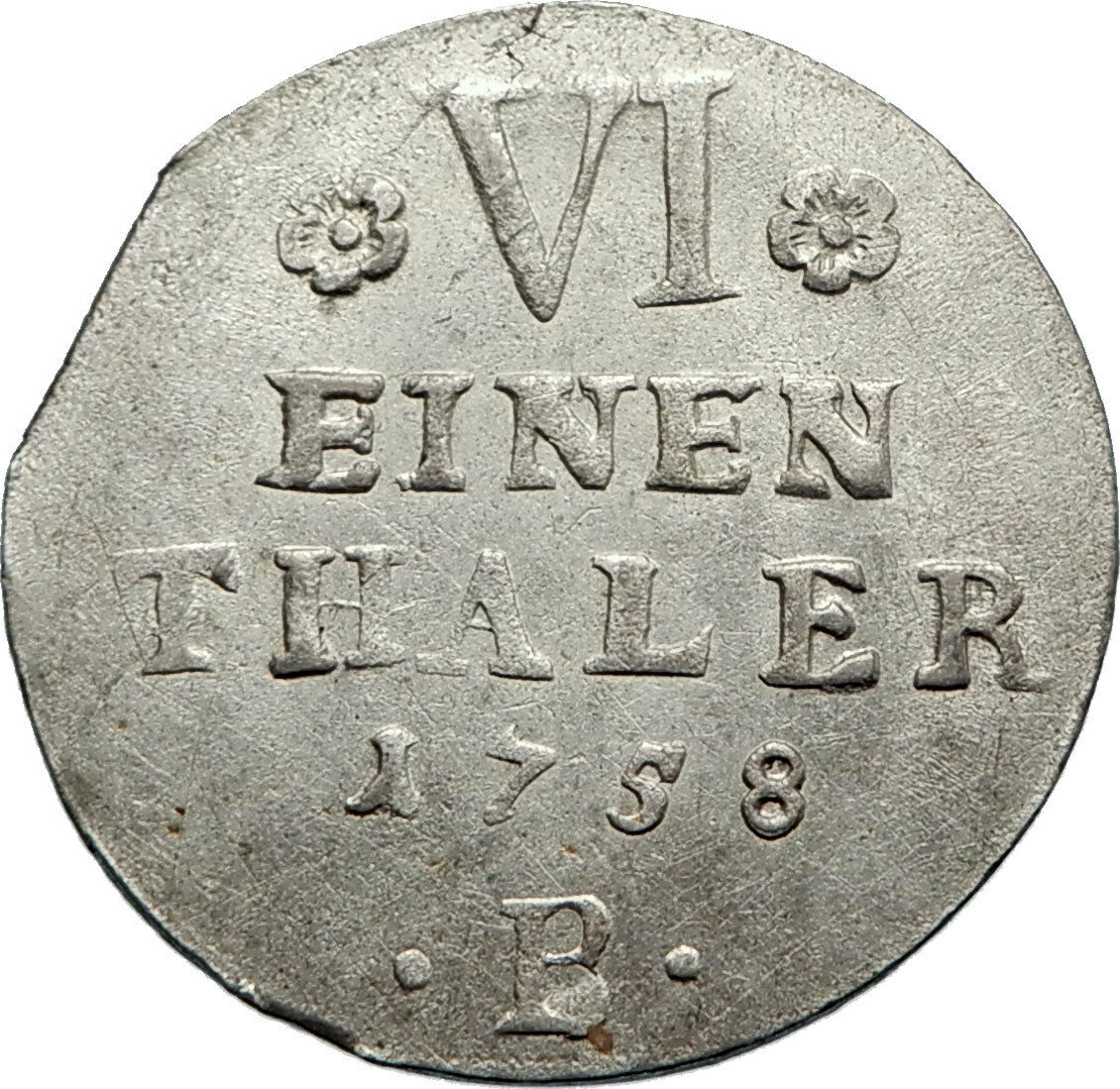
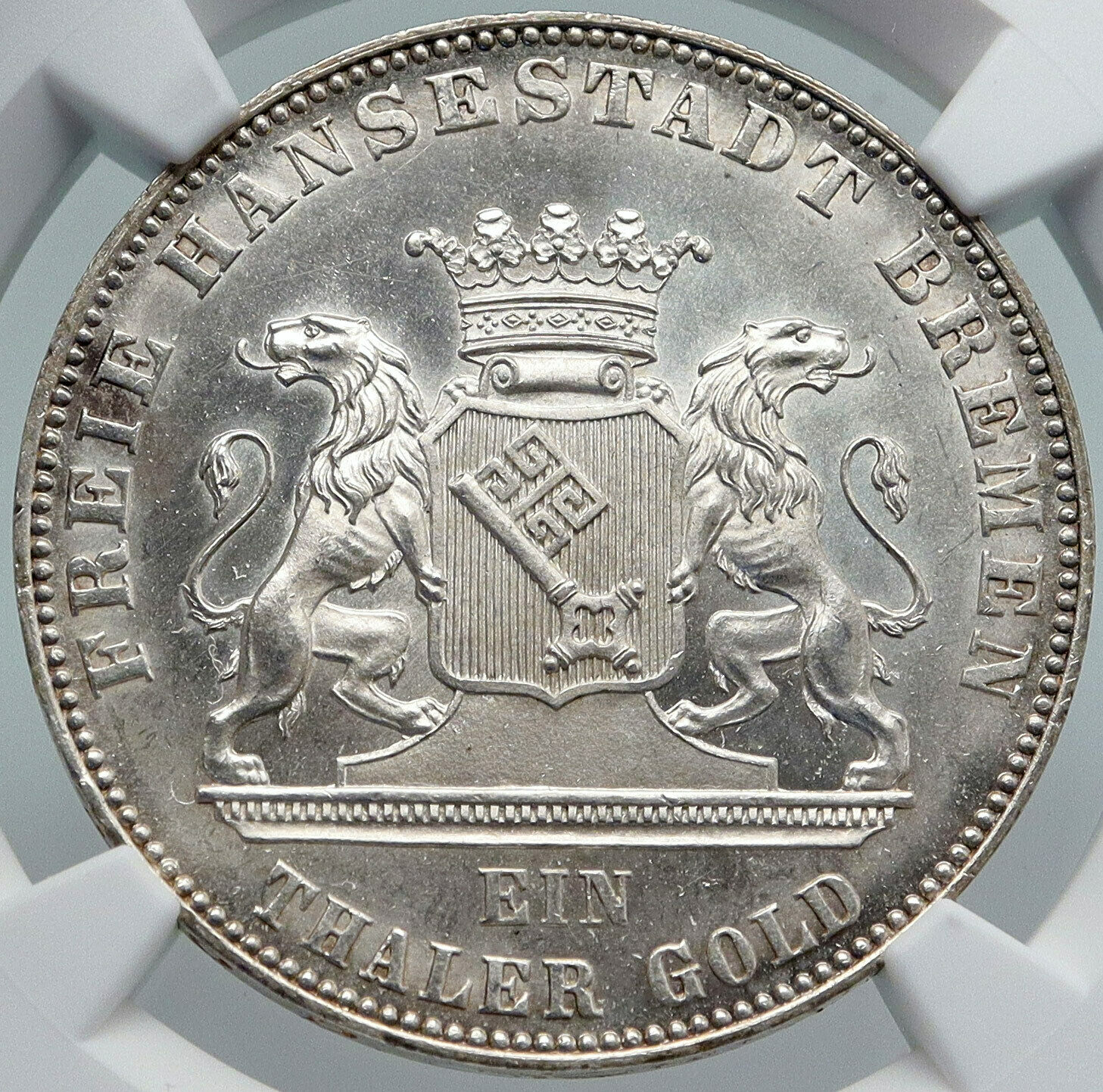
120 EINEN THALER, Crowned crest.
SCHEIDE MÜNZE 3 ꟾ PFENNINGE ꟾ 1822 ꟾ A , Value, with date below, Mint mark bottom.
Edge Design:
Rings
You are bidding on the exact item pictured, provided with a Certificate of Authenticity and Lifetime Guarantee of Authenticity.
 Frederick William III (German: Friedrich Wilhelm III) (3 August 1770 – 7 June 1840) was king of Prussia from 1797 to 1840. He ruled Prussia during the difficult times of the Napoleonic wars and the end of the old German Empire . Steering a careful course between France and her enemies, after a major military defeat in 1806, he eventually and reluctantly joined the coalition against Napoleon in the Befreiungskriege . Following Napoleon’s defeat he was King of Prussia during the Congress of Vienna which assembled to settle the political questions arising from the new, post-Napoleonic order in Europe.
Frederick William was born in Potsdam in 1770 as the son of Frederick William II of Prussia and Frederika Louisa of Hesse-Darmstadt . He was considered to be a shy and reserved boy, which became noticeable in his particularly reticent conversations distinguished by the lack of personal pronouns. This manner of speech subsequently came to be considered entirely appropriate for military officers.
As a child, Frederick William’s father (under the influence of his mistress, Wilhelmine Enke, Countess of Lichtenau ) had him handed over to tutors, as was quite normal for the period. He spent part of the time living at Paretz , the estate of the old soldier Count Hans von Blumenthal who was the governor of his brother Prince Heinrich. They thus grew up partly with the Count’s son, who accompanied them on their Grand Tour in the 1780s. Frederick William was happy at Paretz, and for this reason in 1795 he bought it from his boyhood friend and turned it into an important royal country retreat. He was a melancholy boy, but he grew up pious and honest. His tutors included the dramatist Johann Engel.
As a soldier he received the usual training of a Prussian prince, obtained his lieutenancy in 1784, became a colonel in 1790, and took part in the campaigns against France of 1792-1794. On 24 December 1793, Frederick William married Luise of Mecklenburg-Strelitz , who bore him ten children. In the Kronprinzenpalais (Crown Prince’s Palace) in Berlin, Frederick William lived a civil life with a problem-free marriage, which did not change even when he became King of Prussia in 1797. His wife Luise was particularly loved by the Prussian people, which boosted the popularity of the whole House of Hohenzollern, including the King himself.
Reign
Frederick William succeeded to the throne on 16 November 1797. He also became, in personal union , the sovereign prince of the Principality of Neuchâtel (1797-1806 and again 1813-1840). At once, the new King showed that he was earnest of his good intentions by cutting down the expenses of the royal establishment, dismissing his father’s ministers, and reforming the most oppressive abuses of the late reign. He had the Hohenzollern determination to retain personal power but not the Hohenzollern genius for using it. Too distrustful to delegate responsibility to his ministers, he lacked the will to strike out and follow a consistent course for himself.
Disgusted with the moral debauchery of his father’s court (in both political intrigues and sexual affairs), Frederick William’s first endeavor was to restore morality to his dynasty. The eagerness to restore dignity to his family went so far that it nearly caused sculptor Johann Gottfried Schadow to cancel his Prinzessinnengruppe project, which was commissioned by the previous monarch Frederick William II . He was quoted as saying the following, which demonstrated his sense of duty and peculiar manner of speech:
“Every civil servant has a dual obligation: to the sovereign and to the country. It can occur that the two are not compatible; then, the duty to the country is higher.”
At first Frederick William and his advisors attempted to pursue a policy of neutrality in the Napoleonic Wars . Although they succeeded in keeping out of the Third Coalition in 1805, eventually Frederick William was swayed by the belligerent attitude of the queen, who led Prussia’s pro-war party, and entered into war in October 1806. On 14 October 1806, at the Battle of Jena-Auerstädt , the French defeated the Prussian army led by Frederick William, and the Prussian army collapsed. The royal family fled to Memel , East Prussia , where they fell on the mercy of Emperor Alexander I of Russia .
Alexander, too, suffered defeat at the hands of the French, and at Tilsit on the Niemen France made peace with Russia and Prussia. Napoleon dealt with Prussia very harshly, despite the pregnant Queen’s personal interview with the French emperor. Prussia lost many of its Polish territories, as well as all territory west of the Elbe , and had to finance a large indemnity and to pay for French troops to occupy key strong points within the Kingdom.
Although the ineffectual King himself seemed resigned to Prussia’s fate, various reforming ministers, such as Baron vom Stein , Prince von Hardenberg , Scharnhorst , and Count Gneisenau , set about reforming Prussia’s administration and military, with the encouragement of Queen Luise (who died, greatly mourned, in 1810).
In 1813, following Napoleon ‘s defeat in Russia , Frederick William turned against France and signed an alliance with Russia at Kalisz , although he had to flee Berlin, still under French occupation. Prussian troops played a key part in the victories of the allies in 1813 and 1814, and the King himself travelled with the main army of Prince Schwarzenberg , along with Alexander of Russia and Francis of Austria .
At the Congress of Vienna , Frederick William’s ministers succeeded in securing important territorial increases for Prussia, although they failed to obtain the annexation of all of Saxony , as they had wished. Following the war, Frederick William turned towards political reaction, abandoning the promises he had made in 1813 to provide Prussia with a constitution.
In 1824 Frederick William III remarried (morganatically) Countess Auguste von Harrach , Princess of Liegnitz. They had no children.
He died on 7 June 1840 in Berlin, survived by his second wife. His eldest son, Frederick William IV , succeeded him. Frederick William III is buried at the Mausoleum in Schlosspark Charlottenburg , Berlin.
 Germany, officially the Federal Republic of  Germany is a federal parliamentary republic in western-central Europe. It includes 16 constituent states and covers an area of 357,021 square kilometres (137,847 sq mi) with a largely temperate seasonal climate. Its capital and largest city is Berlin. With 81 million inhabitants, Germany is the most populous member state in the European Union. After the United States, it is the second most popular migration destination in the world.
Various Germanic tribes have occupied northern Germany since classical antiquity. A region named Germania was documented before 100 CE. During the Migration Period the Germanic tribes expanded southward. Beginning in the 10th century, German territories formed a central part of the Holy Roman Empire. During the 16th century, northern German regions became the centre of the Protestant Reformation.
The rise of Pan-Germanism inside the German Confederation resulted in the unification of most of the German states in 1871 into the Prussian-dominated German Empire. After World War I and the German Revolution of 1918-1919, the Empire was replaced by the parliamentary Weimar Republic. The establishment of the Third Reich in 1933 led to World War II and the Holocaust. After 1945, Germany split into two states, East Germany and West Germany. In 1990, the country was reunified.
 In the 21st century, Germany is a great power and has the world’s fourth-largest economy by nominal GDP, as well as the fifth-largest by PPP. As a global leader in several industrial and technological sectors, it is both the world’s third-largest exporter and importer of goods. Germany is a developed country with a very high standard of living sustained by a skilled and productive society. It upholds a social security and universal health care system, environmental protection and a tuition free university education.
Germany was a founding member of the European Union in 1993. It is part of the Schengen Area, and became a co-founder of the Eurozone in 1999. Germany is a member of the United Nations, NATO, the G8, the G20, and the OECD. The national military expenditure is the 9th highest in the world. Known for its rich cultural history, Germany has been continuously the home of influential artists, philosophers, musicians, sportsmen, entrepreneurs, scientists and inventors.
|