|
Hungary
Centenary of 1848 Revolution – Mihály Táncsics
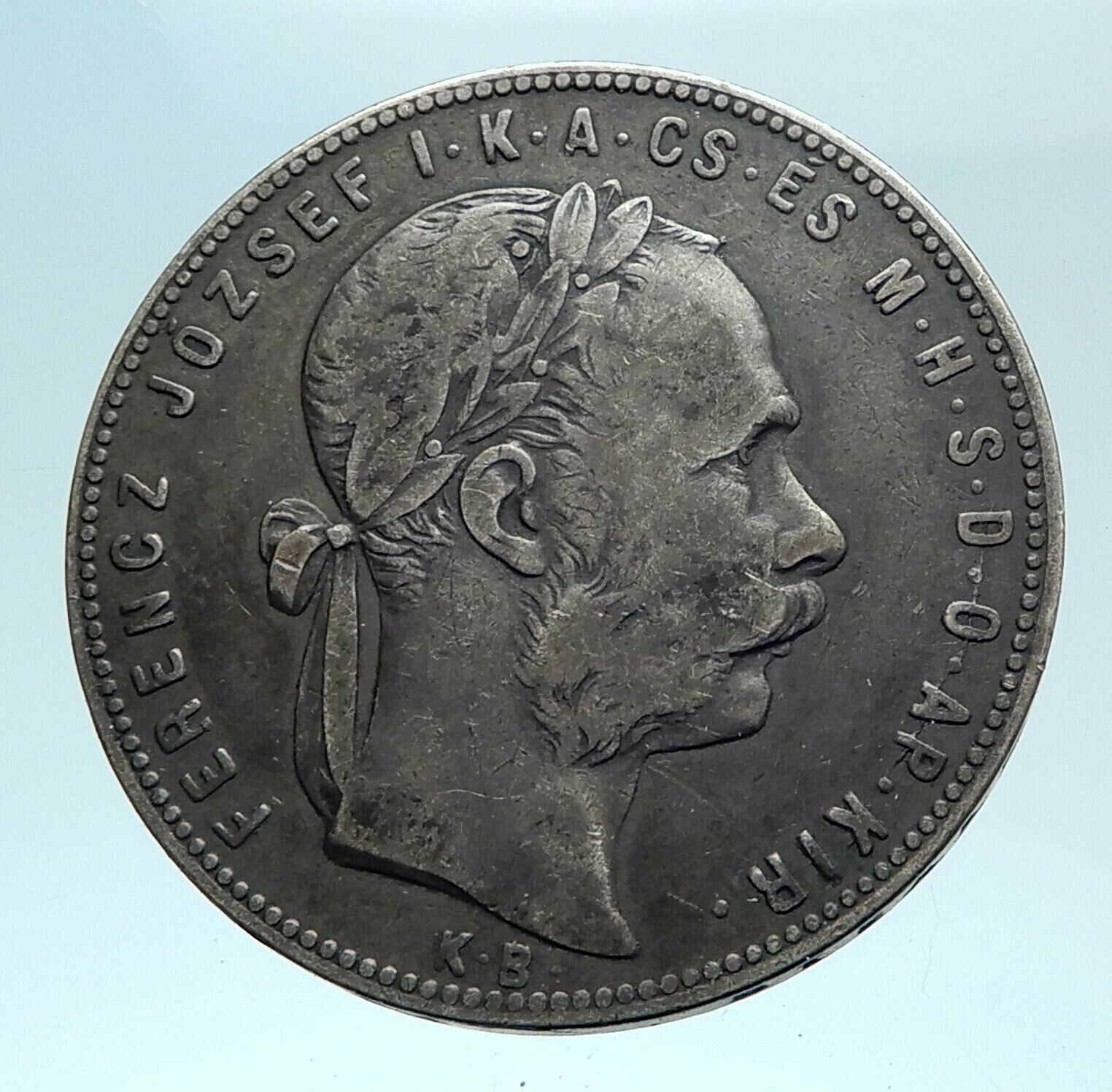
1948 BP Silver 20 Forint 40mm (28.00 grams) 0.500 Silver (0.4501 oz. ASW)
Reference: KM# 539
Certification: NGC UNC DETAILS 2835416-007
MAGYAR KÖZTÁRSASÁG 20 FORINT 1948 BP, Mahaly facing left.
TÁNCSICS MIHÁLY 1848, Coat-of-arms.
You are bidding on the exact item pictured, provided with a Certificate of Authenticity and Lifetime Guarantee of Authenticity.
 Mihály Táncsics (Serbian: Михајло Танчић) (21 April 1799, Ácsteszér – 28 June 1884, Budapest) was a Hungarian writer, teacher, journalist and politician.
Life
Mihály Táncsics was born on 21 April 1799 in the village of Ácsteszér in the Komárom-Esztergom county of the Kingdom of Hungary. By his own account, his father was of Croatian antecedents and his mother was of Slovak origin, but he was brought up to be a Hungarian-speaker and an ardent Hungarian. He was incarcerated in Pest for his radical political convictions in 1846. He propagated in his pamphlet The Word of the People Is God’s Word, a paraphrase of Vox populi, vox Dei. The pamphlet resulted in his arrest. Táncsics was freed from the Habsburgs’s prison on 15 March 1848, the very day when the Hungarian revolution broke out. Although Táncsics’s role in the Revolutions of 1848 in the Habsburg areas is highly emphasized in Hungarian history books, however, in literature he does not rank among the great active heroes of these events. He is remembered as someone who is freed rather than someone who liberates others.
As a teacher, Táncsics tirelessly worked to extend elementary education in Hungarian among children and adults in Hungary’s urban centres, and his slim textbook on geography with a map of Hungary was part of a large educational project.

 Hungary is a sovereign state in Europe. It is situated in the Carpathian Basin and is bordered by Slovakia to the north, Romania to the east, Serbia to the south, Croatia to the southwest, Slovenia to the west, Austria to the northwest, and Ukraine to the northeast. The country’s capital and largest city is Budapest. Hungary is a member of the European Union, NATO, the OECD, the Visegrád Group, and the Schengen Area. The official language is Hungarian, which is the most widely spoken non-Indo-European language in Europe.
 Following centuries of successive habitation by Celts, Romans, Huns, Slavs, Gepids, and Avars, the foundation of Hungary was laid in the late 9th century by the Hungarian grand prince Árpád in the Honfoglalás (“homeland-conquest”). His great-grandson Stephen I ascended to the throne in 1000 CE, converting the country to a Christian kingdom. By the 12th century, Hungary became a middle power within the Western world, reaching a golden age by the 15th century. Following the Battle of Mohács in 1526 and about 150 years of partial Ottoman occupation (1541-1699), Hungary came under Habsburg rule, and later formed a significant part of the Austro-Hungarian Empire (1867-1918).
Hungary’s current borders were first established by the Treaty of Trianon (1920) after World War I, when the country lost 71% of its territory, 58% of its population, and 32% of ethnic Hungarians. Following the interwar period, Hungary joined the Axis Powers in World War II, suffering significant damage and casualties. Hungary came under the influence of the Soviet Union, which contributed to the establishment of a four-decade-long communist dictatorship (1947-1989). The country gained widespread international attention regarding the Revolution of 1956 and the seminal opening of its previously-restricted border with Austria in 1989, which accelerated the collapse of the Eastern Bloc.
On 23 October 1989, Hungary again became a democratic parliamentary republic, and today has a high-income economy with a very high Human Development Index. Hungary is a popular tourist destination attracting 10.675 million tourists a year (2013). It is home to the largest thermal water cave system and the second-largest thermal lake in the world (Lake Hévíz), the largest lake in Central Europe (Lake Balaton), and the largest natural grasslands in Europe (the Hortobágy National Park).
|