|
Egypt – General Authority for Investment and Free Zones (GAFI)
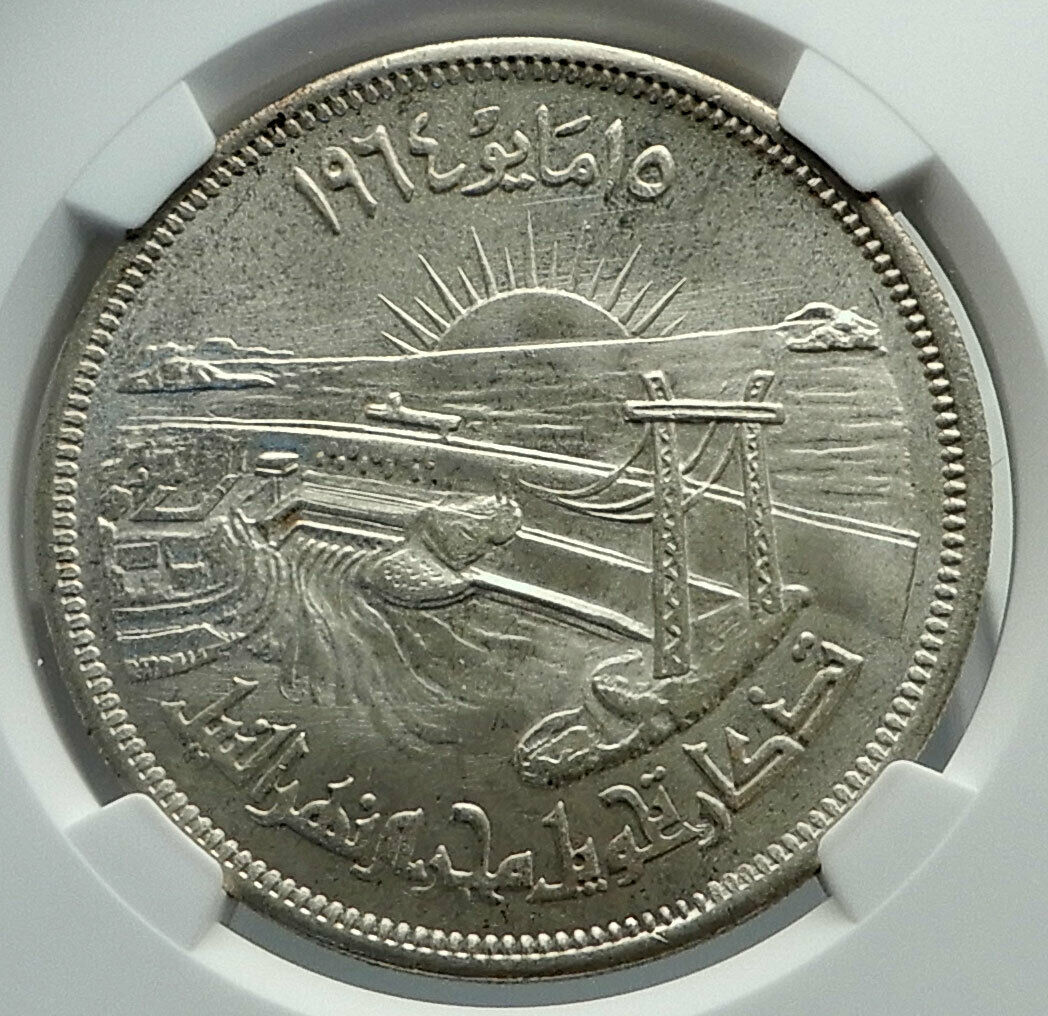
1987 Silver 5 Pound 37mm (17.28 grams) 0.720 Silver (0.4116 oz. ASW)
Reference: KM# 651
لهيئة العامة للاستثمار والمناطق الحرة جمهورية مصر العربية ١٤٠٧ ١٩٨٧ خمسة جنيهات, Tughra divides dates.
الاستثمار من اجل المستقبل, General Authority for Investment and Free Zones (GAFI) logo within inner dentiled circle.
Notes: Subject is listed in Krause as “Investment Bank” which is wrong.
You are bidding on the exact item pictured, provided with a Certificate of Authenticity and Lifetime Guarantee of Authenticity.
Entrepreneurship Policies in Egypt
The Arab Republic of Egypt was among the top ten global Doing Business reformers in four of the seven years from 2003-2010. In Doing Business 2006, Egypt ranked 6th globally on reforms, and in 2007 it ranked 1st, after reforming in five out of ten areas that were studied, jumping 26 places in one year as reported in Doing Business 2008.
- Egypt made starting a business easier by establishing a single access point with standardized application forms in 2004, a one stop shop. Egypt centralized start-up paperwork in a single building, where company charters were to be submitted electronically and reapproved by the registry on the spot. Improvements continued at the General Authority for Investment and Free Zones (GAFI) one-stop shop in Cairo. The number of procedures was supposed to fall from 10 to 7. The entrepreneur can now register for taxes at the chamber of commerce directly through the one-stop shop. As a result of the reforms, the start-up time and costs were supposedly cut by more than half. Alexandria and Assiut, followed the model in Cairo, although both cities have to send a fax to the central commercial registry in Cairo to check that the company name has not been used. A computerization project is underway so that one-stop shops outside Cairo can issue the tax registration card locally. Since the reform of the GAFI one stop shop in 2004, the total number of companies registered in Cairo more than doubled: 5,700 were registered in 2005 compared with 2,660 in 2003. However, some observers have suggested that Egypt’s one stop shop system has not reduced the number of procedures as much as initially promised.Improvements were made at the one-stop shop in Alexandria with the opening of ALEXBANK.
- Its reform cut deep: in 2007, a ministerial decree amended Article 57 of the Executive Regulation of the Company Law cutting the minimum capital required to start a business from EGP 50,000 to EGP 1,000, and halved start-up time and cost. Egypt sharply reduced further the paid-in minimum capital requirement by more than 80%, abolishing bar association fees, and automating tax registration in 2008. Finally in the 2008 report, company start-up was eased by the removal of the minimum capital requirement entirely.
- In 2006, Egypt reduced the cost of dealing with licenses and permits. Two reforms in two years significantly cut construction-related licensing costs for builders. First, building permit fees dropped from 1% to 0.2% of the building value in early 2006 and second, Law 83 of 2006 amended Law 70 of 1964 governing notarization and registration costs at the real estate registry which introduced a low flat fee of 2,000 Egyptian pounds (US$348) to register a property or building. These two reforms led to cost reductions of almost 700% of income per capita. In 2008, a new building code was introduced which aimed to further reduce the procedures and time required to deal with construction permits by establishing a single window for processing construction-related approvals and enforcing a 30-day statutory time limit. However, the municipality does not start counting the 30 days until all pre-approval procedures are completed. In 2008-09, Egypt continued to make it easier to deal with construction permits by issuing executive articles for the 2008 construction law and eliminating most pre-approvals for construction permits.
- According to Doing Business 2006, Egypt made bold reforms and took a lead in streamlining customs procedures and trade documents. Egypt was the top reformer. It established a single window for trade documentation and merged 26 approvals into 5. A time limit of 2 days for clearing customs applied. Improvements were part of a broader reform that cut the number of tariff bands from 27 to 6 and simplified inspections. The inspiration was the association agreement with the European Union. New one stop shops were launched for traders at the ports, cutting the time to import by seven days and the time to export by five. According to Doing Business 2009, the port of Alexandria continued to upgrade its facilities and sped customs clearance, reducing the time to export by 1 day and the time to import by 3. GDP growth increased from 4.2% to reach 7.1% from 2003 to 2007, fueled to a large extent by the expansion in trade. Foreign investment was also up to US$11.1 billion compared with US$500 in 2003.
- New listing rules for the Cairo Stock Exchange strengthened protections for minority shareholders: now an independent body must assess transactions between interested parties before they are approved. New regulations issued by the Central Bank of Egypt, gave borrowers the right to inspect their data in the private credit bureau.
- Egypt promoted corporate governance by becoming the first country in the Middle East to draft a voluntary corporate governance code for companies listed on the stock exchange.
Needed Reforms
On March 29-30, 2010, Ministry of Investment reported that Small & Medium enterprises (SMEs) in Egypt account for about 75% of employment, 80% of GDP, yet contributed to only 4% of exports and 10% of fixed capital formation. And according to GAFI: 90% of registered companies have capital less than LE 10 million while 70% of registered companies have capital less than LE 1 million.
- Establish one-stop shops for start up in more governorates:
The GAFI one-stop shop is a good idea but the implementation needs to be improved, according to local experts. One stop shops can show results quickly when their officials have decision making power. Since 2003, one-stop shops cut on average 5 procedures and more than halved delays in 24 countries. However, in Egypt, gains were not as dramatic, as the number of bureaucratic steps was still quite high.
- Communicate reforms to the public:
Most reformers are bad marketers, according to Doing Business 2008. Advertising the changes can ensure that entrepreneurs know how much easier registration has become. Egypt’s successful marketing campaign after tax reforms in 2005 is a good example to follow.
- Allow online start-up registration:
From single window concept, Egypt can bring it to the ultimate process which is online registration. Online registration is one of the most effective ways to speed the start-up process. Technology can create a unified database of business information to be shared across districts, governorates and government agencies. Egypt took the first step by certifying without delay that the company name is not already in use. The next step is to allow entrepreneurs to search for the company name online. The internet can also provide them with other information such as details on procedures, fee schedules and working hours of the relevant agencies. With some simple legislation to allow electronic signatures, the internet can be used to file business registrations. Making registration electronic cuts time-by more than 50% on average. Paper registration should remain available for those without internet access.
- Create one-stop shops for licenses and permits:
Governorates and other sectors of the government can follow the system in GAFI one stop shops for business start-ups. The reduction in procedures, time and cost are proof that the single window principle is effective in Egypt.
- Introduce risk-based inspections:
Random inspections offer opportunities for bribes, corruption and informal payments. The authorities lose out because they cannot systematically monitor the structural soundness of their buildings and businesses lose time and money every time they have to stop construction to pay off an inspector. Experiences from around the world show that statutory time limits are more effective when coupled with “silence is consent” rules. The latter keep bureaucrats on track and lessen the chances of lost or neglected permit applications and endless delay tactics. Countries with a system of risk-based inspections have fewer inspections than countries with random inspections. Countries with risk-based inspections do not compromise the general safety of their citizens. Instead of visiting the site at whim, inspectors stick to a schedule based on the completion of each construction phase.
- Introduce online license applications and processing
In Assiut and the Ministry of Housing, Utilities and Urban Communities, the requirements to obtain a building permit are listed on their respective web sites. Other governorates can have the same system. Information about the procedures and process for obtaining a building permit helps businesses with their project planning, saving time and money. In Egypt, having forms online can save businesses at least one trip to the municipality-that can mean a whole afternoon not wasted in traffic.
- Simplify and combine procedures to register property
Egypt, as reported in Doing Business 2008 report, ranked low on the ease of registering property in the world-101 out of 178 countries. In Cairo, registering property takes 193 days and costs 1.0% of property value. Each procedure can cause corruption and delays. Global data show that there is no need to have 7 separate procedures to register a property. The procedures related to obtaining the contract from the real estate registry, signing it, and picking up the new title could easily be combined. Egyptian cities can look for good practices within Egypt like in the case of Assiut where it takes 33 days only to register property; otherwise the country could look to Armenia, Croatia, Ghana and the Dominican Republic as recent examples of successful reforms.
- Keep registry records updated and continue to digitize records
Keeping records updated would cut the need for a new valuation and site inspection by the measurement department each time a property is transferred. Countries that transfer records from paper to electronic form benefit from shorter processing times. Going electronic makes it easier to identify errors and overlapping titles, improving title security. Electronic records would solve the numbering and filing problems in Assiut and provide a better organizational framework for Alexandria.
Foreign Ownership
- Investment Law No. 8 of 1997 (which cancelled Law 230 of 1989) allows companies to own building lands and develop real estate as needed for implementing and expanding their activities, regardless of the nationality or place of residence of partners and shareholders or the percentage of their participation except for agricultural areas. It allows 100% foreign ownership of ventures and guarantees the right to remit income earned in Egypt and to repatriate capital.
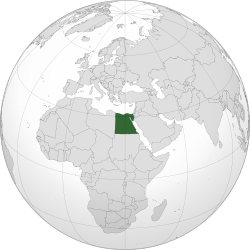
 Egypt, officially the Arab Republic of Egypt, is a country spanning the northeast corner of Africa and southwest corner of Asia by a land bridge formed by the Sinai Peninsula. Egypt is a Mediterranean country bordered by the Gaza Strip and Israel to the northeast, the Gulf of Aqaba to the east, the Red Sea to the east and south, Sudan to the south, and Libya to the west. Across the Gulf of Aqaba lies Jordan, across the Red Sea lies Saudi Arabia, and across the Mediterranean lie Greece, Turkey and Cyprus, although none share a land border with Egypt.
 Egypt has one of the longest histories of any country, tracing its heritage back to the 6th-4th millennia BCE. Considered a cradle of civilisation, Ancient Egypt saw some of the earliest developments of writing, agriculture, urbanisation, organised religion and central government. Iconic monuments such as the Giza Necropolis and its Great Sphinx, as well the ruins of Memphis, Thebes, Karnak, and the Valley of the Kings, reflect this legacy and remain a significant focus of scientific and popular interest. Egypt’s long and rich cultural heritage is an integral part of its national identity, which has endured, and often assimilated, various foreign influences, including Greek, Persian, Roman, Arab, Ottoman Turkish, and Nubian. Egypt was an early and important centre of Christianity, but was largely Islamised in the seventh century and remains a predominantly Muslim country, albeit with a significant Christian minority.
 From the 16th to the beginning of the 20th century, Egypt was ruled by foreign imperial powers: The Ottoman Empire and the British Empire. Modern Egypt dates back to 1922, when it gained nominal independence from the British Empire as a monarchy. However, British military occupation of Egypt continued, and many Egyptians believed that the monarchy was an instrument of British colonialism. Following the 1952 revolution, Egypt expelled British soldiers and bureaucrats and ended British occupation, nationalized the British-held Suez Canal, exiled King Farouk and his family, and declared itself a republic. In 1958 it merged with Syria to form the United Arab Republic, which dissolved in 1961. Throughout the second half of the 20th century, Egypt endured social and religious strife and political instability, fighting several armed conflicts with Israel in 1948, 1956, 1967 and 1973, and occupying the Gaza Strip intermittently until 1967. In 1978, Egypt signed the Camp David Accords, officially withdrawing from the Gaza Strip and recognising Israel. The country continues to face challenges, from political unrest, including the recent 2011 revolution and its aftermath, to terrorism and economic underdevelopment. Egypt’s current government is a presidential republic headed by President Abdel Fattah el-Sisi, which has been described by a number of watchdogs as authoritarian.
Islam is the official religion of Egypt and Arabic is its official language. With over 95 million inhabitants, Egypt is the most populous country in North Africa, the Middle East, and the Arab world, the third-most populous in Africa (after Nigeria and Ethiopia), and the fifteenth-most populous in the world. The great majority of its people live near the banks of the Nile River, an area of about 40,000 square kilometres (15,000 sq mi), where the only arable land is found. The large regions of the Sahara desert, which constitute most of Egypt’s territory, are sparsely inhabited. About half of Egypt’s residents live in urban areas, with most spread across the densely populated centres of greater Cairo, Alexandria and other major cities in the Nile Delta.
The sovereign state of Egypt is a transcontinental country considered to be a regional power in North Africa, the Middle East and the Muslim world, and a middle power worldwide. Egypt’s economy is one of the largest and most diversified in the Middle East, and is projected to become one of the largest in the world in the 21st century. In 2016, Egypt overtook South Africa and became Africa’s second largest economy (after Nigeria). Egypt is a founding member of the United Nations, Non-Aligned Movement, Arab League, African Union, and Organisation of Islamic Cooperation.
|