|
Liberia
American History – Battle of Fort Donelson – Civil War
2001 Proof Silver 20 Dollars 40mm (20.00 grams) 0.999 Silver (0.6424 oz. ASW)
Reference: Cf N# 135978
REPUBLIC OF LIBERIA THE LOVE OF LIBERTY BROUGHT US HERE 20 01 REPUBLIC OF LIBERIA 20 DOLLARS, Seal of Liberia.
CIVIL WAR – THE BATTLE OF FORT DONELSON 1862 $20, War scene.
You are bidding on the exact item pictured, provided with a Certificate of Authenticity and Lifetime Guarantee of Authenticity.
 The Battle of Fort Donelson was fought from February 11–16, 1862, in the Western Theater of the American Civil War. The Union capture of the Confederate fort near the Tennessee–Kentucky border opened the Cumberland River, an important avenue for the invasion of the South. The Union’s success also elevated Brig. Gen. Ulysses S. Grant from an obscure and largely unproven leader to the rank of major general, and earned him the nickname of “Unconditional Surrender” Grant.
Following his capture of Fort Henry on February 6, Grant moved his army (later to become the Union’s Army of the Tennessee 12 miles (19 km) overland to Fort Donelson, from February 11 to 13, and conducted several small probing attacks. On February 14, Union gunboats under Flag Officer Andrew H. Foote attempted to reduce the fort with gunfire, but were forced to withdraw after sustaining heavy damage from the fort’s water batteries.
On February 15, with the fort surrounded, the Confederates, commanded by Brig. Gen. John B. Floyd, launched a surprise attack, led by his second-in-command, Brig. Gen. Gideon Johnson Pillow, against the right flank of Grant’s army. The intention was to open an escape route for retreat to Nashville, Tennessee. Grant was away from the battlefield at the start of the attack, but arrived to rally his men and counterattack. Pillow’s attack succeeded in opening the route, but Floyd lost his nerve and ordered his men back to the fort. The following morning, Floyd and Pillow escaped with a small detachment of troops, relinquishing command to Brig. Gen. Simon Bolivar Buckner, who accepted Grant’s demand of unconditional surrender later that day. The battle resulted in virtually all of Kentucky as well as much of Tennessee, including Nashville, falling under Union control.
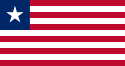 Liberia officially the Republic of Liberia, is a country on the West African coast. Liberia means “Land of the Free” in Latin. It is bordered by Sierra Leone to its west, Guinea to its north and Ivory Coast to its east. It covers an area of 111,369 square kilometres (43,000 sq mi) and is home to 4,503,000 people. English is the official language and over 20 indigenous languages are spoken, representing the numerous tribes who make up more than 95% of the population.
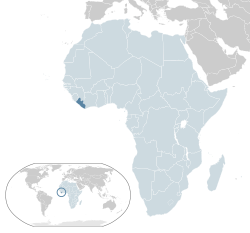 Forests on the coastline are composed mostly of salt-tolerant mangrove trees, while the more sparsely populated inland has forests opening onto a plateau of drier grasslands. The climate is equatorial, with significant rainfall during the May-October rainy season and harsh harmattan winds the remainder of the year. Liberia possesses about forty percent of the remaining Upper Guinean rainforest. It was an important producer of rubber in the early 20th century.
The Republic of Liberia, beginning as a settlement of the American Colonization Society (ACS), declared its independence on July 26, 1847. The United States did not recognize Liberia’s independence until after the American Civil War on February 5, 1862. Between January 7, 1822 and the American Civil War, more than 15,000 freed and free-born Black Americans from United States and 3,198 Afro-Caribbeans relocated to the settlement. The Black American settlers carried their culture with them to Liberia. The Liberian constitution and flag were modeled after the United States. In January 3, 1848 Joseph Jenkins Roberts, a wealthy free-born Black American from Virginia who settled in Liberia, was elected as Liberia’s first president after the people proclaimed independence.
Unlike other African countries, Liberia is the only African republic to have self-proclaimed independence without gaining independence through revolt from any other nation, being Africa’s first and oldest republic. Although it is said that neither Liberia nor Ethiopia, which was a kingdom, were controlled or colonized by foreign powers, this seems contradictory since the country was actually started by the American Colonization Society (ACS). Liberia maintained and kept its independence during the European colonial era.
During World War II, Liberia supported the United States war efforts against Germany and in turn the United States invested in considerable infrastructure in Liberia to help its war effort, which also aided the country in modernizing and improving its major air transportation facilities. In addition, President William Tubman encouraged economic changes. Internationally, Liberia was a founding member of League of Nations, United Nations and the Organisation of African Unity.
Longstanding political tensions from the 27 year rule of William Tubman resulted in a military coup in 1980 that overthrew the leadership soon after his death, marking the beginning of political instability. Five years of military rule by the People’s Redemption Council and five years of civilian rule by the National Democratic Party of Liberia were followed by two civil wars – the First and Second Liberian Civil Wars. These resulted in the deaths and displacement of more than half a million people and devastated Liberia’s economy. A peace agreement in 2003 led to democratic elections in 2005. Recovery proceeds but about 85% of the population live below the international poverty line.
|


