|
Belarus
Konstantin Ostrozhsky – Series: Strengthening and Defending the State
2014 Proof Silver 20 Roubles 38.61mm (33.63 grams) 0.925 Silver (1.0001 oz. ASW)
Reference: KM# 464
(Mintage: 2,000) | Designer: S. Zaskevich
РЭСПУБЛІКА БЕЛАРУСЬ Ag 925 20 РУБЛЁЎ 2014, Scepter lying atop scrolls with hanging seal, intricate mural behind.
КАНСТАНЦІН АСТРОЖСКІ 1460-1530, Constantine 1/3 right with hands on scepter and sword, Shield with Coat-of-arms right.
Edge Lettering:
УМАЦАВАННЕ І АБАРОНА ДЗЯРЖАВЫ
You are bidding on the exact item pictured, provided with a Certificate of Authenticity and Lifetime Guarantee of Authenticity.
 Konstanty Iwanowicz Ostrogski (c. 1460 – 10 August 1530; Lithuanian: Konstantinas Ostrogiškis; Ukrainian: Костянтин Іванович Острозький, romanized: Kostiantyn Ivanovych Ostrozkyi; Belarusian: Канстантын Іванавіч Астроскі, romanized: Kanstantyn Ivanavič Astroski) was a Ruthenian prince and magnate of the Grand Duchy of Lithuania and later a Grand Hetman of Lithuania from 11 September 1497 until his death.
Ostrogski began his military career under John I Albert, King of Poland and Grand Duke of Lithuania. He took part in successful campaigns against the Tatars and Grand Duchy of Moscow. For his victory near Ochakiv against Mehmed I Giray’s forces he was awarded with the title of Grand Hetman of Lithuania. He was the first person to receive this title. However, during a war with Muscovy he was defeated in the Battle of Vedrosha (1500) and held captive for three years. In 1503, he managed to escape and joined king Sigismund I the Old, who allowed him to resume his post as a Hetman. As one of the main military leaders (alongside Polish generals Mikołaj Firlej and Mikołaj Kamieniecki) of the alliance he continued to wage war against the Grand Duchy of Moscow and in 1512 achieved a great victory against the Tatars in the Battle of Wisniowiec.
In 1514 another war with the Grand Duchy of Moscow started and Ostrogski became the commander in chief of all the Polish and Lithuanian forces (amounting to up to 35,000 soldiers). Among his subordinates were Jerzy Radziwiłł, Janusz Świerczowski Witold Sampoliński and the future Hetman of the Crown Jan Tarnowski. On 8 September 1514 he achieved a significant victory in the Battle of Orsha, defeating the army of Vasili III of Russia. However, in 1517 his attempt to besiege the Russian fortress of Opochka became a serious defeat that destroyed any hopes to reconquer Smolensk.
He had two wives: Tatiana Koretska and Aleksandra Słucka. He had two sons: Illia Ostrogski with Koretska, and Konstanty Wasyl Ostrogski with Słucka.
He died in 1530 as a well-respected military commander. Despite his steady loyalty to Catholic Poland as well as an old feud with an Orthodox Muscovy, Ostrogski himself remained a devout Orthodox in traditions of his family. He gave generously for construction of Eastern Orthodox churches and sponsored the creation of many church-affiliated schools for the Orthodox children. As one of the wealthiest Orthodox nobles he was buried in the Kyiv Pechersk Lavra in Kyiv.
He is one of the characters on the famous painting by Polish painter Jan Matejko, Prussian Homage.
The town of Starokostiantyniv still bears his name. The Lithuanian–Polish–Ukrainian Brigade is also named after him. For his wars against Crimea see Crimean-Nogai Raids, years 1508–1527, including Battle of Olshanitsa.
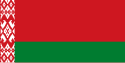 Belarus, officially the Republic of Belarus, is a landlocked country in Eastern Europe. It is bordered by Russia to the east and northeast, Ukraine to the south, Poland to the west, and Lithuania and Latvia to the northwest. Belarus covers an area of 207,600 square kilometres (80,200 sq mi), with a population of 9.4 million, and is the thirteenth-largest and the twentieth-most populous country in Europe. The country is administratively divided into seven regions, and is one of the world’s most urbanized, with over 40% of its total land area forested. Minsk is the country’s capital and largest city.
Until the 20th century, different states at various times controlled the lands of modern-day Belarus, including Kievan Rus’, the Principality of Polotsk, the Grand Duchy of Lithuania, the Polish–Lithuanian Commonwealth, and the Russian Empire. In the aftermath of the Russian Revolution in 1917, different states arose competing for legitimacy amidst the Civil War, ultimately ending in the rise of the Byelorussian SSR, which became a founding constituent republic of the Soviet Union in 1922. After the Polish-Soviet War, Belarus lost almost half of its territory to Poland. Much of the borders of Belarus took their modern shape in 1939, when some lands of the Second Polish Republic were reintegrated into it after the Soviet invasion of Poland, and were finalized after World War II. During WWII, military operations devastated Belarus, which lost about a quarter of its population and half of its economic resources. The republic was redeveloped in the post-war years. In 1945, the Byelorussian SSR became a founding member of the United Nations, along with the Soviet Union.
 The parliament of the republic proclaimed the sovereignty of Belarus on 27 July 1990, and during the dissolution of the Soviet Union, Belarus declared independence on 25 August 1991. Following the adoption of a new constitution in 1994, Alexander Lukashenko was elected Belarus’s first president in the country’s first and only free election post-independence, serving as president ever since. Lukashenko’s government is widely considered to be authoritarian and human rights groups consider human rights in the country to be poor. Belarus is the only country in Europe officially using the death penalty. Lukashenko continued a number of Soviet-era policies, such as state ownership of large sections of the economy. In 2000, Belarus and Russia signed a treaty for greater cooperation, forming the Union State.
Belarus is a developing country ranking very high in the Human Development Index. It has been a member of the United Nations since its founding; and a member of the CIS, the CSTO, the EAEU, and the Non-Aligned Movement, it has shown no aspirations for joining the European Union but nevertheless maintains a bilateral relationship with the Union, and likewise participates in two EU projects: the Eastern Partnership and the Baku Initiative.
|


