|
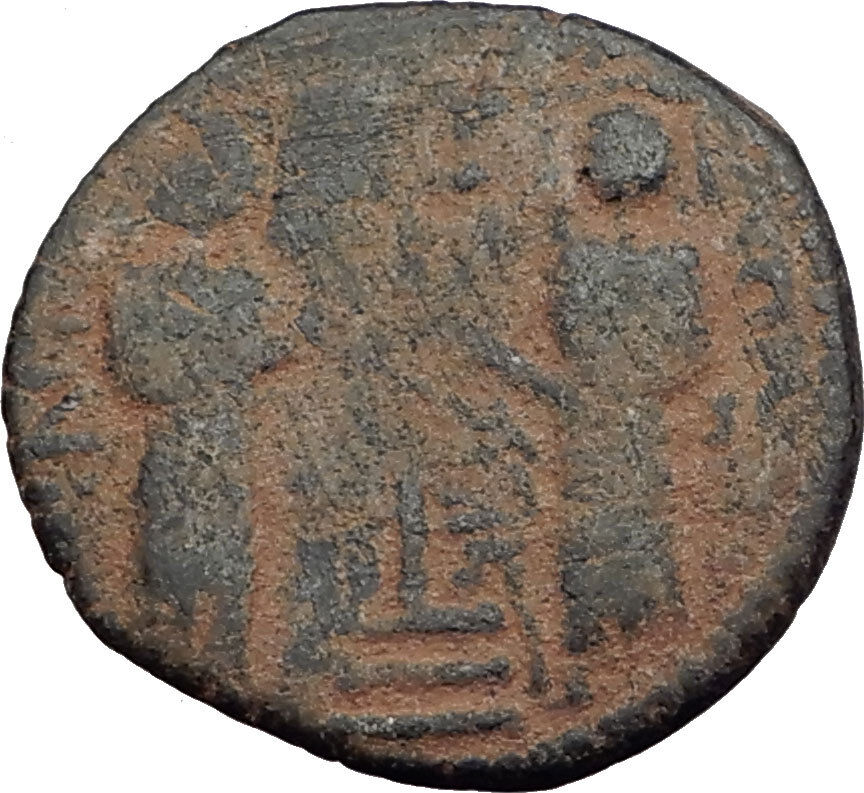
ISLAMIC – Ilkhans Dynasty, Abu Sa’id
716 – 736 (AH 716-736) Silver 2 Dirhams 23mm (2.69 grams)
Ornate text.
You are bidding on the exact item pictured, provided with a Certificate of Authenticity and Lifetime Guarantee of Authenticity.
Sa’id (also spelled Saeed, Sa’eid, Said, Sid, or Sayid; Arabic: سعيد, Sa’īd) is a male Arabic given name, which means “happy”. For the female version, see Saida; for the Turkish variant, see Sait; for the Bosnian variant, see Sejad and Sead. Said or Sid is the spelling used in most Latin languages.
The Maltese surname Said, pronounced [saɪt], has the same origin but has been borne by Latin Catholics for over seven centuries. Most Maltese surnames are of Italian origin, but this (with Abdilla) is one of the very few authentically Arabic given names that have survived in the islands as family names. It is a variant of the medieval Sicilian Christian surname Saido or Saito (Saidu), which was derived from the Siculo-Arabic given name Sa’īd used by both Muslims and Christians. In Sicily and Malta this surname was sometimes italianized as (De) Felice. The surname was established in Malta by 1419, appearing mostly as Sayd in the militia list of that year. In the 1480 militia list it is spelt mostly Said, but was later variously written Said, Sayd, Sajt, Sait in the Catholic church census of 1687. The anachronistic and undocumented claim that ‘Nicolò Sayd’, a grandson of Cem (1459-1496, the renegade son of Turkish Sultan Mehmet II) settled in Malta and became the ancestor of all Maltese bearing the surname Said is a fantasy inspired by the writings of historical novelists Maurice Caron and John Freely and recently promoted by amateur genealogists.
Today, francophone countries use transliterations of that name. These include the names Seydoux and Seydou, which are common in Europe and West Africa, respectively.
The Ilkhanate, also spelled Il-khanate (Ilxānān; Mongolian: Хүлэгийн улс, Hu’legīn Uls), was established as a khanate that formed the southwestern sector of the Mongol Empire, ruled by the Mongol House of Hulagu. It was founded in the 13th century and was based primarily in as well as neighboring territories, such as present-day Azerbaijan and the central and eastern parts of present-day Turkey. The Ilkhanate was originally based on the campaigns of Genghis Khan in the Khwarazmian Empire in 1219-24 and was founded by Hulagu Khan, son of Tolui and grandson of Genghis Khan. With the fragmentation of the Mongol Empire after 1259 it became a functionally separate khanate. At its greatest extent, the state expanded into territories that today comprise most of , Iraq, Armenia, Azerbaijan, Georgia, Turkmenistan, Turkey, western Afghanistan, and the Northwestern edge of the Indian sub-continent. Later Ilkhanate rulers, beginning with Ghazan in 1295, converted to Islam.
|