|
Greek city of Olba in Cilicia
Time of Emperor Augustus, 27 B.C. – 14 A.D.
under Ajax, High Priest & Toparch: 10-15 A.D.
Bronze 16mm (3.00 grams) Dated year 2, struck circa 11-12 A.D.
Reference: RPC I 3730; SNG BN 806; SNG Levante 633
Certification: NGC Ancients
XF 6155893-003
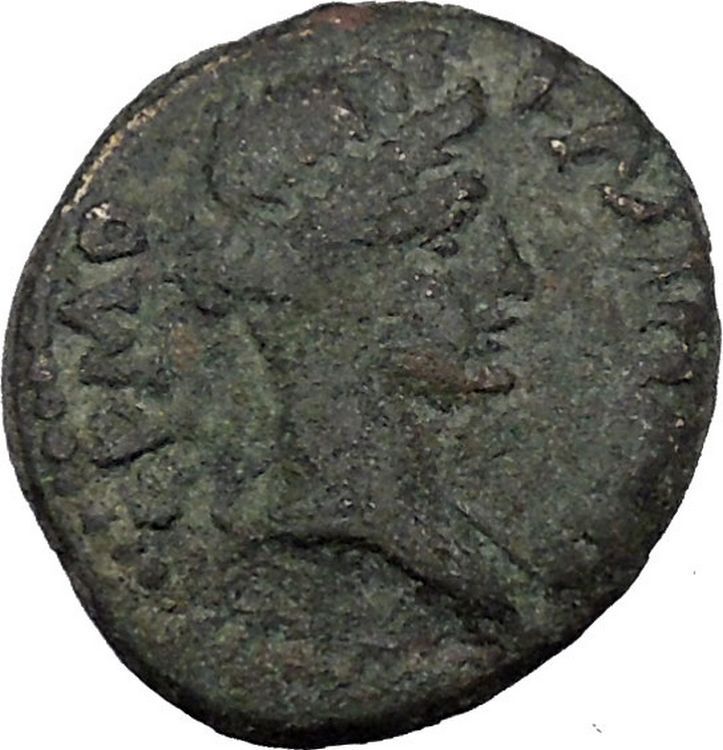
Head of Ajax as Hermes to right, wearing close fitting cap.
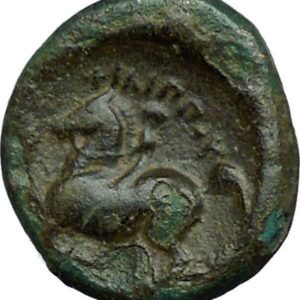
AIAN/TOΣ / ΤΕΥ/ΚΡΟΥ Β in four lines; arrow-head synbol in right field. R. Bluish-green patina with light deposits. Slightly rough surfaces, otherwise, good very fine.
Coin Notes:
Olba (Oura) was said to have been founded by Ajax, son of Teucer, who established there a famous temple of Zeus (site at Uzundja-Burdi, ‘tall castle’). The high priests in the time of Augustus and Tiberius ruled over not only Olba, but also Cennatis and Lalassis. The coinage begins about the end of the first century B.C.Ajax, son of Teucer, reigned A. D. 10/11-14/15 or later.
You are bidding on the exact item pictured, provided with a Certificate of Authenticity and Lifetime Guarantee of Authenticity.

You are bidding on the exact item pictured, provided with a Certificate of Authenticity and Lifetime Guarantee of Authenticity.
Olba was an ancient city in the former Roman province of Isauria, a region of Asia Minor, in present Turkey. It is a Roman Catholic titular see, suffragan of Seleucia Trachea.
 Olba was a city of Cetis in Cilicia Aspera, later forming part of Isauria; it had a temple of Zeus, whose priests were once kings of the country, and became a Roman colony. Strabo (XIV, 5, 10) and Ptolemy (V, 8, 6) call it Olbasa.
A coin of Diocæsarea, Olbos; Hierocles (Synecdemus, 709), Olbe; Basil of Seleucia (Mirac. S.Theclæ, 2, 8) and the Greek Notitiæ episcopatuum, Olba. The primitive name must have been Ourba or Orba, found in Theophanes the Chronographer, hence Ourbanopolis in “Acta S. Bartholomei”.
Le Quien (Oriens christianus, II, 1031) gives four bishops between the fourth and seventh centuries; but the Notitiæ episcopatuum mentions the see until the thirteenth century.
Its ruins, north of Silifke in the Turkish province of Mersin, are called Oura in Turkish.
|