|
Philip I
‘the Arab’ –
Roman Emperor
: 244-249 A.D. –
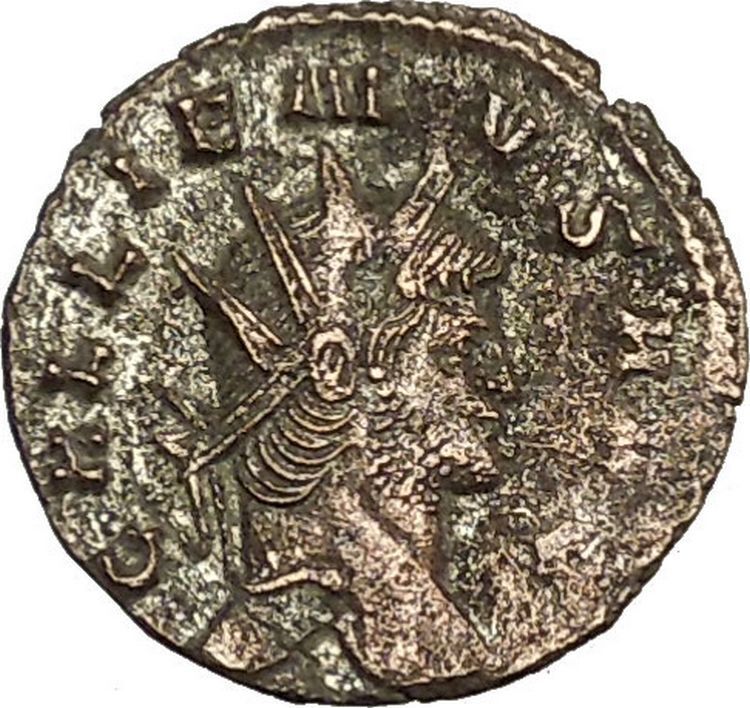
Bronze ‘Sestertius’ 27mm (17.90 grams) from Year 7 of the founding of Viminacium = ANVII = 245/6
A.D.
IMP M IVL PHILIPPVS AVG, laureate, draped and cuirassed bust right.
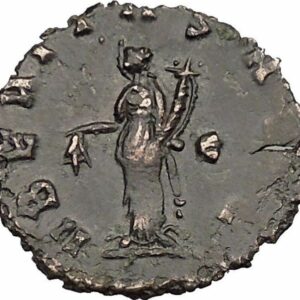
P M S COL VIM, Moesia standing left between bull and lion, AN VII in ex.
* Numismatic Note: The bull and the lion represent the seventh Claudian legion
stationed at the city.
You are bidding on the exact item pictured,
provided with a Certificate of Authenticity and Lifetime Guarantee of
Authenticity.
Legio septima Claudia Pia Fidelis (Seventh Claudian
Legion) was a
Roman legion
. Its emblem, as well as of all Caesar’s legions, was the bull,
together with the lion.[
neededcitation]
The 7th, along with the
6th
,
8th
&
9th
were all founded by Pompey in Spain in 65 BC.[1]
They[
neededcitation] were ordered to
Cisalpine Gaul
around 58 BC by
Julius Caesar
, and marched with him throughout the entire Gallic Wars.
Legio VII was one of the two legions used in
Caesar’s invasions of Britain
, and played a crucial role in The
Battle of Pharsalus
in 48 BC, and it existed at least until the end of the
4th century, guarding middle
Danube
.
Tiberius Claudius Maximus
the Roman soldier who brought the head of
Decebalus
to emperor
Trajan
was serving in Legio VII Claudia.
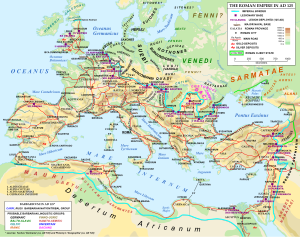
Map of the Roman empire in AD 125, under emperor
HadrianLegio VII Claudia, stationed on the river
Danube
at
Viminacium
(Kostolac, Serbia), in
Moesia Superior
province, from AD 58 until the 4th century
Viminacium (VIMINACIVM) was a major city (provincial
capital) and military camp of the
Roman
province of
Moesia
(today’s
Serbia
), and the capital of
Moesia Superior
. The site is located 12 km
from the modern town of
Kostolac
in Eastern Serbia. The city dates back
to the 1st century AD, and at its peak it is believed to have had 40.000
inhabitants, making it one of the biggest cities of that time. It lies on the
Roman road
Via Militaris
. Viminacium was devastated by
Huns in the 5th century, but was later rebuilt by
Justinian
. It was completely destroyed with the
arrival
of
Slavs
in the 6th century. Today, the
archeological site occupies a total of 450 hectares, and contains remains of
temples, streets, squares, amphitheatres, palaces, hippodromes and Roman baths.
History

A XXV the scene of the
Trajan’s Column
, which may have
been accounted for “headquarters” of the Roman Emperor: Viminacium.
The remains of Viminacium, the capital of the Roman province of
Moesia Superior
, are located on territories of
the villages of Stari Kostolac and Drmno, about 12 km from the town of
Kostolac
and about 90 miles southeast of
Belgrade
. Viminacium was one of the most
important Roman cities and military camps in the period from 1st to 4th
centuries. Its exceptional strategic importance was reflected both in the
defense of the northern border of the Roman empire and in turn of communications
and commercial transactions. No less appealing to the Romans was the hinterland
of the Mlava
river valley, which is rich in ore and
grains. In Roman times, the town on the northern side of relying directly on the
branch of the Danube
, while the western side, touching the
walls Mlava rivers. Only in the later period, Viminacium spread to the left bank
of Mlava. Thanks to the location, land and waterways, Viminacium represented one
of those areas where the encounter of cultures between East and West was
inevitable. Although these roads were the primary military and strategic
function, they are taking place throughout antiquity very lively traffic and
certainly contributed to the very Viminacium become prosperous and an important
trading and business headquarters. In Viminacium,
Roman legion VII Claudia
was stationed, and a
nearby civilian settlement emerged from the military camp. In 117 during the
reign of Hadrian
it received city status. In the camp,
6.000 soldiers were stationed, and 30-40.000 lived nearby. In the first half of
the 3rd century the city was in full development, as evidenced by the fact that
at that time it acquired the status of a Roman colony, and the right to coin
local money. Here, in 211,
Septimius Severus
was proclaimed emperor by his
son Caracalla
. In the mausoleum and the excavated
tombs, the Roman emperor
Hostilian
, who died in 251, was buried.
A legion may have been stationed here as early as Augustus (27 BC-14 AD). In
33/34 AD a road was built, linking Viminacium and
Ratiaria
.
Claudius
(41-54) garrisoned Viminacium,
Oescus
and
Novae
as camps for the Moesian legions.
The first legion attested at Viminacium was the VII Claudia that came from
Dalmatia in 52 AD .
Emperor Trajan
(98-117) was headquartered here
during the
Dacian Wars
. It became a colonia with
minting privilege in 239 AD during the rule of
Gordian III
(238-244) and housed the Legion VII
and Legion IV.
Emperor Hostilian
was the son of the emperor
Decius
, who was killed in the ambush near the
ancient city of Abrutus located in present day Bulgaria. According to the old
manuscript, emperor Hostilian and his mother came to Viminacium to supervise the
organization of defense of northern borders, but both of them died of the
plague. Because of the distance and the fear of spreading the plague, he was
buried with all honors in Viminacium
Viminacium was the provincial capital of
Moesia Superior
. In the late spring of 293-294,
Diocletian
journeyed through his realm and he
re-organized Viminacium as the capital of the new province of Moesia Superior
Margensis. He registered that the people wrote in Latin, as opposed to Greek
in the southern provinces. Viminacium was the base camp of
ClaudiaLegio VII
,
and hosted for some time the
Flavia FelixIIII
.
It had a Roman amphitheatre with room for 12,000 people.
In 382 the city was the meeting place between
Theodosius
and
Gratian
amidst the
Gothic Wars
.
Viminacium was destroyed in 441 by the
Attila the Hun
, but rebuilt by
Justinian I
. During
Maurice’s Balkan campaigns
, Viminacium saw
destruction by the
Avars
in 582 and a
crushing defeat
of Avar forces on the northern
Danube bank in 599, destroying Avar reputation for invincibility.[3]
Location and
excavation

Valerian
AD 253-260. AR
Antoninianus. Viminacium mint. 1st emission, 1st phase, AD 253.
Viminacium is located in
Stari Kostolac
(Old
Kostolac
) a
Serbian
town on the
Danube
river, east of
Belgrade
. Viminacium is the location of the
first archaeological excavation in Serbia, which started in 1882, by
Mihailo Valtrović
, an architect by profession
and the first professor of archeology at the college in
Belgrade
. The only help he received was from 12
prisoners, because the state did not have enough resources to provide him with a
better work force. His research was continued by
Miloje Vasić
, in the 1970s[clarification
needed]. It has intensified in the last ten years in
the area of the Roman city of the Roman legionary camps and cemeteries. Many
studies suggest that the military camp at Viminacium had a rectangular plan,
measuring 442 x 385 meters, and that is not far from its western wall of
civilian settlement in an area of approximately 72 acres. Legionary camp in
Viminacium is now in a layer of arable land, so that wealth Viminacium easily
accessible to researchers, but, unfortunately, and the robbers.The National
Museum in Belgrade
and
Požarevac
kept some 40,000 items found in
Viminacium, of which over 700 made of gold and silver. Among them are many
objects that represent the European and world rarities invaluable.
It has been discovered and more than 13,500 graves. Tombstones and sarcophagi
are often decorated with relief representations of scenes from mythology or
daily life. We have found numerous grave masonry construction. Especially
interesting are the frescoes of the 4th-century tombs.
Fresco
with the notion of young women in
artistic value of the extreme range of late antique art. During the excavation,
an amphitheater, which with its 12,000 seats was one of the largest in the
Balkans
.
 Marcus
Julius Philippus or Philippus I Arabs (c. 204–249), known in
English
as Philip the Arab or formerly (prior to World War II) in
English as Philip the Arabian, was a
Roman
Emperor
from 244 to 249.
//
Early
life
Little is known about Philip’s early life and political
career. He was born in
Shahba
, about
55 miles southeast of
Damascus
,
in the
Roman province
of
Syria
. Philip has the nickname “the Arab” because he had family who had
originated in the
Arabian peninsula
, believed to be distant descendants of the prestigious
Baleed family of Aleppo
. Philip was the son of a Julius Marinus, a local Roman citizen,
possibly of some importance. Many historians[1][2][3]
agree that he was of Arab descent who gained
Roman citizenship
through his father, a man of considerable influence. Many
citizens from the provinces took Roman names upon acquiring citizenship. This
makes tracing his Arabic blood line difficult. However, it is documented that
Rome used the
Ghassan
tribe from the
Azd of
Yemen
as vassals
to keep the neighboring northern Arabs in check.
The name of Philip’s mother is unknown, but sources refer to
a brother,
Gaius Julius Priscus
, a member of the
Praetorian guard
under
Gordian
III
(238–244). In 234, Philip married
Marcia Otacilia Severa
, daughter of a Roman Governor. They had two children:
a son named Marcus Julius Philippus Severus (Philippus
II) in 238 and according to numismatic evidence they had a daughter called
Julia Severa or Severina, whom the ancient Roman sources don’t mention.
Philip became a member of the
Pretorian Guard
during the reign of the emperor
Alexander Severus
, who was a Syrian. In ancient Rome the Pretorian Guard was
closely associated with the emperor, serving among other things as the emperor’s
bodyguard.
Political
career
In 243, during
Gordian
III
‘s campaign against
Shapur I
of
Persia, the
Praetorian prefect
Timesitheus
died under unclear circumstances. At the suggestion of his
brother Priscus, Philip became the new Praetorian prefect, with the intention
that the two brothers would control the young Emperor and rule the Roman world
as unofficial regents. Following a military defeat, Gordian III died in 244
under circumstances that are still debated. While some claim that Philip
conspired in his murder, other accounts (including one coming from the Persian
point of view) state that Gordian died in battle. Whatever the case, Philip
assumed the purple following Gordian’s death. According to Edward Gibbon:
His rise from so obscure a station to the first dignities
of the empire seems to prove that he was a bold and able leader. But his
boldness prompted him to aspire to the throne, and his abilities were
employed to supplant, not to serve, his indulgent master.[4]
Philip was not willing to repeat the mistakes of previous
claimants, and was aware that he had to return to
Rome in order to
secure his position with the
senate
. He thus travelled west, after concluding a peace treaty with Shapur
I, and left his brother Priscus as extraordinary ruler of the Eastern provinces.
In Rome he was confirmed
Augustus
, and nominated his young son
Caesar
and heir.
Philip’s rule started with yet another
Germanic
incursion on the provinces of
Pannonia
and the Goths
invaded Moesia
(modern-day Serbia
and Bulgaria
)
in the Danube
frontier. They were finally defeated in the year 248, but the
legions
were not satisfied with the result, probably due to a low share of the plunder,
if any. Rebellion soon arose and
Tiberius
Claudius Pacatianus
was proclaimed emperor by the troops. The uprising was
crushed and Philip nominated
Gaius Messius
Quintus Decius
as governor of the province. Future events would prove this
to be a mistake. Pacatianus’ revolt was not the only threat to his rule: in the
East, Marcus Jotapianus
led another uprising in response to the oppressive rule of
Priscus
and the excessive taxation of the Eastern provinces. Two other
usurpers, Marcus Silbannacus
and
Sponsianus
,
are reported to have started rebellions without much success.
In April
A.D.
248 (April 1000
A.U.C.
), Philip had the honour of leading the celebrations of the one
thousandth birthday of Rome, which according to tradition was
founded
in 753 BC by
Romulus
. He combined the anniversary with the celebration of Rome’s alleged
tenth saeculum
.
According to contemporary accounts, the festivities were magnificent and
included spectacular games,
ludi saeculares
, and theatrical presentations throughout the city. In the
coliseum, more than 1,000 gladiators were killed along with hundreds of exotic
animals including hippos, leopards, lions, giraffes, and one rhinoceros.[5]
The events were also celebrated in literature, with several publications,
including
Asinius Quadratus
‘s History of a Thousand Years, specially prepared
for the anniversary.
Despite the festive atmosphere, discontent in the legions was
growing. Decius
(249–251) was proclaimed Emperor by the Danubian armies in the spring of 249 and
immediately marched to Rome. Philip’s army met the usurper near modern
Verona
that summer. Decius won the battle and Philip was killed sometime in
September 249,[6]
either in the fighting or assassinated by his own soldiers who were eager to
please the new ruler.[
neededcitation] Philip’s eleven-year-old son and heir may have been killed
with his father and Priscus disappeared without a trace.[6]
Religious
beliefs
Some later traditions, first mentioned in the historian
Eusebius
in his
Ecclesiastical History
, held that Philip was the first
Christian
Roman emperor. This tradition seems to be based on reports in
Eusebius that Philip allegedly had once entered a Christian service on Easter,
after having been required by a bishop to confess his sins. Later versions
located this event in Antioch.[7]
However, historians generally identify the later Emperor
Constantine, baptised on his deathbed, as the first Christian emperor, and
generally describe Philip’s adherence to Christianity as dubious, because
non-Christian writers do not mention the fact, and because throughout his reign,
Philip to all appearances (coinage, etc.) continued to follow the
state religion
.[8]
Critics ascribe Eusebius’ claim as probably due to the tolerance Philip showed
towards Christians.
Saint Quirinus of Rome
was, according to a legendary account, the son of
Philip the Arab.
The Principate
Julio-Claudian
dynasty
|
Reign
|
Incumbent
|
Notes
|
|
16 January 27 BC to 19 August AD 14
|
Augustus
|
|
|
19 August 14 to 16 March 37
|
Tiberius
|
|
|
18 March 37 to 24 January 41
|
Caligula
|
Murdered by Praetorian Guard
|
|
24 January 41 to 13 October 54
|
Claudius
|
Poisoned by his wife Agrippina, mother of Nero
|
|
13 October 54 to 11 June 68
|
Nero
|
Made a slave kill him
|
Year
of the Four Emperors (Civil War)
|
Reign
|
Incumbent
|
Notes
|
|
8 June 68 to 15 January 69
|
Galba
|
Murdered in favour of
Otho
|
|
15 January 69 to 16 April 69
|
Otho
|
Committed suicide
|
|
2 January 69 to 20 December 69
|
Vitellius
|
Murdered in favour of
Vespasian
|
Flavian
dynasty
|
Reign
|
Incumbent
|
Notes
|
|
1 July 69 to 24 June 79
|
Vespasian
|
|
|
24 June 79 to 13 September 81
|
Titus
|
Possibly assassinated by Domitian
|
|
14 September 81 to 18 September 96
|
Domitian
|
Assassinated
|
Nervan-Antonian
dynasty
Main article:
Five Good Emperors
|
Reign
|
Incumbent
|
Notes
|
|
18 September 96 to 27 January 98
|
Nerva
|
Proclaimed emperor by senate
|
|
28 January 98 to 7 August 117
|
Trajan
|
|
|
11 August 117 to 10 July 138
|
Hadrian
|
|
|
10 July 138 to 7 March 161
|
Antoninus Pius
|
|
|
7 March 161 to 17 March 180
|
Marcus Aurelius
|
|
|
7 March 161 to March 169
|
Lucius Verus
|
Co-emperor with
Marcus Aurelius
|
|
175
|
Avidius Cassius
|
Usurper; ruled in Egypt and Syria; murdered by his own army
|
|
177 to 31 December 192
|
Commodus
|
Assassinated
|
Year
of the Five Emperors &
Severan dynasty
|
Reign
|
Incumbent
|
Notes
|
|
1 January 193 to 28 March 193
|
Pertinax
|
Proclaimed emperor by senate; murdered by Praetorian Guard
|
|
28 March 193 to 1 June 193
|
Didius Julianus
|
Proclaimed emperor by Praetorian Guard; executed on orders of the Senate
|
|
9 April 193 to 4 February 211
|
Septimius Severus
|
Proclaimed emperor by
Pannonian
troops; accepted by
senate
|
|
193 to 194/195
|
Pescennius Niger
|
Proclaimed emperor by Syrian troops, defeated in battle by
Septimius Severus
|
|
193/195 to 197
|
Clodius Albinus
|
Proclaimed emperor by British troops, defeated in battle by
Septimius Severus
|
|
198 to 8 April 217
|
Caracalla
|
Assassinated at the behest of
Macrinus
|
|
209 to 4 February 211
|
Geta
|
Co-emperor with
Caracalla
; assassinated on orders
of
Caracalla
|
|
11 April 217 to June 218
|
Macrinus
|
Proclaimed himself emperor; executed on orders of
Elagabalus
|
|
May 217 to June 218
|
Diadumenian
|
Junior co-emperor under
Macrinus
; executed
|
|
June 218 to 222
|
Elagabalus
|
Proclaimed emperor by army; murdered by his own troops
|
|
13 March 222 to ?March 235
|
Alexander Severus
|
Murdered by his own troops
|
Rulers during the
Crisis of the Third Century
|
Reign
|
Incumbent
|
Notes
|
|
February/March 235 to March/April 238
|
Maximinus Thrax
|
Proclaimed emperor by the army; murdered by
Praetorian Guard
|
|
earlyJanuary/March
238 to lateJanuary/April 238
|
Gordian I
|
Proclaimed emperor in Africa; committed suicide after
Gordian II
‘s death
|
|
earlyJanuary
March 238 to lateJanuary/April 238
|
Gordian II
|
Proclaimed emperor with
Gordian I
, killed in battle
|
|
earlyFebruary
238 to earlyMay 238
|
Pupienus
|
Proclaimed joint emperor by senate; murdered by
Praetorian Guard
|
|
earlyFebruary
238 to earlyMay 238
|
Balbinus
|
Proclaimed joint emperor by senate; murdered by
Praetorian Guard
|
|
May 238 to February 244
|
Gordian III
|
Nephew of
Gordian II
; death unclear,
probably murdered
|
|
240
|
Sabinianus
|
Usurper; proclaimed himself emperor; defeated in battle
|
|
February 244 to September/October 249
|
Philip the Arab
|
Proclaimed emperor after death of
Gordian III
; killed in battle by
Decius
|
|
248
|
Pacatianus
|
Usurper; proclaimed himself emperor; murdered by his own soldiers
|
|
248 to 249
|
Iotapianus
|
Usurper; proclaimed himself emperor in the east; murdered by his own
soldiers
|
|
248? or 253?
|
Silbannacus
|
Usurper; details essentially unknown
|
|
249 to June 251
|
Decius
|
Killed in battle
|
|
249 to 252
|
Priscus
|
Proclaimed himself emperor in the east in opposition to
Decius
|
|
250 to 250
|
Licinianus
|
Usurper; proclaimed emperor in Rome; rebellion suppressed
|
|
early251
to June 251
|
Herennius Etruscus
|
Junior co-emperor under
Decius
; killed in battle
|
|
251
|
Hostilian
|
Son of
Decius
; died of plague
|
|
June 251 to August 253
|
Gallus
|
Proclaimed emperor by his troops after Decius’s death; murdered by them
in favour of Aemilianus
|
|
July 251 to August 253
|
Volusianus
|
Junior co-emperor under
Gallus
; murdered by army
|
|
August 253 to October 253
|
Aemilian
|
Proclaimed emperor by his troops; murdered by them in favour of
Valerian
|
|
253 to June 260
|
Valerian
|
Proclaimed emperor by his troops; captured in battle by the
Persians
; died in captivity
|
|
253 to September 268
|
Gallienus
|
Junior co-emperor under
Valerian
to 260; probably murdered
by his generals
|
|
260
|
Saloninus
|
Son of
Gallienus
; proclaimed emperor by
army; murdered shortly after by troops of
Postumus
|
|
June 260 (or 258)
|
Ingenuus
|
Usurper; proclaimed himself emperor after
Valerian
‘s capture; defeated in
battle
|
|
260
|
Regalianus
|
Usurper; proclaimed emperor after
Ingenuus
‘s defeat; fate unclear
|
|
260 to 261
|
Macrianus Major
|
Usurper; proclaimed emperor by eastern army; defeated and killed in
battle
|
|
260 to 261
|
Macrianus Minor
|
Usurper; son of
Macrianus Major
; defeated and
killed in battle
|
|
260 to 261
|
Quietus
|
Usurper; son of
Macrianus Major
; defeated and
killed in battle
|
|
261 to 261 or 262
|
Mussius Aemilianus
|
Usurper; proclaimed himself emperor after the defeat of the Macriani;
defeated and executed
|
|
268 to 268
|
Aureolus
|
Usurper; proclaimed himself emperor after
Gallienus
‘s death; surrendered to
Claudius II Gothicus
; murdered by
Praetorian Guard
|
|
268 to August 270
|
Claudius II Gothicus
|
Proclaimed emperor by the army
|
|
August 270 to September 270
|
Quintillus
|
Proclaimed himself emperor; cause of death unclear
|
|
August 270 to 275
|
Aurelian
|
Proclaimed emperor by army; murdered by the
Praetorian Guard
|
|
271 to 271
|
Septimius
|
Usurper; proclaimed emperor in
Dalmatia
; killed by his own
soldiers
|
|
November/December 275 to July 276
|
Tacitus
|
Appointed emperor by the Senate; possibly assassinated
|
|
July 276 to September 276
|
Florianus
|
Brother of
Tacitus
, proclaimed emperor by the
western army; murdered by his troops
|
|
July 276 to lateSeptember 282
|
Probus
|
Proclaimed emperor by the eastern army; murdered by his own soldiers in
favour of
Carus
|
|
280
|
Julius Saturninus
|
Usurper; proclaimed emperor by his troops; then killed by them
|
|
280
|
Proculus
|
Usurper; proclaimed himself emperor at the request of the people of
Lugdunum
; executed by
Probus
|
|
280
|
Bonosus
|
Usurper; proclaimed himself emperor; defeated by
Probus
and committed suicide
|
|
September 282 to July/August 283
|
Carus
|
Proclaimed emperor by Praetorian guard
|
|
spring 283 to summer 285
|
Carinus
|
Son of Carus; co-emperor with
Numerian
; fate unclear
|
|
July/August 283 to November 284
|
Numerian
|
Son of Carus; co-emperor with
Carinus
; probably murdered
|
Gallic
Empire
260
to 274
|
Reign
|
Incumbent
|
Notes
|
|
260 to 268
|
Postumus
|
Declared himself emperor after
Valerian
‘s death; killed by his
own troops
|
|
268 to 268
|
Laelianus
|
Proclaimed himself emperor in opposition to Postumus; defeated and
killed by Postumus
|
|
269 to 269
|
Marius
|
Proclaimed himself emperor after Postumus’s death
|
|
269 to 271
|
Victorinus
|
Proclaimed emperor after Marius’s death
|
|
270 to 271
|
Domitianus
|
Proclaimed himself emperor of the
Gallic Empire
|
|
271 to 274
|
Tetricus I
|
Nominated heir to Victorinus
|
Britannic
Empire
286
to 297
|
Reign
|
Incumbent
|
Notes
|
|
286 to 293
|
Carausius
|
Declared himself emperor; assassinated by
Allectus
|
|
293 to 297
|
Allectus
|
Declared himself emperor after
Carausius
‘s death; defeated by
Constantius Chlorus
|
Dominate
Tetrarchy
and
Constantinian dynasty
|
Reign
|
Incumbent
|
Notes
|
|
20 November 284 to 1 May 305
|
Diocletian
|
Declared emperor by the army after Numerian’s death; Abdicated
|
|
1 April 286 to 1 May 305
|
Maximian
|
Made co-emperor (‘Augustus’) with
Diocletian
; abdicated
|
|
1 May 305 to 25 July 306
|
Constantius I Chlorus
|
Made junior co-emperor (‘Caesar’) under
Maximian
; became Augustus after
his abdication
|
|
1 May 305 to May 311
|
Galerius
|
Made junior co-emperor (‘Caesar’) under
Diocletian
; became Augustus after
his abdication
|
|
August 306 to 16 September 307
|
Severus II
|
Made junior co-emperor (‘Caesar’) under
Constantius Chlorus
; became
Augustus after his death; executed by
Maxentius
|
|
28 October 306 to 28 October 312
|
Maxentius
|
Son of
Maximian
; proclaimed Augustus by
Praetorian Guard
; defeated in
battle by
Constantine I
|
|
de jure:
307, de facto 312 to 22 May 337
|
Constantine I
|
Son of
Constantius Chlorus
; proclaimed
Augustus by army
|
|
308
–309?/311?
|
Domitius Alexander
|
Proclaimed emperor in Africa; defeated in battle by
Maxentius
|
|
11 November 308 to 18 September 324
|
Licinius
|
Appointed Augustus by
Galerius
; deposed by
Constantine I
and executed
|
|
1 May 311 to July/August 313
|
Maximinus Daia
|
Made junior co-emperor (‘Caesar’) under
Galerius
; became Augustus after
his death; defeated in battle by Licinius and committed suicide
|
|
December 316 to 1 March 317
|
Valerius Valens
|
Appointed co-Augustus by
Licinius
; executed by
Licinius
|
|
July to 18 September 324
|
Martinianus
|
Appointed co-Augustus by
Licinius
; deposed by
Constantine I
and executed
|
|
337 to 340
|
Constantine II
|
Son of
Constantine I
; co-emperor with his
brothers; killed in battle
|
|
337 to 361
|
Constantius II
|
Son of
Constantine I
; co-emperor with his
brothers
|
|
337 to 350
|
Constans I
|
Son of
Constantine I
; co-emperor with his
brothers, killed by
Magnentius
|
|
January 350 to 11 August 353
|
Magnentius
|
Usurper; proclaimed emperor by the army; defeated by
Constantius II
and committed
suicide
|
|
c.
350
|
Vetranio
|
Proclaimed himself emperor against
Magnentius
; recognized by
Constantius II
but then deposed
|
|
c.
350
|
Nepotianus
|
Proclaimed himself emperor against
Magnentius
, defeated and executed
by
Magnentius
|
|
November 361 to June 363
|
Julian
|
Cousin of
Constantius II
; made Caesar by
Constantius, then proclaimed Augustus by the army; killed in battle
|
|
363 to 17 February 364
|
Jovian
|
Proclaimed emperor by the army after
Julian
‘s death
|
Valentinian
dynasty
|
Reign
|
Incumbent
|
Notes
|
|
26 February 364 to 17 November 375
|
Valentinian I
Valentinian I Coins.htm
|
Proclaimed emperor by the army after
Jovian
‘s death
|
|
28 March 365 to 9 August 378
|
Valens
|
Made co-emperor in the east by his brother
Valentinian I
; killed in battle
|
|
September 365 to 27 May 366
|
Procopius
|
Usurper; Proclaimed himself emperor; defeated and executed by
Valens
|
|
24 August 367 to 383
|
Gratian
Gratian Coins.htm
|
Son of
Valentinian I
; assassinated
|
|
375 to 392
|
Valentinian II
Valentinian II Coins.htm
|
Son of
Valentinian I
; deposed by
Arbogast
and died in suspicious
circumstances
|
|
383 to 388
|
Magnus Maximus
Magnus Maximus Coins.htm
|
Usurper; proclaimed emperor by troops; at one time recognized by
Theodosius I
, but then deposed and
executed
|
|
c.386
to 388
|
Flavius Victor
Flavius Victor Coins.htm
|
Son of Magnus Maximus, executed on orders of
Theodosius I
|
|
392 to 394
|
Eugenius
Eugenius Coins.htm
|
Usurper; proclaimed emperor by army under
Arbogast
; defeated in battle by
Theodosius I
|
Theodosian
dynasty
|
Reign
|
Incumbent
|
Notes
|
|
379 to 17 January 395
|
Theodosius I
Theodosius I Coins.htm
|
Made co-emperor for the east by
Gratian
|
|
383 to 408
EAST
|
Arcadius
Arcadius Coins.htm
|
Appointed co-emperor with his father
Theodosius I
; sole emperor for the
east from January 395
|
|
23 January 393 to 15 August 423
WEST
|
Honorius
Honorius Coins.htm
|
Appointed Augustus for the west by his father
Theodosius I
|
|
407 to 411
WEST
|
Constantine III
Constantine III Coins.htm
|
Usurper; proclaimed emperor in Britain; defeated by
Constantius III
|
|
409 to 411
WEST
|
Constans II
Constans II Coins.htm
|
Usurper; made emperor by his father
Constantine III
; killed in battle
|
|
409 and 414 to 415
WEST
|
Priscus Attalus
Priscus Attalus Coins.htm
|
Usurper; twice proclaimed emperor by
Visigoths
under
Alaric
and twice deposed by
Honorius
|
|
409 to 411
WEST
|
Maximus
Maximus Coins.htm
|
Usurper; proclaimed emperor in Spain; abdicated
|
|
411 to 413
WEST
|
Jovinus
Jovinus Coins.htm
|
Usurper; proclaimed emperor after
Constantine III
‘s death, executed
by
Honorius
|
|
412 to 413
WEST
|
Sebastianus
Sebastianus Coins.htm
|
Usurper; appointed co-emperor by
Jovinus
, executed by
Honorius
|
|
408 to 450
EAST
|
Theodosius II
Theodosius II Coins.htm
|
Son of
Arcadius
|
|
421 to 421
WEST
|
Constantius III
Constantius III Coins.htm
|
Son-in-law of
Theodosius I
; appointed co-emperor
by
Honorius
|
|
423 to 425
WEST
|
Joannes
Johannes Coins.htm
|
Proclaimed western emperor, initially undisputed; defeated and executed
by
Theodosius II
in favour of
Valentinian III
|
|
425 to 16 March 455
WEST
|
Valentinian III
Valentinian III Coins.htm
|
Son of
Constantius III
; appointed emperor
by
Theodosius II
; assassinated
|
Western
Roman Empire
|
Reign
|
Incumbent
|
Notes
|
|
17 March 455 to 31 May 455
|
Petronius Maximus
Petronius Maximus Coins.htm
|
Proclaimed himself emperor after
Valentinian III
‘s death; murdered
|
|
June 455 to 17 October 456
|
Avitus
Avitus Coins.htm
|
Proclaimed emperor by the
Visigoth
king
Theoderic II
; deposed by
Ricimer
|
|
457 to 2 August 461
|
Majorian
Majorian Coins.htm
|
Appointed by
Ricimer
; deposed and executed by
Ricimer
|
|
461 to 465
|
Libius Severus
Libius Severus Coins.htm
|
Appointed by
Ricimer
; deposed and executed by
Ricimer
|
|
12 April 467 to 11 July 472
|
Anthemius
Anthemius Coins.htm
|
Appointed by
Ricimer
; deposed and executed by
Ricimer
|
|
July 472 to 2 November 472
|
Olybrius
Olybrius Coins.htm
|
Appointed by
Ricimer
|
|
5 March 473 to June 474
|
Glycerius
Glycerius Coins.htm
|
Appointed by
Gundobad
; deposed by
Julius Nepos
|
|
June 474 to 25 April 480
|
Julius Nepos
Julius Nepos Coins.htm
|
Appointed by eastern emperor
Leo I
; deposed in Italy by
Orestes
in 475; continued to be
recognised as lawful emperor in Gaul and Dalmatia until his murder in
480
|
|
31 October 475 to 4 September 476
|
Romulus Augustus
(Romulus
Augustulus)
Romulus Augustus Coins.htm
|
Son of
Orestes
; deposed by
Odoacer
; fate unknown
|
Further information:
Barbarian kings of Italy
Eastern
Roman Empire
-
For
the rulers of the Eastern Roman Empire (also known as the
Byzantine Empire
) after
Theodosius II
, see:
List of Byzantine Emperors
Theodosian dynasty (395–457)
See also:
Theodosian dynasty
| Name |
Reign |
Comments |
| |
Theodosius I “the Great”
(Θεοδόσιος Α’ ο Μέγας, Flavius Theodosius)Theodosius
I Coins.htm |
19 January 379 –
17 January 395 |
Born on 11 January 347. Aristocrat and military leader,
brother-in-law of Gratian, who appointed him as emperor of the East.
From 392 until his death sole Roman emperor |
| |
Arcadius
(Αρκάδιος, Flavius Arcadius)Arcadius
Coins.htm |
17 January 395 –
1 May 408 |
Born in 377/378, the eldest son of Theodosius I.
Succeeded upon the death of his father |
| |
Theodosius II
(Θεοδόσιος Β’, Flavius Theodosius)
Theodosius II Coins.htm |
1 May 408 –
28 July 450 |
Born on 10 April 401, the only son of Arcadius.
Succeeded upon the death of his father. As a minor, the praetorian
prefect
Anthemius
was regent in 408–414. He
died in a riding accident |

|
Marcian
(Μαρκιανός, Flavius Valerius Marcianus)
Marcian Coins.htm
|
450 – January 457 |
Born in 396. A soldier and
politician, he became emperor after being wed by the Augusta
Pulcheria
, Theodosius II’s sister,
following the latter’s death. Died of
gangrene
|
Leonid
dynasty (457–518)
See also:
House of Leo
| Name |
Reign |
Comments |
| |
Leo I “the Thracian”
(Λέων Α’ ο Θράξ, Flavius Valerius Leo)
Leo I Coins.htm
|
7 February 457 –
18 January 474 |
Born in
Dacia
in 401. A common soldier, he was
chosen by Aspar
, commander-in-chief of the army.
Died of dysentery |

|
Leo II
(Λέων Β’, Flavius Leo)
Leo II
Coins.htm
|
18 January –
17 November 474 |
Born in 467, the grandson of Leo I. Succeeded upon the
death of Leo I. Died of an unknown disease, possibly poisoned |

|
Zeno
(Ζήνων, Flavius Zeno)
Zeno Coins.htm
|
17 November 474 –
9 April 491 |
Born c.425 at
Zenonopolis
,
Isauria
, originally named
Tarasicodissa. Son-in-law of Leo I, he was bypassed in the succession
because of his barbarian origin. Named co-emperor by his son on 9
February 474, he succeeded upon the death of Leo II. Deposed by
Basiliscus, brother-in-law of Leo, he fled to his native country and
regained the throne in August 476. |

|
Basiliscus
(Βασιλίσκος, Flavius Basiliscus)
Basiliscus Coins.htm
|
9 January 475 –
August 476 |
General and brother-in-law of Leo I, he seized power
from Zeno but was again deposed by him. Died in 476/477 |

|
Anastasius I
(Αναστάσιος Α’, Flavius Anastasius)
BYZANTINE – Anastasius
Coins.htm
|
11 April 491 –
9 July 518 |
Born c. 430 at
Dyrrhachium
,
Epirus nova
. A palace official (silentiarius)
and son-in-law of Leo I, he was chosen as emperor by empress-dowager
Ariadne
|
Justinian Dynasty
Main article:
Justinian Dynasty
| Portrait |
Name |
Born |
Reigned |
Succession |
Died |

|
Justin I
FLAVIVS IVSTINVS AVGVSTVS |
c. 450 AD,
Naissus
|
July 9, 518 AD – August 1, 527 AD |
Commander of the palace guard under
Anastasius I)
; elected as emperor with
support of army |
August 1, 527 AD
Natural causes |
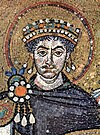
|
Justinian I
FLAVIVS PETRVS SABBATIVS IVSTINIANVS AVGVSTVS |
c. 482 AD,
Tauresium
,
Dardania
|
August 1, 527 AD – 13/14 November 565 AD |
Nephew and nominated heir of
Justin I
|
13/14 November 565 AD
Natural causes |

|
Justin II
FLAVIVS IVSTINIVS IVNIOR AVGVSTVS |
c. 520 AD, ? |
13/14 November 565 AD – 578 AD |
Nephew of
Justinian I
|
578 AD
Became insane;
Tiberius II Constantine
ruled as regent
from December 574 and became emperor on Justin’s death in 578 |
|